Dr. Mohammed Al-Balushi: When do sports injuries become a risk to athletes?
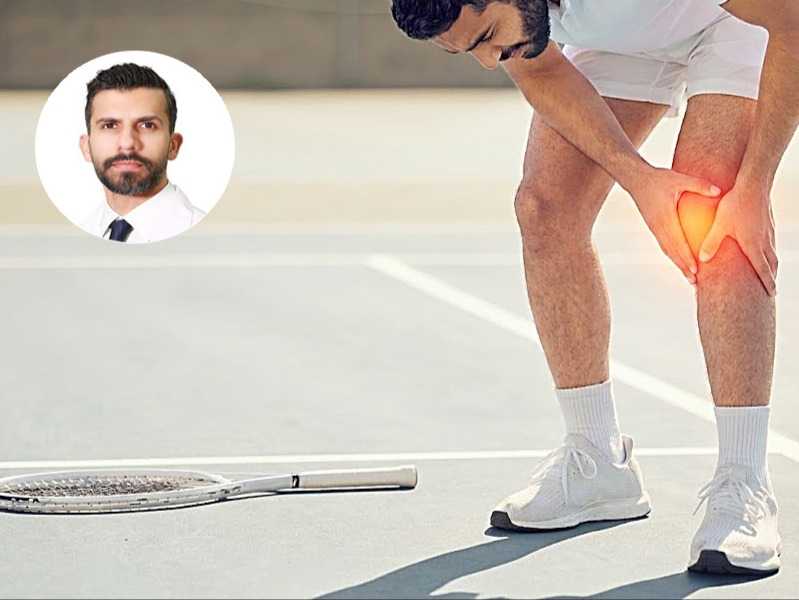
Dr. Wala’a Hafez: Sports injuries typically occur during physical activity or exercise, whether among professional athletes or amateurs. These injuries can be acute and sudden, such as joint sprains, fractures, and ligament tears, or they can be overuse injuries that develop gradually due to repetitive movements or increased training loads.
Regarding the most common sports injuries, Dr. Mohammed Al-Balushi, an orthopedic surgeon and sports medicine specialist at Al Salam Hospitals, explained that ankle sprains, muscle injuries, meniscus tears, and knee ligament injuries—particularly anterior cruciate ligament (ACL) tears—are among the most frequently observed. These also include shoulder and tendon injuries, especially Achilles tendon and rotator cuff tendon issues. He noted that the nature of the injury varies depending on the type of sport, the player’s age, and their level of physical fitness.
Causes of Injuries
Dr. Al-Balushi pointed out that several factors increase the risk of sports injuries, primarily inadequate warm-up routines and poor muscular fitness, though he emphasized that these are not the only causes. “Injuries can also result from a sudden increase in training intensity, practicing sports with incorrect techniques, muscle imbalances, or insufficient rest periods,” he said. He added that the risk of injury increases when using inappropriate footwear or equipment, playing on unsafe surfaces, or continuing to play despite pain and fatigue. Furthermore, returning to sports activity too early after a previous injury, before rehabilitation is complete, can lead to re-injury or more severe damage.
He stressed the importance of a gradual and dynamic warm-up, and that training programs should be tailored to the athlete’s age, physical level, and the specific sport, thereby helping to reduce injury risks and improve physical readiness.
High-Risk Cases
Dr. Al-Balushi confirmed that most sports injuries are treatable, and injured individuals can usually return to their normal activities. However, some severe injuries, or those that are not diagnosed and treated correctly, may leave permanent effects and complications. He highlighted that the most dangerous injuries involve the head and brain, spinal cord and vertebral column injuries, and complex fractures accompanied by nerve or blood vessel damage. Additionally, neglecting or delaying the treatment of joint and ligament injuries can lead to joint instability, cartilage damage, early-onset arthritis, and chronic pain, which may limit the injured person’s ability to play sports, work, or perform daily activities.
He emphasized that early diagnosis, appropriate treatment, and a comprehensive rehabilitation program are essential factors in minimizing complications, reducing the risk of long-term disability, and enhancing the chances of a safe return to sports and daily life.
Life-Threatening Injuries
Dr. Al-Balushi noted that death resulting from sports injuries is uncommon but can occur in specific, highly dangerous situations, such as severe head or neck injuries, internal bleeding, chest trauma, or sudden cardiac arrest during sports. He explained that cardiac arrest may be caused by an undetected heart condition, or, in very rare cases, by a strong, direct blow to the chest at a specific moment in the heart’s cycle, which can trigger a serious arrhythmia and sudden stoppage.
He pointed out that heatstroke and severe dehydration also pose real risks, especially when exercising in hot and humid weather. This highlights the importance of having a clear emergency response plan at sports facilities, training staff in cardiopulmonary resuscitation (CPR), and providing automated external defibrillators (AEDs), as rapid intervention within the first few minutes can be a decisive factor in saving a player’s life.
Warning Signs Requiring Hospital Visit
Dr. Al-Balushi stressed the necessity of immediately stopping sports activity if there is confusion or cognitive impairment, a severe and worsening headache after a head impact, repeated vomiting, seizures, unusual drowsiness, or weakness in movement and balance.
“Athletes should listen to their body’s signals and report any symptoms early. Coaches must not pressure players to return to the field before they have fully recovered and completed rehabilitation. Parents also play a crucial role in protecting children from overtraining, encouraging rest, diversifying sports activities, and seeking medical evaluation when injuries occur.”
He added that the goal of sports is to enhance health and improve quality of life, not to sacrifice player safety for a single match. He reaffirmed that prevention, early diagnosis, and proper rehabilitation represent the best path for a safe and confident return to sports.
Common Misconceptions
Dr. Al-Balushi outlined some of the most common mistakes:
* Attempting to continue playing despite pain, or repeatedly testing the injured limb to check mobility. He noted that bearing weight or returning to running immediately after an injury can worsen tears or displace unstable fractures.
* Some people incorrectly attempt to realign a joint or bone, move an injured person when a head or neck injury is suspected, or rely on non-specialist diagnoses and delay medical examination.
* Other errors include applying ice directly to the skin for prolonged periods or binding the limb too tightly, as this can impede blood circulation. The correct approach is to stop playing, protect the injured area, reduce load on it, elevate it if possible, and use cold compresses safely for short periods. A medical evaluation should be conducted if pain is severe, movement is difficult, or there is rapid swelling or obvious deformity.
Important Procedures
Regarding massaging the injury site or applying hot compresses immediately, Dr. Al-Balushi clarified that in the first hours after an acute injury, especially when swelling or internal tissue bleeding is present, vigorous massage or heat application can increase blood flow, swelling, and pain. Therefore, these are not recommended immediately before the nature of the injury is known.
“In the early stage, priority should be given to protecting the injured part, using cold compresses wrapped in a towel—not placed directly on the skin—and avoiding continuous or excessive use. Ice is not a cure for the injury itself, but a temporary measure to relieve pain.”
Heat and massage may be beneficial in later stages for certain cases of muscle strain or stiffness, but their timing and method should be determined by a physician or physical therapy specialist. He stressed that massage should be completely avoided when a fracture, dislocation, or severe muscle tear is suspected.
Ligament or Cartilage Tears
Dr. Al-Balushi emphasized that not all tears require surgery. The decision depends on the type of tissue injured, the degree and location of the tear, the stability of the joint, the patient’s age and activity level, as well as the symptoms and athletic goals.
“Many partial ligament injuries and some cartilage tears can be treated conservatively, involving activity modification, physical therapy, and restoring strength, mobility, and balance. Even some complete tears may not require surgery if the joint is stable and the injury does not affect daily activities. Conversely, surgery may be necessary in cases of recurrent joint instability, tears that prevent normal movement, multiple ligament injuries, repairable tears in active individuals, or when conservative treatment fails. Therefore, not every tear requires surgical intervention.”
