Amendments to the Nationality Law to Protect the National Fabric
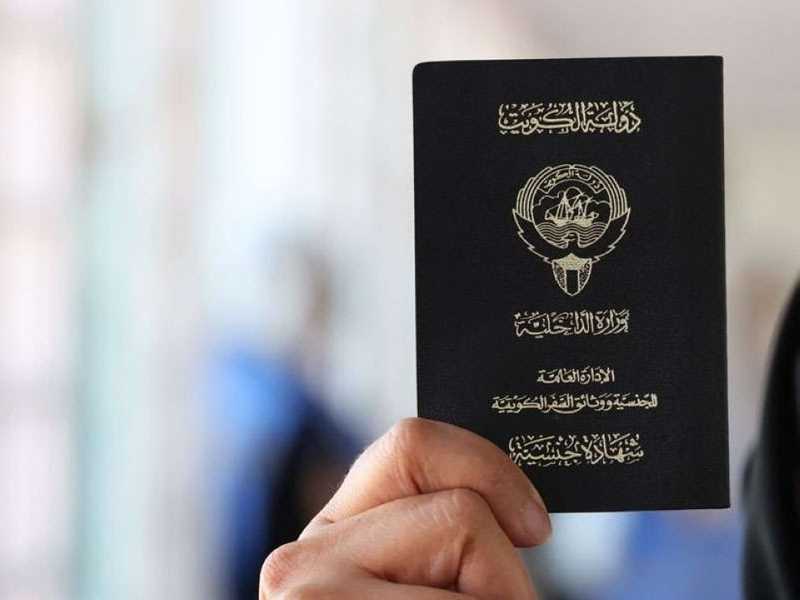
Faisal Matar With the entry into force of amendments to the Kuwaiti Nationality Law, published in the official newspaper *Kuwait Al-Yaum* in its Monday edition, the explanatory memorandum stated that the amendments were introduced to reaffirm the national identity of original Kuwaitis and strengthen allegiance to Kuwait, ensuring the purification and rectification of irregularities that had marred the Kuwaiti nationality file due to erroneous practices in handling it, whether intentional or unintentional.
According to the explanatory memorandum, Article One of the law decree replaced Item 4 of Article 14 of Decree-Law No. 15 of 1959. This item stipulated the deprivation of Kuwaiti nationality from anyone proven by the High Committee for Nationality Verification, through an investigation conducted by it, or by a final judicial ruling, to have intentionally added to their own nationality file or that of another person any individual who is not their child or descendant, with the aim of granting them Kuwaiti nationality contrary to reality. The amended item now allows for the deprivation of Kuwaiti nationality from any child or descendant of the person who committed such an act, provided that the child or descendant was aware of this forgery and failed to report it to the competent authorities. This measure aims to protect the national fabric and ensure the state exercises its sovereign powers in regulating nationality matters within clear boundaries and robust legal controls.
Regarding the nationality certificate, Article One of the decree, according to the explanatory memorandum, replaced Article 19 of the aforementioned decree. The new version stipulates that the certificate issued by the Minister of Interior to individuals whose Kuwaiti nationality has been established will be issued in electronic form instead of the traditional paper format. This change responds to the state’s trend toward comprehensive transformation and reliance on digital platforms and paperless transactions, ensuring security and evidentiary standards for the electronic nationality certificate and official documents.
The explanatory memorandum further noted that Article 82 of the Kuwaiti Constitution stipulates that one of the conditions for a member of the National Assembly is to be a Kuwaiti national by origin in accordance with the law. Consequently, Article Two of the current law decree added a new paragraph to Article 7 of Decree-Law No. 15 of 1959, explicitly prohibiting the right to vote, run for office, or be appointed to any legislative body for anyone who acquired Kuwaiti nationality through naturalization. This completes the assurance of national identity, ensuring that the selection of the people’s representatives in legislative bodies consists solely of those holding Kuwaiti nationality by origin, in line with constitutional provisions on this matter.
The following are the details: The explanatory memorandum for Law Decree No. 79 of 2026, which amends certain provisions of Emir Decree No. 15 of 1959 concerning the Kuwaiti Nationality Law, emphasized that the law aims to reaffirm the national identity of original Kuwaitis and strengthen allegiance to Kuwait, ensuring the purification and rectification of irregularities in the Kuwaiti nationality file resulting from erroneous handling practices, whether intentional or unintentional.
While the official newspaper *Kuwait Al-Yaum* published the law decree with the amendments in its Monday supplement, the explanatory memorandum stated that the Emir’s directive was issued on May 10, 2024, and Article 4 thereof stipulates that laws are issued by law decrees. Therefore, the current law decree was prepared to introduce necessary and fundamental amendments to certain provisions of the aforementioned Emir Decree No. 15 of 1959, ensuring the reaffirmation of the national identity of original Kuwaitis and the strengthening of allegiance.
According to the explanatory memorandum, Article One of this law decree replaced Item 4 of Article 14 of the aforementioned Emir Decree No. 15 of 1959. This item stipulated the deprivation of Kuwaiti nationality from anyone proven by the High Committee for Kuwaiti Nationality Verification, through an investigation conducted by it, or by a final judicial ruling, to have intentionally added to their own nationality file or that of another person any individual who is not their child or descendant, with the aim of granting them Kuwaiti nationality contrary to reality. The amended item now allows for the deprivation of Kuwaiti nationality from any child or descendant of the person who committed such an act, provided that the child or descendant was aware of this forgery and failed to report it to the competent authorities. This ensures the protection of the national fabric and guarantees the state’s exercise of its sovereign powers in regulating nationality matters within clear boundaries and robust legal controls.
Regarding the nationality certificate, Article One of the decree, according to the explanatory memorandum, replaced Article 19 of the aforementioned Emir Decree No. 15 of 1959. The new version stipulates that the certificate issued by the Minister of Interior to individuals whose Kuwaiti nationality has been established will be issued in electronic form instead of the traditional paper format. This responds to the state’s trend toward comprehensive transformation and reliance on digital platforms and paperless transactions, thereby enhancing the efficiency of government services and ensuring the highest standards of security and evidentiary value for official documents. The second paragraph of the same article was referred to a decision issued by the Minister of Interior, which specifies the necessary technical and technological controls and requirements for issuing the electronic certificate, its preservation and use, and the procedures for verifying its authenticity, as well as cases of its cancellation or suspension.
An Emir decree-law amending certain provisions of Emir Decree No. 15 of 1959 concerning the Kuwaiti Nationality Law was issued yesterday (Sunday). The decree was issued after reviewing the Constitution, the Emir’s directive issued on May 10, 2024, and Emir Decree No. 15 of 1959 concerning the Kuwaiti Nationality Law and its amendments, based on a proposal from the First Deputy Prime Minister and Minister of Interior, and following approval by the Council of Ministers.
**Selection of the People’s Representatives Must Be from Holders of Kuwaiti Nationality by Origin**
The explanatory memorandum stated that Article 82 of the Kuwaiti Constitution stipulates that one of the conditions for a member of the National Assembly is to be a Kuwaiti national by origin in accordance with the law. Consequently, Article Two of the current law decree added a new paragraph to Article 7 of the aforementioned Emir Decree No. 15 of 1959, explicitly prohibiting the right to vote, run for office, or be appointed to any legislative body for anyone who acquired Kuwaiti nationality through naturalization. This completes the assurance of national identity, ensuring that the selection of the people’s representatives in legislative bodies consists solely of those holding Kuwaiti nationality by origin, in line with constitutional provisions on this matter.
**Legal Evidentiary Value of the Electronic Certificate**
To address the current situation where the nationality certificate is a paper rather than an electronic document, and some legislation required its submission in paper form to complete required documents, Article Three of this law decree established that the electronic certificate holds the same legal evidentiary value and effects as the paper certificate. It also stipulated that it shall replace the paper certificate in the application of all legislative provisions requiring its submission to obtain a service or benefit.
Article Four of the current law decree repealed every provision contrary to its provisions, and Article Five obligated the Prime Minister and Ministers, each within their respective jurisdictions, to implement it. It specified that the effective date of the law is from the date of its publication in the official newspaper.
