How did the Venezuelan government abandon its “kidnapped” president?
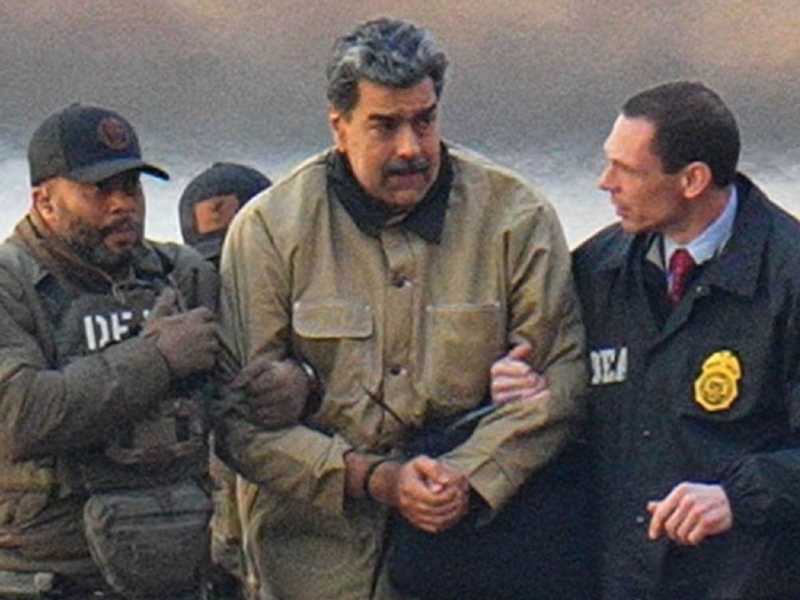
On January 3, Venezuela entered one of its most dramatic political moments, following a swift U.S. military raid that detained President Nicolás Maduro and transported him to the United States, a development that shook a
Translated by Qiyas from القبس — Original source
On January 3, Venezuela entered one of its most dramatic political moments, following a swift U.S. military raid that detained President Nicolás Maduro and transported him to the United States, a development that shook a system built on decades of rhetoric centered on sovereignty and confrontation with Washington. In the initial hours, Venezuelan leadership raised the banner of defiance. Delcy Rodríguez, who later assumed the role of interim president, demanded the immediate and unconditional release of Maduro and his wife, Cilia Flores, affirming that the detained president remained the country’s legitimate leader. The government also portrayed the incident as an “abduction” and an aggression against the Venezuelan state. However, this hardline stance did not last long. After direct threats from U.S. President Donald Trump of harsher measures if the new leadership did not cooperate, Caracas began to gradually retreat from its confrontational rhetoric, with Rodríguez shifting to calls for dialogue and cooperation with Washington under a “cooperation agenda” aimed at sparing the country from a new war. Over time, this conciliation evolved into a clear political and economic trajectory. Venezuela began opening its doors to rapprochement with the United States after years of estrangement, demonstrating considerable flexibility on the oil file, ultimately granting Washington significant influence over the management of oil resources and crude sales mechanisms, alongside legislative amendments designed to facilitate the return of U.S. companies to the Venezuelan market. Simultaneously, the government released American detainees and political prisoners, without linking these steps to Maduro’s release, while references to the detained president gradually faded from official discourse. The final phase became even more evident when the government ignored the Maduro file during its negotiations with the opposition, and removed posters and murals supporting him from the streets, signaling that restoring him was no longer the priority; rather, the focus was on consolidating the new authority and ensuring its survival. Thus, within a few months, Caracas shifted from demanding the return of the “kidnapped president” to treating him as part of the political past, leaving Maduro to face his trial and fate in the United States, while his former government rebuilt its relations with Washington without him.
