Bloomberg: Kuwait is Resilient
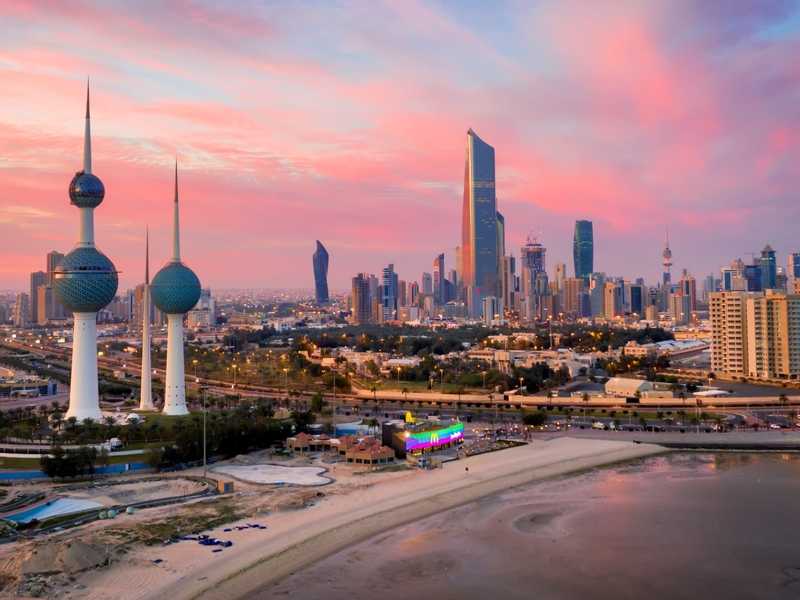
Bloomberg confirmed that Kuwait has faced the Iranian aggression with resilience, emphasizing that Kuwaitis are united by crises and motivated by events. It stated that as the Iran war approaches its seventh month, without a permanent peace agreement between President Donald Trump and Tehran, Kuwaitis are focusing on keeping the economy operational and uniting behind public displays of resilience. The agency’s report touched upon confidence in national defense capabilities, noting that 98% of missiles and drones were intercepted with efficiency. People have grown accustomed to the sound of imminent danger to such an extent that they now ignore air raid sirens, indicating that Kuwait is firmly rooted in this resilience.
The agency added in its report that the effects of the aggression embody the state of a country that knows well what it means to be on the front line, noting that market activity remained vibrant, store shelves were stocked with goods, and supply chains continued uninterrupted. It affirmed that economic liquidity is abundant, shopping malls are constantly crowded with shoppers and restaurant patrons. It pointed out that Kuwait is one of the wealthiest countries in the world, supported by a sovereign wealth fund exceeding one trillion dollars, highlighting the strength of the Kuwaiti economy, which has navigated the crisis well thanks to strong sovereign reserves and effective policy interventions.
It said: “This August marked the 36th anniversary of the Iraqi army’s invasion of Kuwait, which ignited the First Gulf War. That event inflicted a deep wound on the country, but many Kuwaitis say those events unite and motivate them.”
Below are the details: Bloomberg confirmed that Kuwait has faced the Iranian aggression with resilience, emphasizing that Kuwaitis are united by crises and motivated by events. It stated that as the Iran war approaches its seventh month, without a permanent peace agreement between President Donald Trump and Tehran, Kuwaitis are focusing on keeping the economy operational and uniting behind public displays of resilience. The agency’s report touched upon confidence in national defense capabilities, noting that 98% of missiles and drones were intercepted, according to a Kuwaiti defense official. People have grown accustomed to the sound of imminent danger to such an extent that they now ignore air raid sirens.
The agency added in its report that the effects of the aggression embody the state of a country that knows well what it means to be on the front line. It added: “This August marked the 36th anniversary of the Iraqi army’s invasion of Kuwait, which ignited the First Gulf War. That event inflicted a deep wound on the country, but many Kuwaitis say those events unite and motivate them.”
After February 28, 2026, when the United States and the occupying entity launched their first strikes against Iran, daily life has been interspersed with aggressive attacks from Iran and its proxies in Iraq. A report issued by the International Institute for Strategic Studies in the early weeks of the war showed that Kuwait was the most targeted Arab country by Iran after the UAE. In response, Kuwaitis rushed to donate blood and rally together. School studies moved online, and the government ensured measures to export oil and maintain business operations as usual.
In 1991, the retreating Iraqi army set fire to more than 600 oil wells, plunging Kuwait into darkness for many days. This time, however, Kuwait kept some oil flows running to power electricity stations and desalination plants until it managed to increase production and send ships through the Strait of Hormuz, which has become the main focal point of the war.
Kuwaiti Resistance: The report clarified that the 1990 Iraqi invasion marked the starting point of Kuwaiti resistance, a concept now firmly embedded in national consciousness. The spirit of defiance is clearly evident upon arriving in Kuwait City. At the airport, passenger queues often stretch from the entrance to check-in counters in a crowded building originally designated only for Kuwait Airways, with most operations quickly transferred there after the terminal housing international airline offices was bombed for the second time.
The report pointed to the revival of market activity, stating: “Shelves in major stores remained stocked with goods after supply chains were reinforced through neighboring Saudi Arabia and the UAE. Liquidity in the economy remained abundant, while shopping malls are constantly crowded with shoppers and restaurant patrons.”
In the spring, two friends wanted to create a symbol of unity for Kuwaitis to adopt by wearing badges. They chose the bright yellow desert flower, Arfaaj. Since then, the flower has been hung on cranes, and Kuwaitis have worn it on their jackets, including Kuwait’s ambassador to the United States, Sheikha Al-Jana Al-Sabah, last month.
Mohammed Sharaf, who designed and developed the idea launched by his friend Khaled Al-Fadhli, said: “Just like Kuwaitis, the Arfaaj flower is vibrant and blooms in the harshest conditions, symbolizing resilience and rising under pressure.”
The report noted that Kuwait is one of the wealthiest countries in the world, supported by a sovereign wealth fund valued at over one trillion dollars. Daniel Kay, chief economist at National Bank of Kuwait, one of the largest banks in the country, said: “Despite the severity of the shock, the Kuwaiti economy has navigated the crisis reasonably well, thanks to a combination of strong sovereign reserves, effective policy intervention, and regional cooperation.” He added: “Many of the activity indicators we monitor have rebounded noticeably from their initial low levels.”
Kuwait has not engaged directly with Iran, except for a phone call in June between the foreign ministers of the two countries, followed by a memorandum of understanding regarding an American-Iranian peace agreement that later collapsed.
Diplomatically, Kuwait is working to strengthen its relations with European and Arab allies to support its sovereignty and defenses. Sheikh Meshal Jaber Al-Ahmad Al-Sabah, Director General of the Direct Investment Promotion Authority, said: “By developing a business environment based on trust, innovation, and sustainable growth, Kuwait continues to attract long-term investments and drive sustainable economic transformation,” attributing the country’s perseverance to “strong economic foundations and progressive vision.”
Key manifestations of resilience despite the aggression:
- Continued shopping momentum
- Uninterrupted supply chains
- Kuwaiti solidarity and cohesion
- Strength of the Kuwaiti economy
- Effective defense against drones and missiles
- Sustained economic and investment attractiveness
- Resilience and recovery under pressure
- Navigating the crisis efficiently, bravely, and with planning
