Writing and Literature in the Age of Artificial Intelligence: Is Style Still the Man?
Dr. Ahmed Yahya Ali*
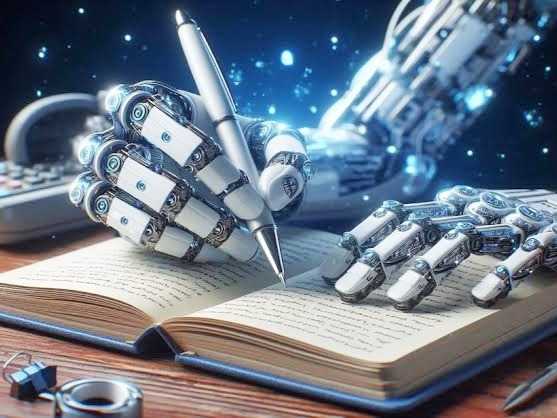
The discourse on artificial intelligence is no longer confined to scientific laboratories or technology companies; it has become an integral part of cultural and intellectual debates concerning the future of humanity itself. While fields such as economics, medicine, and education have been preoccupied with exploring the potential of this technology, literature finds itself facing an unprecedented question: What happens when machines become capable of producing texts that appear, on the surface, to resemble human writing? This question extends beyond mere writing to the very essence of creativity and the meaning of literature. Since the dawn of the arts, literary work has been inextricably linked to a human experience shaped by memory, emotion, imagination, and existential awareness. Consequently, the emergence of systems capable of composing stories, writing poetry, and drafting articles compels us to rethink the relationship between humans and language, as well as between the writer and the tools they employ.
Cultural history teaches us that literature has never been isolated from technological evolution. The printing press revolutionized the dissemination of knowledge, followed by journalism, which transformed writing styles, and then the internet imposed a new reality that made publishing faster and more expansive. With each shift, fears arose regarding the decline of literary value or the loss of its identity, yet literature has consistently demonstrated the ability to rediscover itself. Today, artificial intelligence appears as a new link in this long chain of transformations.
What distinguishes artificial intelligence? Unlike previous technologies, AI does not merely facilitate the delivery of text to the reader; it participates in the actual production of the text. It can analyze millions of pages, identify linguistic patterns, and construct new texts based on what it has learned from that data. At first glance, it may seem as though the machine has become a new writer competing with humans. However, deeper reflection reveals that the issue is far more complex. Language is not merely a sequence of words arranged according to grammatical rules; it is an expression of existential experience. When a novelist writes about loss, or a poet crafts a poem about nostalgia, they are not simply rearranging vocabulary; they are imbuing it with a portion of their memory, emotions, and worldview.
Artificial intelligence, regardless of its capacity for imitation, does not live or feel these experiences. Instead, it analyzes patterns and reconstructs them coherently. This distinction between experience and imitation lies at the heart of the differentiation between humans and machines in the literary realm. AI can mimic styles, but it does not experience time, pain, or joy as humans do. Therefore, while the text it produces may be linguistically sound, it remains in need of that human stimulation that grants literature its aesthetic and emotional value.
Nevertheless, it would be a mistake to view artificial intelligence as an adversary to literature. The contemporary writer can employ this technology for research and information gathering, organizing ideas, or exploring multiple possibilities for developing characters and plots, without relinquishing their creative role. Just as writers of the past benefited from dictionaries and encyclopedias, they can today utilize more advanced tools that help expand the horizons of writing. Experiments are already emerging where novelists and poets use AI as a partner in the brainstorming phase, rather than a substitute for the author. In such experiments, the final decision remains with the writer, who selects, deletes, adds, and rephrases, while the technology serves as an assistant that broadens the space of possibilities. Here, artificial intelligence transforms from a competitor into a tool, and from a threat into an opportunity.
Ethical and Cultural Challenges
However, this opportunity is not without ethical and cultural challenges. Among the most prominent questions raised are: Who is the owner of a text if algorithms participate in its production? Is it permissible to publish works that rely heavily on AI without disclosing this fact? And how can authors’ rights be protected if the models learn from millions of books and texts written by others? These questions are not merely legal; they touch upon the concept of authenticity in literature.
The Risk of Homogeneity
Another critical issue is the risk of homogeneity. If a large number of writers rely on the same tools, it may lead to convergence in styles, structures, and imagery, thereby threatening the diversity that represents one of literature’s most important characteristics. The difference between literary voices is what enriches culture, whereas an overreliance on ready-made models results in texts that are similar in tone, rhythm, and structure.
On the other hand, artificial intelligence can contribute to expanding the circle of readership and access to literature. It is now possible to translate texts at a faster pace and provide tools that assist visually or hearing-impaired individuals in interacting with literary works in ways previously unavailable. It can also be used to analyze texts and discover connections between different literary works, opening new horizons for researchers and critics. Perhaps the most intriguing aspect lies in the changing image of the writer themselves. In the past, writers worked in relative isolation; today, they write in a world connected around the clock, surrounded by an inexhaustible source of information and digital tools.
The Real Challenge
Literature has proven throughout history to be the art form most capable of adapting to change. Writing media have evolved, publishing formats have shifted, and successive schools and movements have emerged, yet the need for storytelling has not vanished, because humans do not live by facts alone, but by the meanings they derive from those facts. It is likely that this will continue in the age of artificial intelligence; while writing tools will change, the search for meaning will remain the core of the literary process.
The real challenge does not lie in whether a machine can write a convincing text, but in whether humans can preserve their unique voice amidst the increasing digital noise. The reader does not seek abstract information in literature, but rather an experience that resonates with them, questions that touch upon their anxieties, and a language that offers them the opportunity to understand themselves and the world around them. It is this human space that gives literature its value and ensures its continued presence, regardless of changes in communication mechanisms.
(*) Professor of Literature and Criticism, Faculty of Languages, Ain Shams University, Egypt
