War Accelerates the Strategic Fortification of Gulf Economies
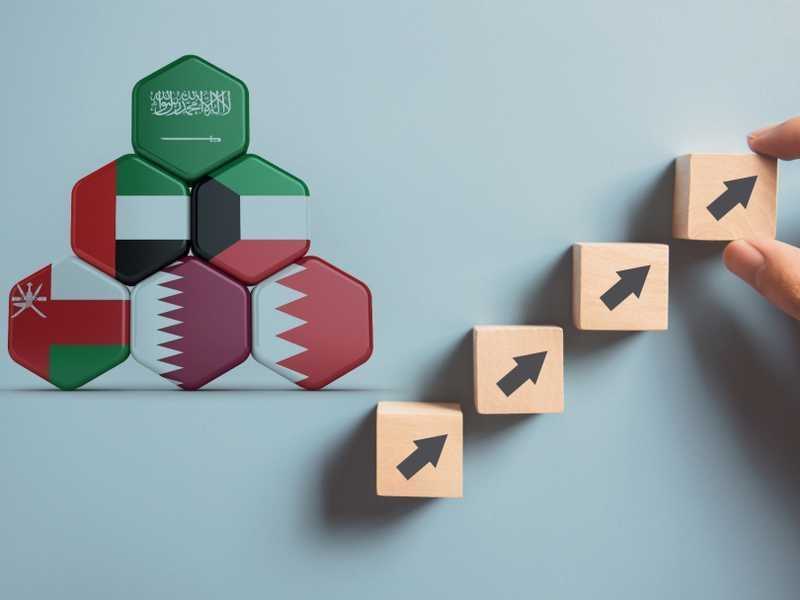
Waleed Mansour: A recent report indicated that Gulf economies demonstrated a resilience that defied many of the expectations prevailing at the outset of the war between the United States and Iran in late February. At tha
Translated by Qiyas from القبس — Original source
Waleed Mansour: A recent report indicated that Gulf economies demonstrated a resilience that defied many of the expectations prevailing at the outset of the war between the United States and Iran in late February. At that time, the prevailing belief was that oil prices would surge, financial markets would experience sharp volatility, and Gulf economies would suffer a temporary shock before quickly regaining their momentum.
The report by *The National* highlighted that five months into the conflict, these assumptions proved short-sighted. It became clear that the greatest economic threat was not merely rising oil prices, but the disruption of Gulf states’ ability to export energy, import goods, and conduct normal business operations through the Strait of Hormuz.
**A Greater Shock**
*The National* emphasized that distinguishing between rising oil prices and export disruptions is crucial for Gulf economies. Typically, oil-producing nations benefit from price increases, whereas prolonged disruptions to oil and gas exports inflict economic damage. The report pointed to the World Bank’s revision of forecasts as evidence of this shift in expectations: in April, the bank lowered its 2026 growth projections for Gulf economies from 4.4% to just 1.3%, before adopting an even more pessimistic outlook by July.
According to a Reuters poll of economists, a contraction was expected for Kuwait and Qatar by 8.1% each, and for Bahrain by 5.1%, while the UAE was projected to contract by 0.5%. In contrast, Saudi Arabia and the Sultanate of Oman were expected to maintain positive growth rates, thanks to their more diversified export portfolios.
The report noted the paradox that oil prices did not stabilize at the record levels feared at the war’s onset. On August 10, Brent crude was trading near $84 per barrel, far below early fears that continued disruptions would push prices toward $120–$150 per barrel.
**Different Calculations**
The core problem for Gulf states is no longer linked to the extent of oil price increases, but rather to their capacity to produce, transport, and sell oil. Early economic forecasts were built on the assumption that the Strait of Hormuz would reopen within a relatively short period. The International Monetary Fund’s July projections assumed the strait would begin reopening in mid-July, with a gradual return to normal conditions by March 2027—a timeline that has proven overly optimistic.
**The Cost of Continuation**
The report stressed that the element of time is critical, as economic repercussions accumulate the longer the crisis persists. Rising shipping costs, insurance premiums, supply chain disruptions, delayed investments, and weakened consumer confidence can become more damaging than the initial spike in oil prices.
The past five months have also revealed significant disparities in how the war has impacted Gulf economies. Saudi Arabia enjoys greater protection due to its East-West pipeline infrastructure, while Oman possesses ports outside the strait. The UAE has alternative energy export infrastructure, although its status as a global hub for logistics, aviation, tourism, and finance makes it somewhat vulnerable to broader regional disruptions.
The prevailing outlook for Gulf economies over the medium term has become less pessimistic compared to the war’s most difficult periods, yet it remains more cautious regarding short-term prospects. The IMF’s July forecasts suggest a strong recovery in 2027 for economies that regain their energy export and transport network activity. For instance, Saudi Arabia’s economic growth is expected to accelerate from 1.7% in 2026 to 5.5% in 2027.
**Recovery Path**
The report explained that these expectations reflect a belief that much of the current economic damage represents delayed rather than lost growth. However, this scenario hinges primarily on the possibility of a return to normalcy in the near and medium term. If the Strait of Hormuz reopens and regional security improves, Gulf economies could experience a strong recovery driven by the resumption of delayed investments in energy production, tourism, trade, and infrastructure projects.
Conversely, continued disruptions could shift the expected recovery trajectory from a V-shape—characterized by a sharp decline followed by a rapid rebound—to a U-shape, marked by a prolonged period of weakness before economic activity is restored.
*The National* confirmed that one long-term consequence of the war is already becoming clear: Gulf states are likely to become more aware of the economic risks stemming from the geographic concentration of energy exports, shipping routes, food supplies, and critical infrastructure. This awareness is expected to accelerate investments in alternative logistics corridors, storage facilities, local production, energy security, and supply chain resilience against shocks.
**The Cost of Geopolitical Dependence**
The report concluded that while economic discussions five months ago focused largely on oil prices, the discourse has now shifted significantly toward the cost of geopolitical dependence. This cost may ultimately become the most significant and enduring economic impact of the war on the Gulf region.
