New system at European airports sparks travelers' anger
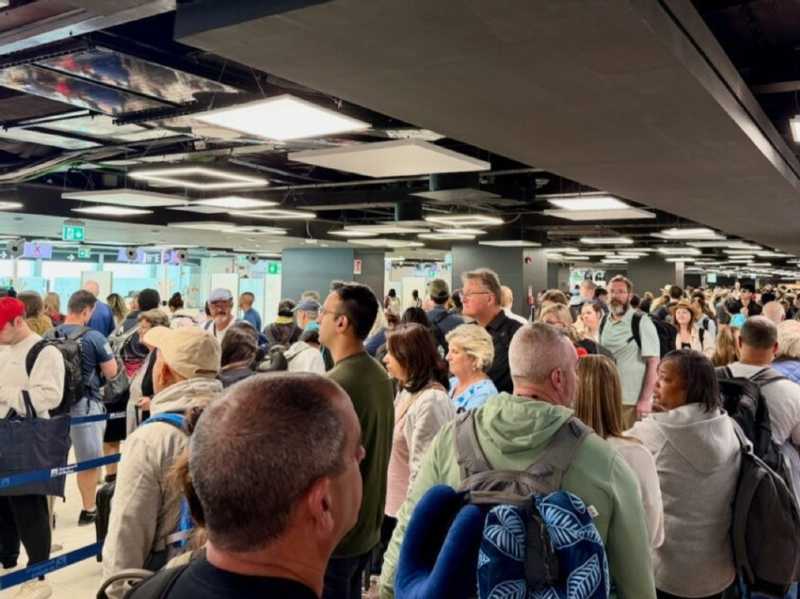
The European Union’s new biometric border system has led to waits of up to two hours at major airports, with Frankfurt, Amsterdam, and Munich recording the longest delays, sparking anger among travelers as queue lengths during peak hours in some of the continent’s busiest airports have doubled. New data reveal that waiting times have doubled at key hubs such as Frankfurt, Amsterdam, and Munich, as the EU struggles to cope with the massive influx of travelers from outside the bloc. The biometric Entry/Exit System (EES), which requires non-EU travelers to register their fingerprints and have their faces scanned, has caused significant increases in queue lengths and resulted in many passengers missing their flights. A study by the UK’s Financial Times and travel data analytics group Qsensor found that the average wait time in Frankfurt reached 120 minutes in July, up from 60 minutes in the same month last year. At Munich Airport, current wait times have risen to 60 minutes, up from 31 minutes last year, while peak wait times in Amsterdam jumped from 80 to 120 minutes over the same period. During peak hours, queues can stretch up to two hours, while wait times are considerably shorter during less busy periods. Since the system’s full launch on April 10, every non-EU traveler has been required to scan their passport and have their face scanned, in addition to registering their fingerprints the first time they use the system. In practice, however, many passengers have been forced to provide their fingerprints on multiple trips due to repeated system failures. This chaotic situation has drawn widespread criticism from the travel sector, and Ryanair CEO Michael O’Leary mocked the system, calling it poorly designed. Some airports have temporarily suspended parts of the EES procedures, including halting fingerprint collection during peak hours, to ease pressure on travelers and staff. These measures are scheduled to end in September, prompting eight EU member states, along with Switzerland, to request an extension from the European Commission. In a statement, the Commission said it is considering the possibility of continuing these practices.
