Sami Muhammad: The Artist Who Turned Pain into Sculpture
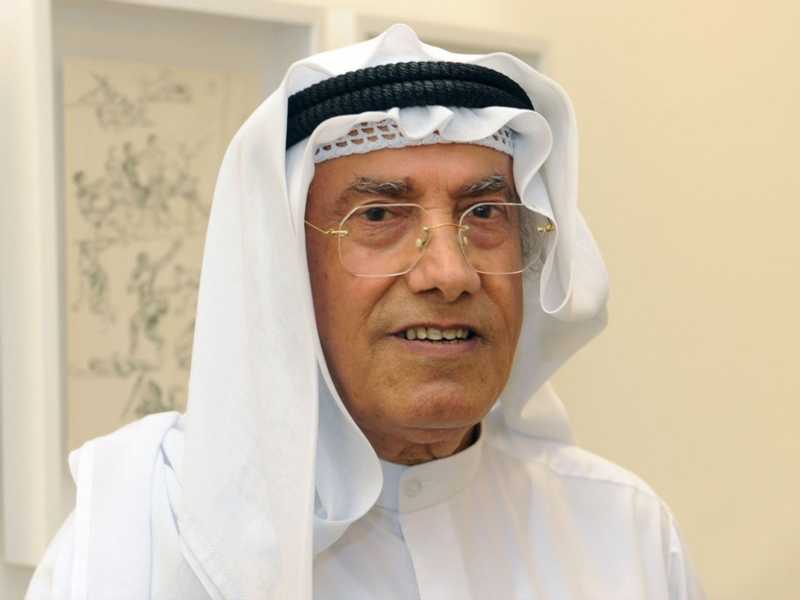
The artist Sami Muhammad, one of the most significant names in the history of modern Kuwaiti plastic arts, has passed away following a recent health setback that required hospitalization, bringing to a close an artistic career spanning more than six decades. Throughout his life, he remained one of the most Kuwaiti artists deeply connected to humanity and its existential questions, possessing a unique ability to transform pain, fear, waiting, and resistance into images, bodies, and blocks that carve their place in memory.
Sami Muhammad Ahmed Al-Saleh was born in Kuwait in 1943 in the Shuwaikh area, where his relationship with art began at a time when the Kuwaiti plastic arts movement was still finding its initial contours. His early passion for clay and forms paved the way for an experience that was not transient in his life; art became a long-term choice for him, quickly evolving into a comprehensive project through which he participated in building the Kuwaiti plastic arts scene and helping to formulate some of its major questions.
In 1962, he received a scholarship to study at the Free Studio, a milestone that marked one of the key beginnings in his artistic formation. He then moved to Cairo to study sculpture at the Faculty of Fine Arts, continuing his education and experimentation outside Kuwait before returning with new knowledge and experiences, and with an artistic sensibility that crystallized away from direct imitation. Sami Muhammad belonged to a generation of artists who did not find a fully institutionalized artistic scene awaiting them; instead, they had to contribute to its establishment in parallel with building their own experiences. In 1967, he was among the founding members of the Kuwait Association for Plastic Arts, linking his name early on to the trajectory of the Kuwaiti plastic arts movement itself, rather than merely to its exhibitions.
Over the years, his experience became increasingly distinctive. Sami Muhammad did not treat sculpture as a formal game or an exercise in mastering material; for him, the mass carried a stance, and the body was a means of expressing an internal state that transcended external features. Consequently, themes of the oppressed human, the bound body, pain, hunger, death, memory, war, and the search for freedom were prominent in his work. His sculptures gave the body a meaning that transcended the body itself. An outstretched hand could signify a plea for help, a bend could carry the weight of an entire life, and a tense face could transform into collective memory. The closer he came to humanity in its most vulnerable moments, the more capable he appeared of restoring artistic dignity, as if he were searching within pain for the space where humans could resist.
Thus, his works addressed major Arab and human issues, including pieces linked to the Sabra and Shatila tragedy, among other experiences that turned sculpture into a witness to what was happening outside the studio. Palestine was present in his artistic consciousness through his insistence that tragedy not become a passing number, and that the wounded body retain its place in memory. One of the most distinctive motifs associated with his experience was "The Scream," which transformed into a recurring artistic and human stance. In Sami Muhammad’s works, the scream was not merely an expression of pain, but an attempt to emerge from it, preserving the possibility of confrontation even when things seemed more brutal than an individual could bear. Therefore, his works appear today as closer to a visual record of the questions of the Arab human during decades of turbulence.
He witnessed major political and social transformations, and wars, setbacks, dreams, and defeats passed before his eyes. He chose to carry something of all this to his studio, then return it to people in the form of artistic works. Sculpture, for Sami Muhammad, required patience. Hard material does not yield its secrets easily, and the chisel does not give the artist a chance to retreat after a strike. Perhaps for this reason, his experience in many of its stages was closely related to the very idea of resistance. The artist carved into the material as if digging into a heavy memory, with each blow removing a layer to reveal a human figure underneath, waiting to see the light.
His experience received wide recognition throughout his career, and he was awarded numerous prizes and honors, including the State Encouragement Prize in 1999, the Artistic Creativity Prize from the Arab Thought Foundation, and the State Appreciation Prize in 2015. His works reached important Arab and international artistic circles, and he participated in events that kept Kuwaiti art present beyond its local borders. His presence in the Kuwaiti plastic arts scene went beyond exhibitions and individual works. For all his years, he remained part of the memory of an entire generation of artists, part of the story of the establishment and development of the Kuwaiti plastic arts movement, and part of that era when the artist worked on his project amidst conditions less expansive than those available in today’s artistic arena.
When we return to Sami Muhammad’s experience after his passing, the question is not only about what the artist achieved during his life, but also about what we have done regarding his achievements. Great works require a memory to preserve them, institutions to collect them, studies to analyze them, and new generations capable of accessing them without remaining dependent on scattered images and personal memories. Sami Muhammad had spoken in previous years about his dream of having a private museum dedicated to his works, a dream that now extends beyond him to broader cultural responsibilities. The artist who spent his life creating Kuwait’s visual memory deserves for his works to be a clear part of its collective memory, and for researchers, students, and audiences to find a place where they can view his experience in its entirety, follow its transformations, and understand its position in the history of Kuwaiti and Arab art.
Sami Muhammad passed away in Kuwait at the age of 82, leaving behind numerous works and a question larger than the boundaries of sculpture itself: What does art do when it decides to stand beside humanity in its most painful moments? Perhaps the answer lies in those faces he created, in bodies that appeared burdened beyond what words could carry, and in hands that continued to reach out from within his works as if searching for another hand. There, in the material that resisted his hand for a long time before yielding to it, something of Sami Muhammad remains. The artist has departed, but his sculptures remain in the place he intended for them: as witnesses to their time, to their questions, and to the human being who spent his entire artistic life searching for a foothold amidst all this pain. This is the artist’s most difficult legacy: for his body to depart while his hand remains present in his works, and for the stone to continue, after his passing, saying what he wanted to say.
