A certificate may not be enough!
We celebrate academic credentials and take pride in those who hold master’s and doctoral degrees, viewing education as one of the most important pillars of progress. This is entirely justified. However, the question we ought to ask today is: Is a certificate alone sufficient to shape an individual capable of leading the future?
The truth is that there is a distinction between a certificate and culture. A certificate proves that its holder has completed a specific academic path, whereas culture reflects the breadth of one’s horizons, and knowledge reveals one’s capacity for understanding, connecting ideas, and analysis. A person may hold the highest academic degrees yet remain confined within the boundaries of their specialization, while another individual, possessing broad cultural awareness, may be better equipped to read people and society, understand the world, and navigate its transformations.
Therefore, a certificate should not become an ultimate goal or merely a social title, but rather the beginning of a longer journey of learning. Nations do not advance by the number of certificates hanging on walls, but by the quality of elevated minds that think, research, innovate, differ, and engage in dialogue. It depends on their ability to transform education into knowledge, knowledge into production, and production into development.
Behind every knowledgeable individual lies a passion that drives them to discover more. Culture does not always begin in a lecture hall; it may start with a book, a question, a journey, an experience, or a conversation with someone different. Passion is what sustains learning after formal education ends, because a passionate person does not wait for a syllabus to read or an exam to prepare for; they learn because knowledge has become an integral part of their life. This is what our societies need today: a doctor who reads beyond medicine, an engineer who understands economics and the environment, an academic who follows technological developments, and an official who knows history and studies the experiences of other nations. It also requires young people who do not limit their ambitions to merely securing a job after graduation, but who strive to acquire skills and create opportunities.
Experiences of advanced societies provide clear evidence: the most innovative nations have built systems that encourage research, reading, libraries, arts, technology, and lifelong learning. They have recognized that the modern economy relies not only on resources, but on people capable of generating ideas, and that knowledge has become a national asset no less important than any other economic resource.
The true aspiration for the future must involve shifting from the question “What degree do you hold?” to a more significant one: “What do you know, and what can you contribute?” This does not diminish the value of the university; on the contrary, it means fulfilling its mission. A successful university does not merely grant its graduates a certificate; it equips them with intellectual curiosity that drives them to continue learning. In this context, building the individual becomes a shared responsibility among the family, school, university, media, and cultural institutions, by providing an environment that respects reading, dialogue, scientific research, and innovation, and opens doors for talents and ideas.
Future societies will not compete merely by the number of their graduates, but by their citizens’ capacity for critical thinking, renewal, and solution-building. Therefore, optimism about our future begins with redefining success itself. A certificate is an achievement worthy of respect, but it is not the end of the journey. Culture is not a luxury, knowledge is not a hobby, and passion is not a minor detail; rather, they are all tools for building the human being. When we have a generation that learns because they want to know, reads because they want to understand, and researches because they want to make a difference, we will have laid the strongest foundation for sustainable development, a more innovative economy, a more aware society, and a nation that does not merely honor those with certificates, but opens the path for those with ideas.
Stay well,
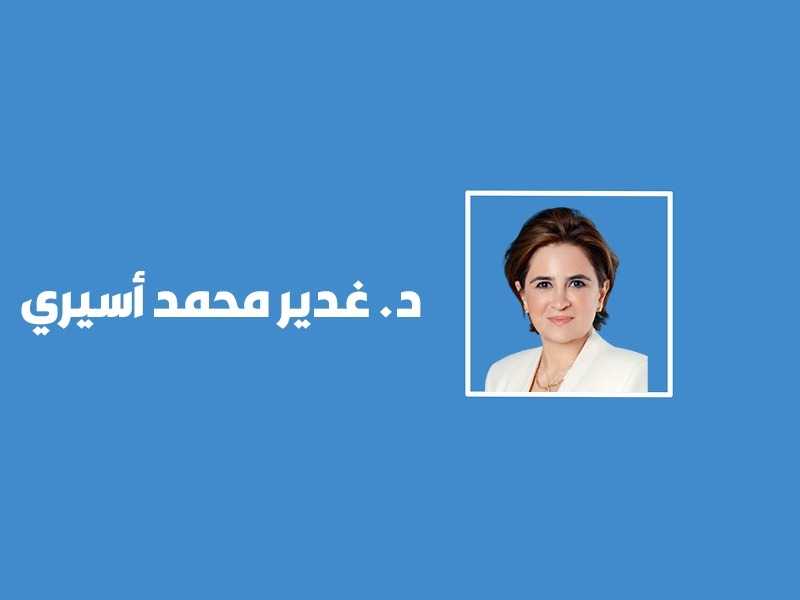
Dr. Ghadeer Mohammed Al-Asiri
