Electric Scooter: Its Design Is Not Suitable for Children
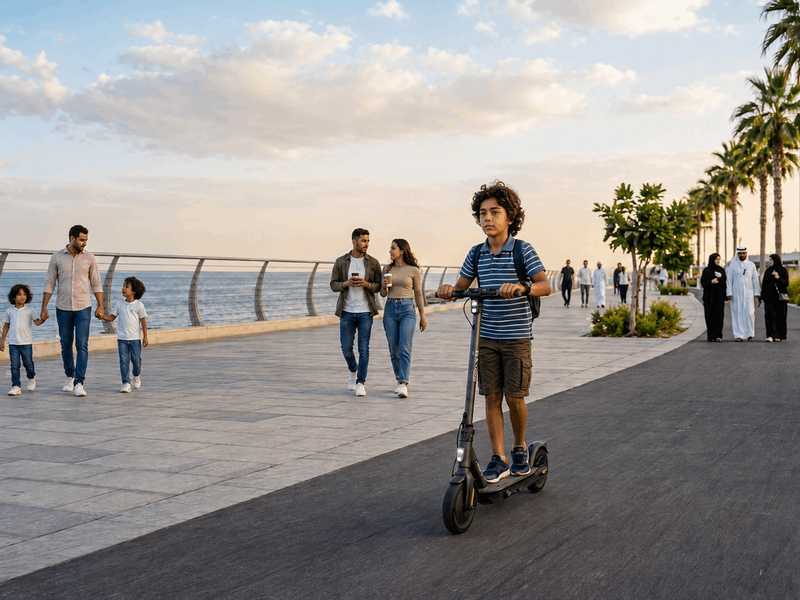
Reem Kassem – For the first time, a recent, large-scale study has quantified the risks associated with using electric scooters, revealing, according to a report published by the French newspaper Le Figaro, a rise in head injuries, as well as internal injuries and bleeding. In less than a decade, scooter use has spread widely in major cities, sparking intense debate over their safety and presence in traffic or on bike lanes. The discussion has become highly contentious, with some calling for a ban. However, scientific data has been lacking to compare this new mode of transport with those that have been in use for longer periods, and whether the sharp increase in accidents involving scooter users is merely the price of their success or an indicator of heightened danger.
Earlier, several local studies, relying on data from a single hospital in major European cities such as Liverpool and Lyon, provided initial answers to these questions. But for the first time, a nationwide analysis has been conducted. British researchers examined more than 15,000 recorded traffic accidents between 2020 and 2022 in England and Wales, in addition to incidents reported to Voi, the largest scooter-sharing operator in the UK between 2020 and 2024. The results, published in the journal Scientific Reports, were unequivocal: scooter users are 3.5 times more likely to suffer head injuries, three times more likely to experience bleeding, and 1.5 times more likely to sustain internal injuries compared to motorcyclists. Compared to cyclists, the risk of head injury is 1.7 times higher. The only “good news” is a 20% lower risk of fractures compared to motorcyclists.
◄ Scooter Design Among the most worrying factors in this grim picture is the low helmet usage rate among scooter accident victims, which is less than 6%, compared to 75% for motorcyclists and 45% for cyclists. However, this alone is insufficient to explain the significant rise in head injuries, let alone internal organ damage, according to the study’s authors. Dr. David Bodansky, an orthopedic surgeon who participated in the study, summarized the situation, stating: “Thanks to their very small wheels and high center of gravity due to the standing position, it is enough for the front wheel to stop for the person to be thrown forward. The abdomen then strikes the handlebars, causing abdominal injuries, before the entire body tilts forward, leading to the head hitting the ground. Computer simulations show that in electric scooter collision accidents, the head hits the ground first in nearly half of the cases.”
Pierre Petit, a resident physician in neurosurgery at the Lyon Mother and Child Hospital and the lead researcher in a study on head injuries associated with electric scooters among those under 18, said: “This is the paradox of the electric scooter... it is a mode of transport that significantly increases the risk of head injuries, yet helmet usage is low compared to other two-wheeled vehicles... Wearing a helmet seems intuitive in this case, but how can we encourage its use? Should it be mandatory, or is it enough to make more efforts to promote its use and prevent accidents?”
◄ Increased Risks for Children The height and shape of the electric scooter’s handlebars, along with the small size of the front wheel, play a significant role in accident risk. However, British researchers expressed regret over the lack of serious scientific studies on these factors. For example, an Austrian study demonstrated that a simple modification, such as using soft-edged grips on the handlebars, could significantly reduce the risk of abdominal injuries, especially in children. Dr. David Bodansky stated: “Crash tests for electric scooters should be conducted using dummies equipped with measurement devices, similar to those used in the automotive industry. But to my knowledge, no such study has been published.”
The British study also highlights children’s vulnerability in scooter accidents. Pierre Petit explained that “there is an increased risk of accidents for those under 18, with more severe injuries. This is likely an indicator that these devices, designed for adult men, are unsuitable for individuals with smaller physical builds.” Children’s bodies are also more fragile at the same speeds. This is compounded by behaviors that may be riskier among young children, increasing the likelihood of accidents. Unlike other modes of transport, the majority of scooter accidents are not related to collisions with other vehicles, but rather to loss of control or collisions with fixed obstacles, as notably observed in the study conducted at Lyon Hospital.
