Muscle-building Obsession: When It Becomes a Health Hazard
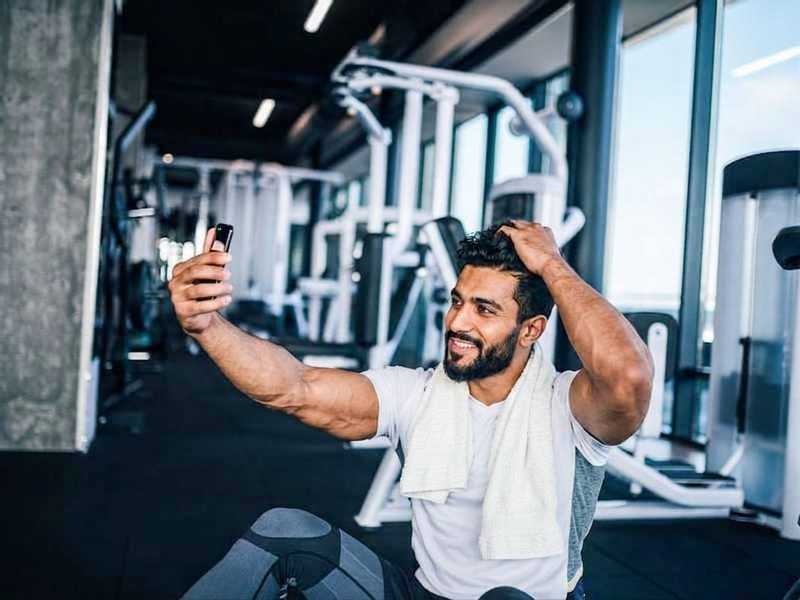
Dr. Wala’a Hafiz – Building muscle is no longer the exclusive domain of bodybuilders or professional athletes. Muscular physiques are now prominently featured in advertisements, films, and social media platforms. As the pressure to achieve a “sculpted” body intensifies, fitness concerns for some men can evolve into an obsession, leaving them perpetually dissatisfied with their muscle size, regardless of how large it is. This feeling may lead to overtraining, strict dietary regimens, constant comparison with others, and, at times, the use of methods that threaten health. So, when does the pursuit of muscle building shift from a healthy habit to a psychological and behavioral issue?
◄ Muscle Dysmorphia
One of the paradoxes of muscle dysmorphia is that sufferers may possess larger, more prominent muscles than most people, yet still believe their bodies are skinny or their muscles insufficient. The problem is not related to actual muscle size, but rather to the individual’s perception of their body. They remain convinced that their muscles need to be bigger, even though others see them as strong and athletic. Scientific references, according to a report by LJMU Research at Liverpool John Moores University, indicate that “muscle dysmorphia” is a form of body dysmorphic disorder. In this condition, individuals become excessively preoccupied with the size and appearance of their muscles, driving them to constantly seek ways to increase their muscle mass.
◄ From Sport to Obsession
Going to the gym and engaging in resistance training and muscle building is not negative; rather, it is an important part of healthy physical activity. However, problems begin when the focus on fitness and appearance becomes the central axis of one’s life. A person may spend hours training, feel intense guilt if they miss a session, or avoid social events because they conflict with their diet or training schedule. In some cases, individuals continue exercising despite injury or pain, out of fear of losing their muscle mass or reverting to a previous physique. According to The Telegraph, research on unhealthy exercise dependence suggests that continuing to train despite injury, prioritizing gym visits over social life, and feeling unable to stop exercising may all be signs of an unhealthy relationship with sports.
◄ Social Media: A Mirror That Doesn’t Reflect Reality
One reason for the increased pressure on men is what they see daily on social media: images of extremely muscular bodies, defined abs, visible muscles, broad shoulders, and narrow waists. With repeated exposure, the mind may treat these images as the natural standard for an ideal body. Men begin comparing their actual bodies with carefully curated images of others, which can exacerbate feelings of dissatisfaction with their appearance. As comparisons continue, the gap between their actual body shape and the image they believe they should achieve widens, potentially driving some to adopt more extreme behaviors to reach that goal.
◄ When Food Becomes Part of the Battle
Building muscle does indeed require balanced and appropriate nutrition, but an obsession with appearance can turn food from a means to support health and athletic performance into a constant source of anxiety. Individuals may begin counting every calorie with excessive precision, eliminating entire food groups, adhering to rigid meal times and quantities, or feeling guilty when eating anything that doesn’t fit their diet. In more extreme cases, the goal is no longer to improve health or athletic performance, but to achieve a specific body shape at any cost. It is crucial to distinguish between organized sports nutrition and compulsive eating behaviors that cause psychological distress or disrupt daily life.
◄ The Greatest Risk: Seeking Faster Results
Experts believe the greatest risk begins when a person feels their muscles are not growing as fast as desired, leading them to seek faster ways to achieve their goals. This is where the use of anabolic steroids and other performance-enhancing substances may emerge, aimed at accelerating muscle growth and increasing strength. Although these substances may increase muscle mass and strength, using them without medical supervision can expose individuals to health risks, and they do not represent a safe solution for body image disorders. Moreover, increasing muscle size does not necessarily address the psychological issue related to body image; if a person continues to perceive their muscles as insufficient despite having a large muscle mass, they may remain dissatisfied even after further increasing their size.
◄ Dehydration for Muscle Definition: A Dangerous Trick
There is another aspect to the world of “cut” bodies, where muscles appear more defined and clear. Some individuals may try to reduce body water before photoshoots or competitions to make their muscles look more prominent. However, lowering body fluids is not a healthy way to achieve a better physique. Experts emphasize that dehydration can affect blood circulation, body temperature regulation, and physical performance, and can become dangerous if severe, especially during exercise or exposure to heat. This is particularly important in our region, where intense training can coincide with high temperatures, highlighting the importance of maintaining hydration.
◄ Muscles Are Important... But Why?
The irony is that building muscle does not require such obsession in the first place. Resistance exercises help maintain strength and mobility, and their importance increases with age and the loss of muscle mass. The healthy goal is not to reach the maximum possible muscle size, but to possess strong muscles that help individuals move, perform daily tasks, and maintain independence as they age. Here, healthy fitness differs significantly from the continuous pursuit of an ideal image that is difficult to achieve.
◄ When Does It Require Help?
Experts have summarized the key signs that warrant attention and should prompt seeking help before they turn into an obsession that harms health, including:
• Thinking about muscle shape most of the time.
• Frequently checking the body in the mirror.
• Constantly comparing muscles with others.
• Avoiding social events due to food or training.
• Feeling intense guilt when missing a workout.
• Continuing to train despite injury.
• Following highly restrictive diets.
• Using substances or medications to enlarge muscles without medical necessity.
Experts note that the presence of one of these signs does not necessarily indicate a disorder, but the combination of several, especially when they begin to affect life, work, and relationships, warrants pausing and re-evaluating one’s relationship with sports and the body.
◄ A Healthy Body Is Not Necessarily the Largest
Perhaps the most important message is that building muscle is not an endless race. A man can be strong, athletic, and healthy without possessing the body seen on magazine covers or fitness accounts on social media. Muscles are an important part of health, but they are not the only measure of it. The goal of sports is to build a strong and healthy body, not to enter into a constant race with the mirror and others.
