Severe drought hits England, leaving barren landscapes covering its fields and gardens
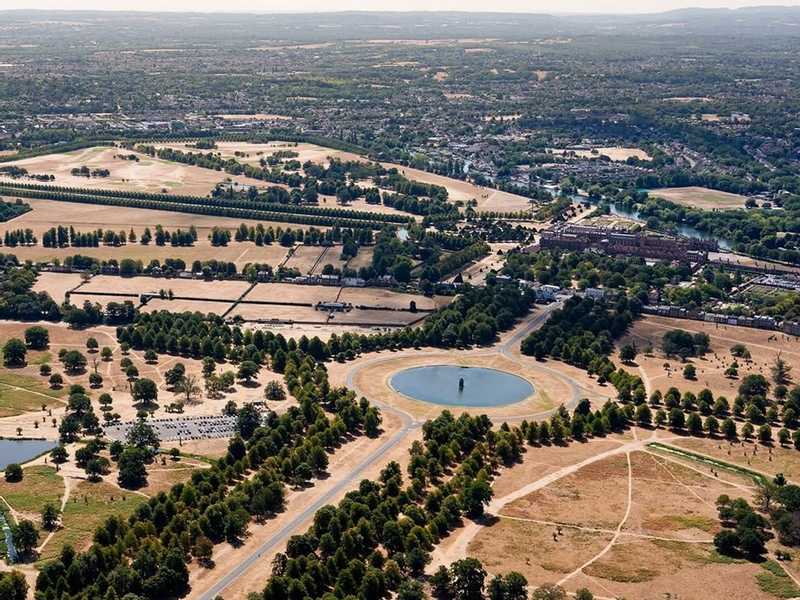
As England endures one of its most severe heatwaves and droughts in history, images have emerged showing vast arid areas covering numerous parks and football pitches, reflecting the intensity of the climatic conditions the country is experiencing. This follows July, which was recorded as the driest month in England’s history. The green cover has receded, and grassy areas in London’s Hyde Park have turned increasingly yellow.
Data from the UK Met Office and reports from the Environment Agency indicate that large swathes of England, including London and parts of the south and east, have been classified under “persistent dry weather.” The Met Office had previously announced that last July was the driest on record for England and Wales since data recording began in 1836. England recorded just 6.5 millimeters of rainfall, representing only 10% of the usual monthly average, while southern England recorded just 1.9 millimeters, or 3% of the average, making it the driest month in the region’s history.
The UK government reported that approximately 71% of England is experiencing drought, with forecasts predicting the start of a fifth heatwave and limited rainfall next week. These conditions coincided with exceptional temperature rises, with the UK recording its second hottest July ever.
Visual comparisons of satellite images captured by the US company Planet show a clear change in the greenery of grassy areas within Hyde Park, with larger brown areas appearing in the more recent image, corresponding to the dry period in southern England.
UK government drought monitoring reports highlight widespread impacts on the agricultural sector and the aquatic environment. Farmers have been forced to harvest crops early amid expectations of reduced productivity, and winter livestock feed reserves are being used due to the halt in grass growth in pastures.
The drought’s repercussions have extended beyond agriculture and the environment to local sports activities. The English Combination League announced the postponement of the start of the new season until August 29. League chairman Dale Brown stated that the decision was taken unanimously by the committee to safeguard the safety of players and referees, as natural grass pitches had turned into hard, rock-like surfaces due to the heatwave and drought.
The statement noted the cancellation of several pre-season matches and injuries sustained by players in recent games, indicating that the impacts of the heatwave and drought are broadening to affect various aspects of daily life in Britain.
