Kuwait condemns the systematic Iranian aggression that endangers civilians
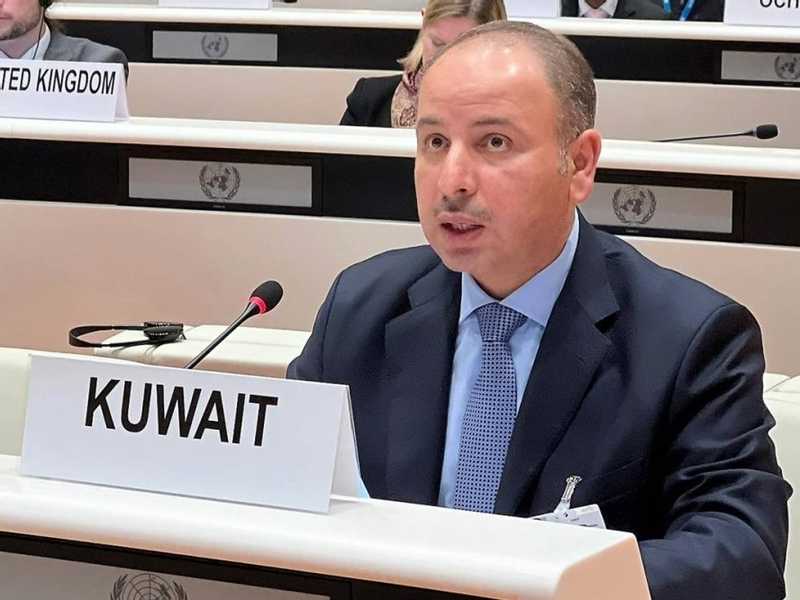
The Permanent Representative of the State of Kuwait to the United Nations and other international organizations in Geneva, Ambassador Nasser Al-Hin, condemned on Tuesday the continuation of the systematic Iranian aggress
Translated by Qiyas from القبس — Original source
The Permanent Representative of the State of Kuwait to the United Nations and other international organizations in Geneva, Ambassador Nasser Al-Hin, condemned on Tuesday the continuation of the systematic Iranian aggression that endangers the lives and basic rights of civilians. He emphasized that the protection of civilians and civilian objects constitutes a legal and ethical obligation that is not subject to selectivity, double standards, or discrimination.
This statement was made during the discussion of Kuwait’s comprehensive report on the implementation of the International Convention on the Elimination of All Forms of Racial Discrimination before the UN Committee on the Elimination of Racial Discrimination, held in Geneva.
Ambassador Al-Hin, who headed the Kuwaiti delegation before the Committee, noted that Kuwait’s participation in the dialogue stems from its voluntary commitments as a member of the Human Rights Council for the 2024–2026 term. He pointed out that the dialogue takes place at a time when the world is witnessing a disturbing regression in the enforcement of basic rights, alongside a surge in hate speech and racist practices that have even affected international sporting events.
The Ambassador further highlighted that the dialogue holds special significance given the exceptional security conditions facing Kuwait, which has been subjected to Iranian aggression since February 28. The repercussions of this aggression have included repeated and deliberate targeting of civilian objects and critical infrastructure, such as Kuwait International Airport, power stations, and water desalination and distillation plants, as well as other vital civilian facilities relied upon by the population in their daily lives.
He clarified that these attacks have damaged power generation units, threatened the regular supply of electricity and water, disrupted air transport, and resulted in casualties. These actions revealed a systematic aggressive approach that endangers the lives and basic rights of civilians. At the same time, Ambassador Al-Hin affirmed that state institutions continue to operate efficiently and activate emergency plans to ensure the uninterrupted provision of basic services to citizens and residents without discrimination.
In this context, the Ambassador explained that Kuwait’s approach to combating discrimination is rooted in a solid constitutional foundation, which establishes justice, freedom, and equality as pillars of society. It affirms that all people are equal in human dignity and equal before the law without discrimination based on gender, origin, language, or religion. It also guarantees freedom of belief and the practice of religious rites, as well as the right to legal recourse for all.
He added that the International Convention on the Elimination of All Forms of Racial Discrimination has become part of the national legal system under Article 70 of the Constitution. This approach aligns with the “Kuwait 2035” vision, which places the enhancement of Kuwait’s international standing as a cornerstone of national development, linking its developmental path to its international commitments, foremost among which is the 2030 Agenda for Sustainable Development.
Ambassador Al-Hin clarified that Law-Decree No. 75 of 2026 reorganized the National Council for Human Rights under the name of the National Authority for Human Rights and strengthened its independence. Its affairs are currently managed by a three-member committee until a new board of directors is formed. Additionally, a human rights department was established within the Ministry of Interior, and a specialized prosecution office for international cooperation and human rights was created.
He noted that the National Permanent Committee for Preparing Reports and Monitoring the Implementation of Human Rights Recommendations, chaired by the Ministry of Foreign Affairs, coordinates reports and monitors recommendations. It holds periodic consultations with civil society institutions, academic bodies, and the National Authority for Human Rights, while enhancing training for judges, prosecutors, and law enforcement personnel on human rights principles.
The Ambassador stated that in June 2026, Kuwait launched the third phase of its comprehensive national plan for updating the legislative system, following the completion of the previous phase ahead of schedule. This process yielded reforms that strengthened the protection of women and the family, regulated the establishment of places of worship and the practice of freedom of belief, and supported justice in labor relations.
He affirmed that Law-Decree No. 19 of 2012 concerning the protection of national unity remains one of the legislations most closely aligned with the Convention, as it criminalizes hate speech and incitement based on sect, tribe, or race, including through electronic media.
The Kuwaiti Ambassador explained that the national policy regarding contracted labor is based on Article 22 of the Constitution, which links the regulation of relations between workers and employers to social justice. He clarified that Law No. 114 of 2024 concerning the establishment of foreigners regulated the labor and residency sectors and enhanced the fight against trafficking in residency permits, in coordination with the law combating human trafficking and the National Strategy for the period 2025–2028.
He added that domestic workers are subject to a legal and supervisory system that includes receiving complaints, investigating violations, imposing penalties, and referring cases to the judiciary, alongside the existence of integrated shelter centers providing legal, psychological, and health care.
Ambassador Al-Hin pointed out that the measures regulating health insurance for residents aim to govern services and improve the efficiency of the health system, while adhering to the constitutional commitment to guarantee the right to health and provide basic and emergency care to all residents without discrimination.
He emphasized that the state pays special attention to empowering women, youth, and persons with disabilities, and protecting children. He stressed that women constitute more than 58 percent of the workforce in the public sector and hold approximately 28 percent of senior leadership positions.
The Ambassador renewed the State of Kuwait’s commitment to the provisions of the Convention and its determination to continue developing its legislation and institutions. He reaffirmed Kuwait’s firm commitment to fulfilling its international obligations and ensuring the protection of citizens and residents without discrimination, despite the exceptional security conditions the country is currently facing.
