Imminent agreement between Iran and Oman to open the Strait of Hormuz
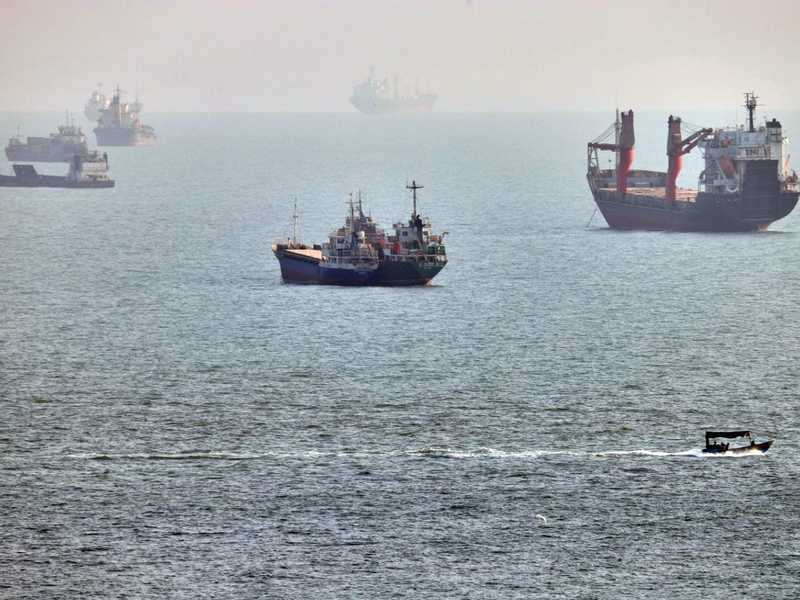
As Iran and the Sultanate of Oman move closer to reaching a temporary agreement to reopen the Strait of Hormuz, significant challenges remain in implementing any deal to open the strait, thereby helping to bring an end t
Translated by Qiyas from القبس — Original source
As Iran and the Sultanate of Oman move closer to reaching a temporary agreement to reopen the Strait of Hormuz, significant challenges remain in implementing any deal to open the strait, thereby helping to bring an end to the war between the United States and Iran. Al Arabiya channel quoted a high-level source as saying that the announcement of the agreement could come within days, noting that it still requires approval from Iran’s National Security Council. The source clarified that the proposed agreement aims to resume navigation in the vital Strait of Hormuz, with inbound vessels using the channel closest to Iran and outbound vessels using the channel closest to Oman. He added that the proposed agreement does not include imposing transit fees or services on ships passing through the strait.
Four sources in the shipping sector told Reuters that the proposed agreement between Iran and Oman, which would grant Tehran control over ships entering the Gulf via the Strait of Hormuz, is difficult to implement due to U.S. sanctions and insurance conditions that restrict any payments. Tehran has insisted that the strait will never return to its pre-war status, implicitly indicating its expectation of greater control over the waterway.
On the other side, U.S. Vice President J.D. Vance said that peace negotiations with Iran are extremely difficult, proceeding in a “two steps forward, one step back” manner, and will be “chaotic” and time-consuming, noting that Tehran is suffering from a “fractured system.” Pakistan expressed hope that the agreement between Iran and Oman regarding the Strait of Hormuz would contribute to resuming talks between the United States and Iran under the framework of an Islamabad memorandum of understanding.
The following are the details: Despite optimism about reaching an agreement between Iran and Oman on the Strait of Hormuz, challenges remain significant regarding its implementation, opening the strait to international navigation, and helping to end the war between the United States and Iran. Meanwhile, in the capital Tehran, billboards promising revenge against the U.S., produced by the Iranian regime’s propaganda apparatus, have appeared, in an attempt to show its people and the outside world that the Islamic Republic still maintains strong control while the United States collapses.
Both the United States and Iran state that they are nearing the end of negotiations regarding an agreement to reopen the Strait of Hormuz, but both sides have emphasized their contradictory claims of authority in the region. The embargo on Iranian ports imposed by President Donald Trump remains in effect, and its lifting could be key to any agreement with Iran. However, Tehran has insisted that the strait will never return to its pre-war status, implicitly indicating its expectation of greater control over the waterway.
In this context, the official Iranian news agency reported that talks between Iran and Oman are nearing an agreement, but not on fully reopening the Strait of Hormuz. ISNA reported yesterday (Thursday) that Iran and Oman are close to reaching a new arrangement to manage traffic through the Strait of Hormuz, with Tehran insisting that this framework represents a new security model for the strategic waterway rather than a full reopening. According to the agency, the proposed mechanism would regulate commercial ship traffic, with ships entering through Iranian waters and exiting through Omani waters. The talks aim to define a “new model different from the practice that lasted for 60 years in the past,” under which ships passed through the strait at will. ISNA emphasized that the Iranian war had changed the security situation around the waterway and that previous arrangements could not address the new realities. It added that the success of this arrangement would depend on whether other countries in the region and the world would accept it. The ISNA report did not mention any intention to impose fees on ships transiting the strait.
Its conditions for opening the strait: In a related context, Behnam Saeidi, the First Secretary of the National Security and Foreign Policy Committee in the Iranian Parliament, said that negotiations between Iran and Oman regarding the Strait of Hormuz concern ship traffic and navigation routes, and “under no circumstances” relate to reopening the strait. Adding in an interview with Iranian television that such discussions would only take place after the United States ends its threats, lifts its embargo on Iranian ports, withdraws from the region, and a ceasefire is declared. Saeidi said: “This issue should not be confused with the current negotiations, nor should it be assumed that these talks mean the reopening of the Strait of Hormuz.” He described the strait as a strategic asset and a deterrent tool available to Iran, used effectively. Saeidi stated that ships using this route would need a permit, could not be military vessels, and would have to follow regulations and pay service fees. He claimed: “The decision-maker regarding the Strait of Hormuz is Iran, and negotiations with Oman are conducted as a coastal state. If Iran’s conditions are accepted, an agreement will be reached.”
Tehran also says it needs several guarantees from the United States to allow ships to cross the strait freely. Iranian Deputy Foreign Minister Kazem Gharibabadi outlined Iran’s demands, stating that the United States must reverse actions it claims violated previous commitments. These include: ending the naval embargo on Iranian ports, addressing sanctions reimposed when the ceasefire collapsed, and resuming negotiations on frozen assets, as well as ensuring stability in Lebanon as stipulated in the memorandum of understanding.
Difficult and chaotic negotiations: While Tehran denies holding talks with Washington, U.S. Vice President J.D. Vance said on Wednesday that peace negotiations with Iran would be “chaotic” and time-consuming, noting that Tehran is suffering from a “fractured system.” Vance discussed U.S.-Iran negotiations and national security in an interview with Laura Ingraham on Fox News, stating that talks with the Iranians remain extremely difficult, proceeding in a “two steps forward, one step back” manner. He added: “Our mission is to deal with this situation and achieve the best outcome for the American people, and for the President of the United States as well.” Vance added: “I think we will ultimately reach a complex situation, and it will take some time. As you can see, oil prices were at $79 on Thursday. These oil prices will drop and remain low. Iran will never possess a nuclear weapon, and the United States will be in a stronger position.”
President Donald Trump had said during an event in Las Vegas that Iran sought negotiations after the United States prepared what he described as a massive military strike, arguing that continuous military pressure brought Tehran back to the negotiating table. Trump said he prefers a diplomatic solution to any additional military action but reiterated that the administration’s position has not changed. He added: “I prefer to reach an agreement because I don’t want to kill people, but Iran cannot possess a nuclear weapon.”
Objections to “ammunition shortages”: In a related context, the Trump administration rejected concerns that the war with Iran had left the United States lacking in some of its more advanced long-range missiles, following a report that the military had consumed nearly all its stockpiles of two of its main long-range precision weapons. Trump objected to reports of a significant shortage of U.S. ammunition due to the war with Iran. In a post on his platform Truth Social on Thursday morning, he said: “The United States has huge amounts of ammunition, especially certain types. In addition, large quantities are being manufactured and shipped to the United States as needed. Defense companies are building more factories and facilities than ever before in our country. Those who leaked these treasonous statements are being prosecuted, and long prison sentences will be sought!”
CBS News had previously reported, citing sources, that the United States had actually used all of its Army’s tactical missile systems, known as ATACMS, and its long-range precision missiles. Reuters was the first to report that the United States had “effectively” used all its long-range precision missiles during Operation Epic Fury. CBS News had previously reported that the United States has dwindling stocks of defensive interceptor missiles and long-range missiles, a situation that has become a point of pressure within the administration.
