A narrative that embodies the suffering and courageous struggle of the Syrians
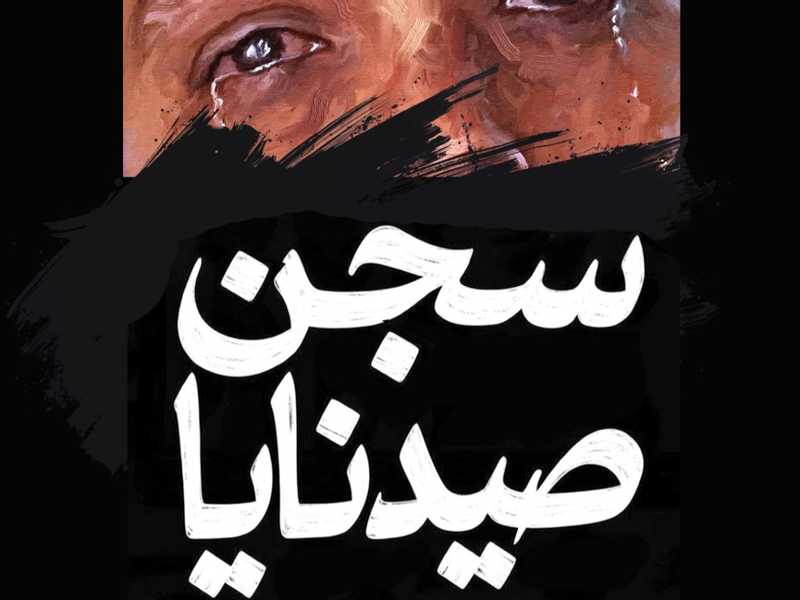
Khaled Omawi’s novel Saydnaya embodies the concept of literature that addresses silenced and suffocated issues, preserving them as an inspiring historical tool that documents struggle and dreams. In this novel, we hear the echo of groans and catch a ray of hope in the depths of darkness. The novel was written to embody the real suffering endured by detainees in Saydnaya prison, describing the horrific, real-life scenes they witnessed, within a framework that delves deeply into the personalities of both the jailer and the prisoner, giving suffering a broader resonance that transcends the scene as a fictional narrative to become a profound, lived reality.
The novel, recently published by Al-An Publishers and Distributors in Jordan (2026), exceeds 200 pages and begins with a touching dedication, starting with the phrase: “To the spirits burned within the walls of Saydnaya.” It then dedicates the book to the Syrian people, followed by his parents and all mothers who have tasted the bitterness of defeat, ending with the words: “I dedicate to you this pulse, these words, this cry that does not die, because freedom, no matter how prisons conspire against it, remains an unextinguishable light.”
In the book’s preface, which follows the dedication, the author presents some details concerning Saydnaya prison and provides a brief overview of the novel and its protagonist, “Anas,” stating: “Here we follow the story of Anas, a young man who enters prison on political grounds, and whose life turns into a daily nightmare, where only a few moments of pain separate him from death. Yet, despite these harsh conditions, hope remains his only weapon, and it is the same hope that remains alive in the hearts of all detainees in Saydnaya.”
During the reading of the novel, the chronological rhythm through which the author developed the events becomes clear. It moves from ordinary times with ordinary events to a long struggle, embodied in the plot, which describes what lies behind the scenes. The family does not cease to be the cornerstone and pillar of the novel; it is present in all joyful and sorrowful scenes, emanating through memory, where we find it embodies warmth, stability, security, nostalgia, and freedom.
The protagonist lives in a harsh reality imposed by unjust political policies that led many toward death, oppression, and torture. In prison, the protagonist experiences events alongside a group of inmates who share the same suffering in different ways. He listens to their stories and witnesses them, conveying them with delicate sensitivity that restores justice to suppressed human rights. Furthermore, the family serves as a bridge connecting suffering to the reception of solutions. Hope radiates from a small crack between the prison walls, proving that life must continue through this outlet, and that listening to this ray is not an illusion, but a delayed reality that accumulates through patience and prayer.
In response to a painful question posed in the novel: “Who are the Syrians outside the prison walls?” the protagonist says with a lump in his throat: “Syrians... were my neighbors, my friends, the sons of my neighborhood. We used to laugh together during summer nights, stand in bread lines, not complain, but joke. But war... war came as an uninvited guest that does not leave. It sat in the hearts of our homes, ate from our plates, and slept in our beds. Some became names on lists: refugee, displaced, missing, while others disappeared... no voice, no image, no grave.”
The author narrates, through the protagonist, the suffering of the Syrian people under a distorted war that lacks justification, except for the brutality of humans who know no humanity. He speaks about the Syrian regime and Bashar al-Assad, stating: “He is not a leader... he is the greatest wound in the body of Syria.”
The novel ends with two shocking scenes that reopen a wound that had nearly healed, swallowing some joy, leaving the question hanging, to be raised anew.
