Yousef Al-Saadoun and Album Qaseer Announce Project by a Major Artist
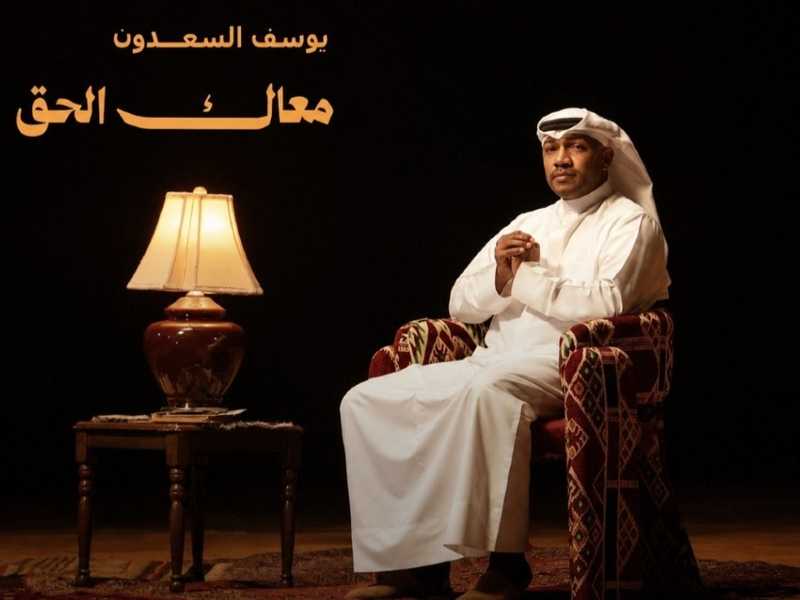
Amjad Jamal: Not all beginnings require noise to attract attention. Sometimes, it is enough for an artist to possess a sincere voice, a clear vision, and a personality formed with confidence, leaving the impression that we are facing a project worth following. This is precisely what singer Youssef Al-Saadoun offers in his first short album, *Moaak Al-Haq* (You Are Right), consisting of six songs, which feels closer to an artistic business card. Youssef began his vocal journey through the digital space, offering cover songs of other artists on social media platforms, gaining significant acceptance from followers and acquiring practical experience. This led to the release of his single *Kol Al-Khair* (All Goodness) in 2021, in which he collaborated with prominent names in the Kuwaiti music industry. He then captured hearts when he participated in the talent discovery program *The X Factor* in 2023, bringing us to today’s launch of his complete, standalone project.
From the first listen to the album, produced by Start Music, it becomes clear that the main bet is on building a musical and vocal identity. Youssef’s voice possesses a distinct warmth that relies not on display, but on feeling, calmness, and the ability to convey meaning. He is among the voices that give the song room to breathe, far from exaggerated performance or gratuitous ornamentation.
In the Kuwaiti landscape, this release gains additional significance. For years, Kuwaiti music has suffered a clear decline in the number of young voices capable of sustaining themselves, compared to previous decades or the musical activity in other Gulf countries. Therefore, the emergence of a singer who possesses talent, ambition, and musical culture represents not just a personal success, but a revitalization of the entire Kuwaiti musical scene, injecting it with much-needed fresh blood.
The album was released under the artistic supervision of composer Abdullah Al-Qaoud. It consists of six songs that navigate between reproach, regret, betrayal, and the search for self after a failed romantic relationship. The album’s songs were released sequentially in the last third of the current month, accompanied by music videos while maintaining a unified vocal identity.
**Moaak Al-Haq (You Are Right): Rational Separation**
The song *Moaak Al-Haq* opens Youssef Al-Saadoun’s album, exploring the idea of courageous abandonment and rational separation tinged with sorrow. Poet Shafi Al-Subaie wrote an eloquent text about a protagonist who feels disappointed in a lover who broke promises of loyalty, yet he does not fall into the trap of begging, weakness, or clinging. Instead, he leaves the door open. Youssef opens the song with an unexpected phrase that establishes the speaker’s pride: “You are right, and I am not forced to stay with you.”
Composer Yasser Bouali relied on calm *tarab* (musical enchantment), utilizing the expressive warmth in Youssef Al-Saadoun’s voice to serve the drama and lyrics. The melody begins in the *Bayati* maqam at its original level (Re), adding a melancholic tone, especially when the phrase settles on “and I am not forced to stay with you,” reflecting calmness and pride in accepting separation. However, the clever touch lies in the composer’s skilled manipulation of the maqam’s secondary genus in the middle of the chorus, “I live and my heart does not feel shy”; he creates a *Rast* genus on the fourth degree of the maqam instead of *Hijaz*, a flexible melodic transition that takes us to the *Husayni* maqam (one of the branches of *Bayati* rich in melancholy). Arranger Khaled Azza provides an effective musical combination that brings together Eastern strings, the ney (flute), and Gulf rumba rhythms.
**Malik Bil-Tawila (You Are Long): The Returning Lover**
This track presents a sincere vocal drama about a returning and regretful lover, featuring the acknowledgment of mistakes and an explicit desire to correct them. The delicate lyrics, written by Mansour Al-Wawani, quickly resonate in memory. This eloquence is evident in his famous line: “By God, if it would please you that I apologize... I would embroider an apology for the heart and send it.” Here, the apology transforms from mere passing words into a meticulously crafted artistic sculpture.
Composer Abdullah Al-Qaoud translates this apologetic tone through calculated ascents in the *Kurd* maqam at the level of (Sol). The melody succeeds in freeing itself melodically from the quartet system imposed by the poetic style, creating a larger expressive space for Al-Saadoun’s performance, who places every nuance and emotion in its correct place. Arranger Barak Al-Mutawa distinguished himself with the smooth interplay of guitar, piano, keyboard, and ney behind the *Khaleeji* rhythm enveloping the song, with clear string lines that rise from time to time, and excellent use of chorus vocals.
**Wattawaddad (And She Flirts): The Flames of Jealousy**
The song *Wattawaddad* addresses the theme of jealousy and the psychological conflict resulting from a lover’s negligence in respecting their partner’s feelings due to flirting with others. Poet Al-Ghaym relied on a strong confrontational language characterized by directness in describing the scene of joking with others and ignoring the partner’s private feelings. The narrative becomes more intense as the escalation moves from accusations of flirting to accusations of intent, as in the line: “I feel she deliberately sets me on fire with jealousy.”
Composer Abdulqader Al-Hadhdhod placed the melody in the *Kurd* maqam at the level of (B-flat). The melody is characterized by vitality and movement without neglecting the expressive aspect. Its charm increases with the exquisite chorus vocals added by arranger Barak Al-Mutawa in a rich musical piece, framed by thick string pads and sensitive violin breaks.
**Tabi Akthar (You Want More): Boundless Giving**
The song *Tabi Akthar*, written by poet Omar Al-Kandari, is based on a delicate reproach between the protagonist and his lover, mixed with an exhibition of love. It portrays the feeling of a loyal partner who dedicates all his energy, emotion, and absolute giving to his beloved, only to find that it is not enough. The song presents a state of sincere, forgiving, and transcendent love, rising above the complexities famous in relationships. The protagonist does not respond to the feeling of inadequacy with coldness, but rather announces his readiness to give more, in a generous style in the final verse: “If you see me falling short, I am sorry, you want more.”
Composer Ibrahim Al-Ghanim built the melody on the *Kurd* maqam at the level of (Mi), with calculated melodic turns expressing a mix of bewilderment and reproach stirred by love, not hostility. Youssef Al-Saadoun’s performance is confident and demonstrates a wonderful understanding of the meaning of every melodic nuance and every pitch jump, making it an intelligent and unpretentious delivery capable of conveying emotions. The musical arrangement by Adnan Abdullah featured brighter sounds compared to the rest of the album, thanks to the touches of classical guitar and its calculated interplay with Eastern instruments and Gulf rhythms.
**Ajmae Shitati (Gather My Winter): The Journey of Recovery**
If the album presents more than one state regarding romantic relationships, *Ajmae Shitati* represents its literary and poetic peak. It is the song that clearly excels in the richness of its metaphors and rhetorical images. Poet Badr Abdulaziz crafted a text overflowing with melancholy; it does not merely narrate the experience of heartbreak but transforms it into a journey of rebuilding the self after a failed relationship. These aesthetics are evident from the opening, when he says: “I gather my scattered pieces and the remaining stars, and I fly in the silver of my soul, and I will not return to arrange what is past and what has passed.”
Composer Ibrahim Al-Ghanim set the melody on the *Kurd* maqam at the level of Sol, utilizing the melancholic nature of the maqam to express the psychological restoration theme. The melody begins calmly and contemplatively before gradually rising until it reaches its emotional peak in the chorus line, “I bore your coldness and stabs...”, where suppressed pain turns into an explosion. Arranger Adnan Abdullah provided an arrangement that preserved the Gulf identity of the song, relying on the *Khaleeji* rhythm, with effective use of chorus and melancholic strings. The music video also deserves praise, as it chose to translate the idea of “gathering the scattered self” into a smart and economical visual language, far from grand production or complex symbols.
**Baad Ahbak (After I Love You): The Power of Confessing Love**
The album concludes with the song *Baad Ahbak*, a romantic finale with a female signature. Poet Razan presents a simple but highly impactful emotional scene: a moment where the lover hears his beloved confess her love for the first time, filling his soul with joy to the point where he cannot sleep or think of anything else. This meaning is evident from the opening line: “After I love you, I want to know how you love me; I sleep while you know how long I waited for the word ‘I love you.’”
Composer Samawa Khaled Al-Sheikh provided a melody that swims in romance, based on the *Hijaz* maqam at the level of Re, carrying the passionate emotion suitable for the moment of confessing love. Youssef Al-Saadoun begins singing from this space with a dreamy voice, expressing the lover’s astonishment after hearing the long-awaited word “I love you.” However, the melody does not remain in the same state; it cleverly transitions to the *Bayati* maqam at the level of La in the chorus line, “I used to see you from afar,” adding a touch of melancholy that evokes the lover’s old attachments before his dream became reality. Then, Samawa surprises us with a fleeting touch of the *Saba* maqam in the phrase “I used to hide my sadness from you,” a musical reflection that intensifies the feeling of pain preceding the moment of union. Al-Saadoun excels in transitioning between these maqamat with ease and mastery, before the melody returns to its initial warmth, maintaining its dramatic harmony and emotional flow.
