Dr. Abdulaziz Al-Sultan: Sheikh Yousuf bin Isa Award proves the field is rich with creators
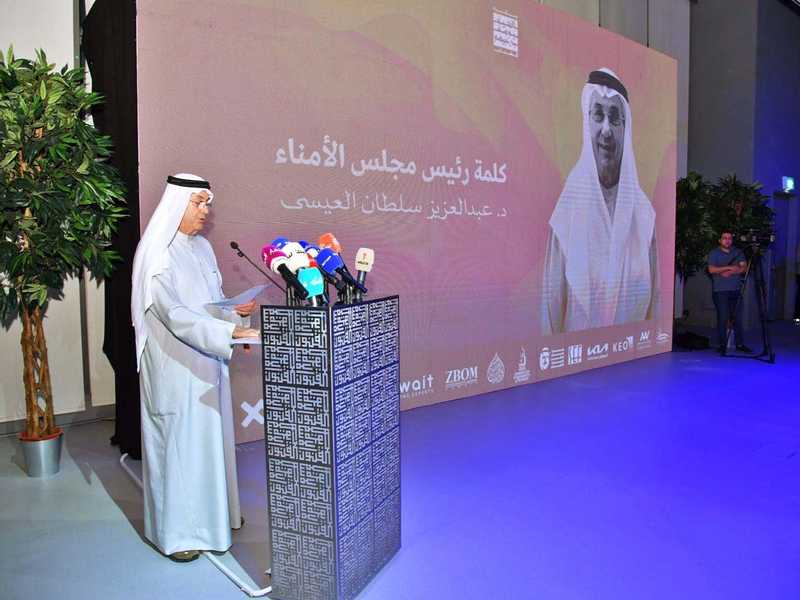
Dr. Abdulaziz Al-Sultan, Chairman of the Board of Trustees of the Sheikh Yusuf bin Isa Al-Qa’aqi Cultural Prize, announced the launch of the prize’s second edition. In a statement, he affirmed that this marks a new phase in the journey of a cultural project inspired by the vision of one of the most prominent pioneers of educational, cultural, and reformist progress in Kuwait, continuing its mission to support thought and creativity and to consolidate the status of knowledge as the foundation for societal advancement.
Al-Sultan stated in his announcement: “When we recall the name of Sheikh Yusuf bin Isa Al-Qa’aqi, we are not merely recalling a historical figure among Kuwait’s pioneers; rather, we are recalling a foundational phase in the trajectory of Kuwait’s cultural, educational, and reformist renaissance. Sheikh Yusuf was one of the foremost advocates who believed that building human capital precedes building infrastructure, and that education and knowledge are the fundamental pillars for the progress and stability of societies. Therefore, the Sheikh Yusuf bin Isa Al-Qa’aqi Cultural Prize does not merely invoke his name as a historical symbol worthy of honor; it draws inspiration from the values he embodied throughout his life: initiative, reform, education, openness to knowledge, faith in dialogue, public service, and social responsibility. These values remain more urgent than ever today, in a world witnessing rapid cognitive and cultural transformations.
Sheikh Yusuf bin Isa demonstrated that the true impact of an intellectual is not measured solely by the number of books he writes, but by the institutions he establishes, the ideas he instills, and the positive transformations he brings to his community. It is from this understanding that the philosophy of the prize emerged, positioning it as a cultural project that honors thought, creativity, and impactful cultural work.
**A Notable Diversity**
The first edition of the prize carried a clear message: the Arab cultural arena remains rich with creative minds and serious researchers. The prize attracted 532 books from 32 Arab and foreign countries, a figure that reflects the status the prize has achieved since its inception and underscores its ability to reach across the Arab world and attract the interest of authors, researchers, and publishing houses. The submissions also revealed a notable diversity in creative fields. The Literature category accounted for the largest share, with 390 novels, representing approximately 73% of total submissions. The History Studies and Research category received 79 books, accounting for nearly 15%, while the Education and Teaching Studies and Research category included 63 books, representing about 12% of the total entries. These figures reflect the growing presence of the Arab novel on one hand, and the sustained interest in historical and educational studies on the other.
The second edition builds upon this success while simultaneously representing a new stage of development. The prize has maintained its focus on supporting the Arab novel as one of the most important forms of expression for human and societal issues. At the same time, it has introduced a new category for Humanities Studies, encompassing philosophy, psychology, sociology, anthropology, and thought, in response to the evolving questions posed by the Arab reality regarding humanity and its transformations.
**Personality of the Year**
Humanities studies have assumed exceptional importance today, particularly in the fields of philosophy, psychology, sociology, anthropology, and thought, amid rapid digital transformations and the artificial intelligence revolution, which raise profound questions concerning identity, knowledge, values, social relations, and the future of humanity itself. Consequently, this new category reflects the prize’s recognition that the future of societies is not built on technological advancement alone, but on a deep understanding of the human condition.
Another distinguishing feature of the second edition is the introduction of the “Personality of the Year” category, an addition carrying deep cultural philosophy. Culture is not created by authors alone; it is also shaped by institution-builders, reformers, initiative leaders, and anyone who leaves a lasting impact on cultural life, even without producing extensive written works. This direction aligns with the biography of Sheikh Yusuf bin Isa Al-Qa’aqi, whose influence extended beyond writing and authorship to the establishment of educational institutions, the consolidation of reformist values, and contributions to shaping cultural and social awareness. Thus, honoring the “Personality of the Year” embodies the prize’s belief that culture is an integrated system, crafted not only by books but also by initiatives, institutions, stances, and societal roles.
As the prize launches its second edition, it sends a clear message to novelists, researchers, and thinkers across the Arab world, inviting them to participate with their works and expressing confidence in the prize’s integrity and cultural mission. The prize bets on original works that offer solid knowledge, raise new questions, open horizons for dialogue, and enrich Arab thought, moving beyond repetition and rehashing. It firmly believes that the Arab writer remains capable of making a real impact on society, and that knowledge will continue to be the most crucial means for confronting challenges, shaping the future, and consolidating the values of reason, openness, and creativity.
**A Long-Term Cultural Project**
The launch of the second edition of the Sheikh Yusuf bin Isa Al-Qa’aqi Cultural Prize is not merely a recurring annual obligation, but a new step in a long-term cultural project aimed at consolidating the prize’s position as a leading Arab platform for celebrating creativity, thought, and impactful cultural work, while enhancing Kuwait’s presence as a hub for Arab cultural activity.
On this occasion, we extend our sincere gratitude and appreciation to those overseeing the prize, the members of the Board of Trustees, the judging committees, supporting entities, and all those who contributed to the success of this ambitious cultural project. The continuity of these efforts is the true guarantee that the prize will become one of the most important Arab cultural awards, and that the name of Sheikh Yusuf bin Isa Al-Qa’aqi will remain present—not merely as part of national memory, but as an inspiration for the future of Arab culture.
