Dr. Ghazi Al-Humaidan: "Tervia" – An Innovative Nasal Spray for Treating Dry Eye
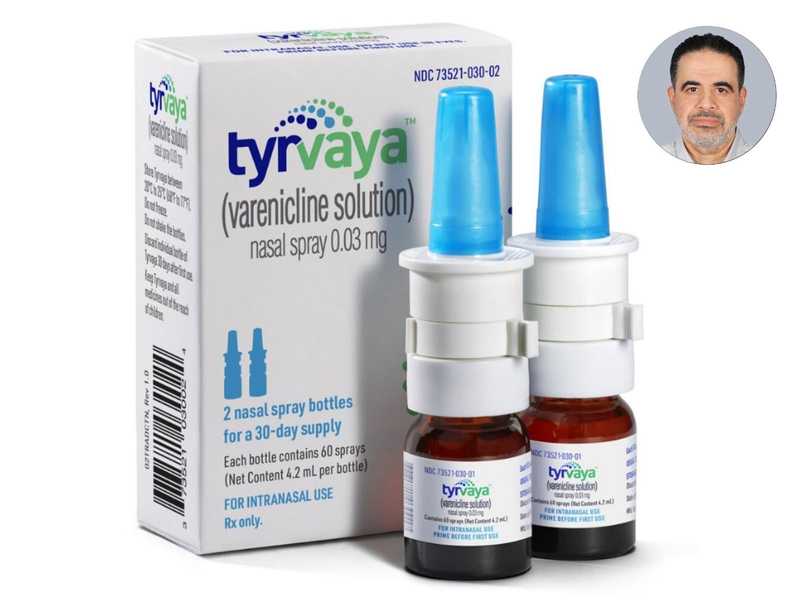
Using a nasal spray to treat dry eye may seem unconventional, but this therapeutic approach has become a reality. A nasal spray known as “Tyrvaya,” containing the active ingredient varenicline, is used to stimulate the trigeminal nerve via the nasal passage. This stimulation triggers natural tear production and reduces the need for artificial tears. To identify the patient groups that may benefit from this modern treatment, it is first necessary to understand the nature of dry eye and its causes, as diagnosing the type of dryness is the fundamental step in selecting the most appropriate therapy.
In this context, Dr. Ghazi Al-Hamdan, a consultant in ophthalmology and eye surgery, holder of the Canadian Board certification and Fellow of the Royal College of Surgeons in Canada, and specialist in corneal diseases and refractive surgery corrections, explained that dry eye is one of the most common eye diseases in Gulf countries due to climatic and environmental conditions. Speaking to Al-Qabas, Dr. Al-Hamdan stated, “Dry eye is a prevalent disease in our Gulf region with multiple causes, leading to varied treatment methods. Accurate diagnosis of the type of dryness remains the cornerstone for choosing the right treatment for each case.”
**Tyrvaya Nasal Spray**
Dr. Al-Hamdan clarified that Tyrvaya is a distinct nasal treatment compared to traditional eye drops. It works by stimulating natural tear secretion rather than merely supplementing with artificial tears. He noted that it is available by prescription and has received approval from the U.S. Food and Drug Administration (FDA). The spray relies on varenicline, which stimulates sensory nerves within the nasal passages, sending signals to the lacrimal glands to produce natural tears with their various components.
He highlighted that the primary uses of Tyrvaya include treating the symptoms and manifestations of dry eye, whether acute or chronic. By encouraging the eyes to produce their own tears, it may reduce reliance on artificial tears. The recommended dosage is one spray in each nostril twice daily, with an interval of approximately 12 hours. The most common side effects include sneezing, coughing, or irritation of the nasal mucous membranes.
**Tear Film Layers and Causes of Dry Eye**
Dr. Al-Hamdan emphasized that successful treatment must be tailored to each patient’s condition, depending on the type and severity of dry eye. Understanding the causes begins with identifying the layers that constitute the tear film:
1. **The Outer Lipid Layer:** Secreted by the meibomian glands in the eyelids, this outer layer protects the eye’s tear film from rapid evaporation.
2. **The Aqueous Layer:** Primarily secreted by the main lacrimal gland, along with some accessory lacrimal glands, this layer consists of water, salts, and antibacterial substances. It forms the primary moisturizing component of the eye.
3. **The Mucinous Layer (Mucin):** Secreted by goblet cells in the conjunctiva, this layer stabilizes the aqueous tear film and distributes it evenly across the conjunctiva and cornea. It moisturizes the eye and protects the ocular surface from dust and germs.
Dr. Al-Hamdan explained that dry eye can sometimes result from a defect in one of these layers individually, but in many cases, the defect involves more than one layer, varying in degree from person to person. “Therefore, as we mentioned, treatment must be prescribed according to each individual’s condition, matching the type and severity of the dry eye,” he said.
**Specialized Techniques for Severe Dryness**
Dr. Al-Hamdan noted that in cases of severe dry eye causing corneal ulcers, doctors may resort to preparing drops from the patient’s own blood using specialized techniques. This is because the patient’s blood contains certain factors that can contribute to treating difficult dryness cases, such as Endoret and PRGF (Platelet-Rich Growth Factors).
He added, “We also sometimes use amniotic membranes, specially prepared for severe dryness cases, such as Omnigen or Prokera.” He further explained, “Since dry eye can result from inflammation of the lacrimal glands, meibomian glands, or conjunctiva, using various types of corticosteroid drops may help treat the dryness. However, this must be done under the supervision of the treating physician and for a limited duration.”
**Other Treatments**
Beyond eye drops, several devices have emerged in recent years to treat dry eye caused by meibomian gland inflammation and rapid tear evaporation, including thermal therapy (LipiFlow) and phototherapy (IPL). Dr. Al-Hamdan clarified that these technologies do not replace the use of therapeutic drops and may require repeated sessions from time to time, depending on the patient’s condition and response to treatment.
He added, “One of the simple interventions we perform in the clinic to treat dry eye is the temporary occlusion of the tear duct opening using various types of lacrimal plugs. Despite its simplicity, this procedure can be a successful solution for some cases that do not respond to other treatments.”
**Moisturizing Methods**
Regarding the treatment of dry eye, Dr. Al-Hamdan pointed to several moisturizing drops that can be used depending on the patient’s condition:
1. **Various Moisturizing Drops:** These contain multiple components that help replace lost tears, such as:
* Hyaluronic acid at various concentrations.
* Other substances that contribute to eye moisturization, such as polyethylene glycol, propylene glycol, hydroxypropyl guar, and sorbitol. These form a flexible protective layer and a set of mineral salts that balance natural tears.
2. **Drops Containing a Lipid Layer Substitute:**
* Meibo drops and Evo Tears drops (which contain perfluorohexyloctane at 100%, making them the first moisturizing drops completely free of water and preservatives).
* Evo Tears, with the same formulation, has been available in Europe since 2015 and can be obtained from pharmacies without a prescription.
* In Kuwait, Optive Omega is currently available. It contains multiple components, including flaxseed oil and castor oil, helping to enhance the lipid layer of tears and reduce evaporation.
3. **Drops that Treat Lacrimal Gland Inflammation and Enhance Tear Secretion:**
* Verkazia drops, which contain cyclosporine at 0.1%.
* Restasis drops, which contain the same substance but at a concentration of 0.05%.
4. **Xiidra Drops:**
* Xiidra drops primarily contain the active ingredient lifitegrast at a concentration of 5% (50 mg/ml). It is a therapeutic anti-inflammatory drop.
* It is available by prescription and differs significantly from traditional artificial tears because it treats the main cause of chronic dry eye.
* It acts as a regulator and inhibitor of LFA-1 proteins on the eye surface, which reduces cell irritation and the secretion of lymphocytes that cause dryness.
5. **Trehalose Drops:**
* These help protect corneal cells from oxidative stress and environmental damage, maintaining water on the corneal surface for extended periods.
**Conclusion**
Finally, Dr. Al-Hamdan highlighted that the importance of the nasal spray lies in its mechanism of action, which stimulates natural tear production. He emphasized that its use does not mean complete abandonment of other eye drops. He stated that dry eye has multiple causes, and therefore, patients often need to combine more than one treatment method to achieve the desired result, depending on the type, severity, and individual condition of each patient.
