Tel Aviv maneuvers: Concerns over Hamas disarmament deal
In a new attempt to shirk its obligations under the ceasefire agreement in Gaza and U.S. President Donald Trump’s plan, the occupation entity expressed “serious security concerns” to the White House regarding the propose
Translated by Qiyas from القبس — Original source
In a new attempt to shirk its obligations under the ceasefire agreement in Gaza and U.S. President Donald Trump’s plan, the occupation entity expressed “serious security concerns” to the White House regarding the proposed disarmament agreement with Hamas, marking some of the first public statements since the U.S. president announced the deal last Thursday. Daron Smeiman, spokesperson for the entity’s prime minister’s office, told The Associated Press on Sunday that intelligence assessments in Tel Aviv indicate that Hamas remains committed to rebuilding its military rather than genuinely disarming. He added that the occupation army would not withdraw from Gaza—where it controls more than 60% of the territory—until Hamas relinquishes its weapons. “Our assessment is that if we redeploy before Hamas is fully disarmed, it will rapidly expand its presence throughout Gaza, rebuild its military infrastructure, threaten settlements again, and seek to carry out another attack similar to the October 7 assault,” Smeiman said. “Disarmament means actually giving up weapons. Nothing less than that.”
His remarks come days after Hamas announced the start of a disarmament process as part of a U.S.-brokered ceasefire agreement signed nine months ago to end a war of annihilation that has raged for nearly three years. While the agreement represents a potential breakthrough in ending the conflict, numerous obstacles, conditions, and lengthy timelines remain.
The process is fraught with hurdles. Trump’s twenty-point ceasefire plan calls on Hamas to hand over its weapons and destroy its extensive tunnel network. It also includes the withdrawal of occupation forces from Gaza, the formation of a new technocratic Palestinian government, the deployment of an international security force, and the reconstruction of the devastated Palestinian sector. Hamas’s disarmament has been a point of contention, leading to a stalemate in negotiations for months. In announcing the agreement on social media on Thursday, Trump stated it would be implemented in carefully planned stages.
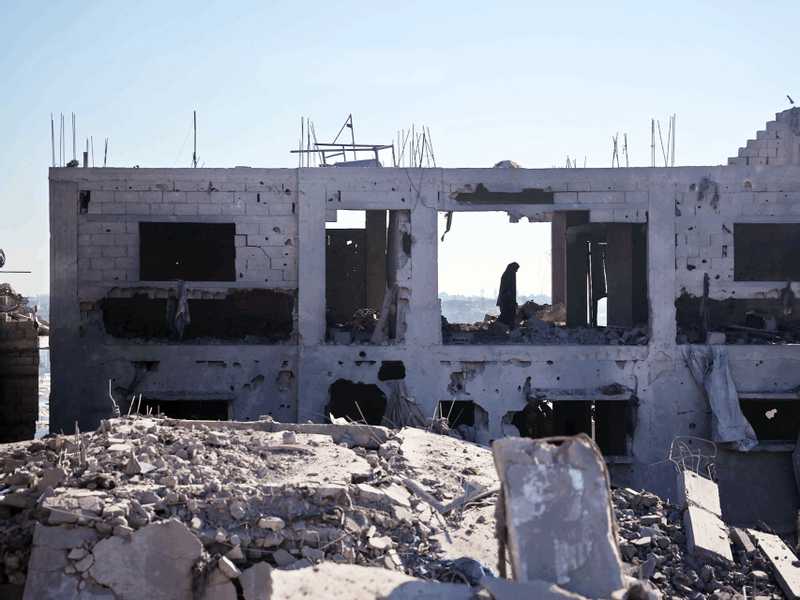
A copy of the agreement, obtained by The Associated Press, indicated that all weapons held by the Hamas-run police would be transferred to the U.S.-backed Palestinian technocratic committee, known as the National Administration for the Management of Gaza, upon their arrival in the sector. The timing of this transfer remains unclear, as it is contingent on other steps. The process of dismantling and storing heavy weapons, demolishing military production sites, and destroying tunnels will begin only after the arrival of the Palestinian committee and the deployment of international forces. This process will be linked to a gradual withdrawal by the occupation, according to the agreement. Areas in Gaza controlled by Tel Aviv have been almost completely destroyed and emptied of their population. Meanwhile, the majority of Gaza’s two million Palestinians live in the remaining part of the sector, where hundreds of thousands reside in squalid tent camps and destroyed neighborhoods.
It appears unlikely that Tel Aviv will withdraw significant forces or make further concessions before the Knesset elections in October. Prime Minister Benjamin Netanyahu faces a difficult re-election battle. While Smeiman stated that Tel Aviv highly values Trump’s commitment to its security and finding a permanent solution, the Netanyahu government’s stance on disarmament is based on detailed intelligence suggesting that Hamas continues to rearm, recruit fighters, and rebuild its military capabilities.
It remains unclear exactly what Tel Aviv conveyed to the White House. Two sources familiar with the agreement told The Associated Press that Tel Aviv informed former British Prime Minister Tony Blair, a member of the peace council chaired by Trump, of its concerns regarding the deal. One source said that among the points Israel demanded was the freedom to conduct military operations in Gaza.
Gaza continues to be bombed. Since the ceasefire agreement was signed last October, the occupation has continued its airstrikes on Gaza, claiming they target Hamas and its infrastructure. Health officials reported that an airstrike hit a residential building in southern Gaza, killing at least 14 people, including children. Nasser Hospital, which received the victims’ bodies, stated that the strike killed three members of a single family, including a four-year-old child. The occupation army said the nighttime airstrikes targeted Hamas military elements, without providing further details. The occupation army also announced that three members of Palestinian factions were killed in recent airstrikes while launching attacks on troops in Gaza: Alaa Imad Khamis Tarmuz, a member of the Army of Islam group; Hassan Ibrahim Shihadeh Qahman, a member of the Islamic Jihad movement; and Ahmad Khader, a commander in Hamas’s Jabalia Battalion.
