Trump delays strike on Iran, contingent on reaching an agreement "quickly"
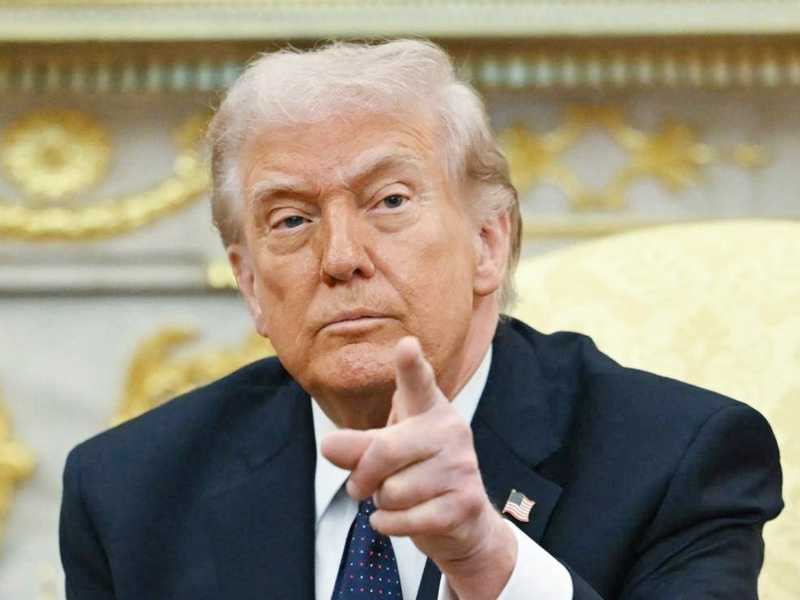
The mediating countries and regional powers, led by the Kingdom of Saudi Arabia, succeeded in preventing the Middle East from sliding back into a comprehensive war spiral, amid the ongoing tensions between Iran and the U
Translated by Qiyas from القبس — Original source
The mediating countries and regional powers, led by the Kingdom of Saudi Arabia, succeeded in preventing the Middle East from sliding back into a comprehensive war spiral, amid the ongoing tensions between Iran and the United States, fueled by Iran’s intransigence in negotiations concerning the Strait of Hormuz and the nuclear file. After threatening to bomb Iran heavily earlier this week, Trump reversed course early yesterday, opting against launching a planned military strike against Iran, as both sides worked to finalize a rapid agreement. No air raids were recorded from either the Iranian or American sides on Sunday, following Trump’s announcement. The region witnessed relative calm in terms of air strikes over the past few days. However, officials warn that tensions remain high.
On Saturday evening, indications emerged from some U.S. officials regarding the possibility of a joint U.S.-Israeli attack on Iran’s energy infrastructure, all in an attempt to pressure Iranians into accepting U.S. terms in ceasefire negotiations. Nevertheless, Trump wrote early Sunday on his Truth Social platform: “The United States of America is fully prepared to confront the Islamic Republic of Iran, with levels of military terrorism, force, and influence not seen since the Second World War.” He continued: “However, we have finally been asked by Iran and other countries in the Middle East to hold off on launching any attack, following an agreement on the terms of the deal. This agreement includes the immediate and full opening of the Strait of Hormuz and the end of the Iranian nuclear threat.” He added: “For the sake of the world’s future interest, as well as for Iran’s continued success and prosperity, I have agreed to cancel the attack, provided we can conclude a deal quickly.” The U.S. President stated that Tel Aviv supports the efforts to reach an agreement. Trump said: “Let’s all get to work, and get the job done.”
Saudi Movement: Saudi Crown Prince Prince Mohammed bin Salman held a telephone conversation with President Trump to discuss developments in the region and their regional and international implications at various levels. Prince Mohammed bin Salman emphasized the necessity of prioritizing dialogue to de-escalate tensions and stressed the importance of making every possible effort to achieve a ceasefire that paves the way for diplomatic solutions yielding positive results to preserve regional and international security and stability, and to prevent being drawn into a wider conflict whose repercussions would extend to regional and global security, according to the Saudi Press Agency (SPA).
The American Axios website reported hours before Trump’s social media post that the Saudi Crown Prince expressed concern over the strike plans. Other regional powers, including Qatar, the United Arab Emirates, Turkey, and Pakistan, also pressured the United States and Iran to de-escalate, noting that an attack on Iranian infrastructure and energy sites would escalate the war. Saudi Foreign Minister Prince Faisal bin Farhan received a call from Iranian Foreign Minister Abbas Araghchi on Saturday evening. According to Reuters, Araghchi also warned the United States against any “adventurous action” in separate calls with senior officials from Turkey and Pakistan, stating that any attacks by the United States or Tel Aviv would be met with a “proportional response.”
Qatar-U.S. Proposal: Channel 12 of Israel reported on Sunday that Trump canceled the strikes after Iranian Foreign Minister Abbas Araghchi agreed to a settlement deal to open the Strait of Hormuz. According to the Israeli report, which relied on diplomats familiar with the situation, the settlement deal brokered by Qatar and the United States allows ships to enter the Arabian Gulf from the Iranian side of the strait and exit from the Omani side. According to the report, Oman agreed to the deal but sought guarantees that the Iranian Revolutionary Guard would respect the agreement, a guarantee Qatari officials are trying to secure. The report did not mention any tolls for crossing the strait, which had been a major point of contention. However, the semi-official Iranian Fars News Agency reported on Sunday that a member of the Iranian negotiating team called the Israeli media report “false.”
Mohammad Mardani, a member of the Iranian negotiating team, mocked President Trump when he announced the cancellation of the attack, writing: “Everyone knows this is false news; Trump has surrendered.” Iranian media reacted with joy and sarcasm to Trump’s announcement, claiming he had backed down. They stated that Tehran had shown no signs of changing its position regarding the Strait of Hormuz and had neither approved nor requested the cancellation of attacks, emphasizing that “as long as the United States continues its hostile actions, the Strait of Hormuz will remain closed to ships.”
Acting Iranian Defense Minister Majid Al-Reza stated that Tehran considers any threat from its adversaries “real and credible,” even if presented as part of a psychological war. He added that Iran would use these threats as a basis to increase its military readiness, enhance deterrence, and improve its military capabilities: “We will not be surprised.”
Channel 12 of Israel: Tel Aviv learned of the attack cancellation from Trump’s post. In announcing the cancellation of strikes on Iran, U.S. President Donald Trump said: “Israel joins me in this commitment.” However, Israeli Prime Minister Benjamin Netanyahu had not yet commented—which is hardly surprising. Channel 12 reported that Israeli officials discovered that Trump had decided to cancel the planned major attack on Iran through his post on Truth Social. The channel claimed that the U.S. Central Command was also not notified in advance. While no official reaction was issued in Tel Aviv, Energy Minister Eli Cohen said on Sunday that there is close security and intelligence coordination between Israel and the United States regarding everything happening in the region. He told Army Radio: “Whether an agreement is reached or not, and regardless of any external commitments, if Iran attempts to resume its nuclear program or develop its ballistic missile industries, we will be there. We will take action, and we will strike.”
Netanyahu was in the Oval Office last Tuesday, perhaps hoping to persuade the U.S. President with Israel’s arguments regarding Iran and strongly wishing for the United States to seriously resume its military campaign against Iran.
Qatari Movement to Contain Escalation: Qatari Prime Minister and Foreign Minister Sheikh Mohammed bin Abdulrahman Al Thani held separate telephone calls on Sunday with Kuwaiti Foreign Minister Sheikh Jaraah Jaber Al Ahmed Al Sabah, Jordanian Deputy Prime Minister and Foreign Minister Ayman Safadi, and Saudi Foreign Minister Prince Faisal bin Farhan Al Saud. The calls covered the latest regional developments and diplomatic efforts to de-escalate tensions and enhance security and stability in the region. According to the Qatari Ministry of Foreign Affairs, the communications reviewed the cooperative relations between Qatar and the three countries and ways to support and develop them, in addition to “the rapid developments in the region, emphasizing the importance of joint coordination at the current stage.”
The Prime Minister and Foreign Minister emphasized “the necessity for all parties to commit to dialogue and diplomatic means, and to work on implementing what was agreed upon within the framework of the memorandum of understanding between the United States and the Islamic Republic of Iran, including ensuring freedom of navigation in the Strait of Hormuz.” He stressed that “preserving regional security and safeguarding achieved gains require prioritizing dialogue and avoiding any steps that could increase tensions,” reiterating Doha’s support for all efforts aimed at defusing the crisis and reaching a comprehensive agreement that achieves sustainable stability in the region.
Rubio: The Iranian Regime Must Change: U.S. Secretary of State Marco Rubio stated in an interview with Fox News on Saturday night: “Regime change is not a goal for the United States, but the Iranian regime must change, and it must stop trying to export the revolution.” He added: “Gulf countries now realize that Iran is no longer a theoretical threat, but a real threat to their security and economic interests. As a result of the war, the world will become less dependent on energy passing through the Strait of Hormuz.”
Meanwhile, efforts continue on the Iranian side, with reports indicating that Foreign Minister Abbas Araghchi spoke overnight with Turkish Foreign Minister Hakan Fidan, the Pakistani Army Chief, and Saudi Foreign Minister Faisal bin Farhan Al Saud.
