Iraqi Chargé d'Affairs Ali Al-Taai to Al-Qabas: We will not allow the use of our land to harm Kuwait's security
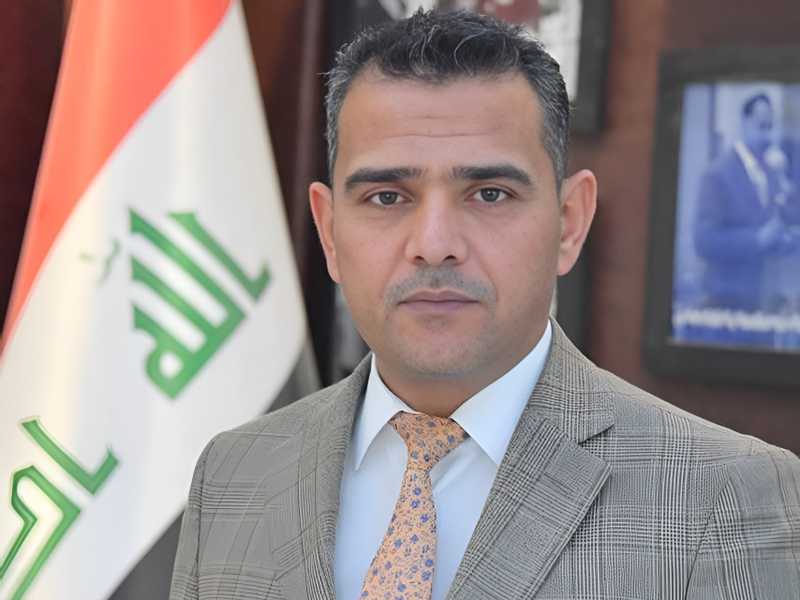
Mays Al-Sukari: The Iraqi Chargé d’Affaires in Kuwait, Ali Al-Taee, was unequivocal in a series of direct messages addressed to Kuwait’s leadership and people on the occasion of the 36th anniversary of the Iraqi invasion of Kuwait. He affirmed that the new Iraq is turning the page on the past, adhering to the principles of good neighborliness and respect for state sovereignty, and that Kuwait’s security and stability are of great importance to Iraq. He stressed Baghdad’s commitment to preventing the use of its territory or airspace to harm Kuwait’s security or that of any Gulf state.
In an exclusive interview with Al-Qabas, Al-Taee emphasized that Iraqi-Kuwaiti relations have moved beyond the painful phase of the past into a new era based on trust, cooperation, and shared interests, supported by the leaderships of both countries. He confirmed the existence of a joint will to resolve outstanding issues through dialogue and diplomatic channels, alongside expanding political, economic, and security cooperation, and welcomed increased Kuwaiti investments in Iraq.
“We affirm to the brotherly Kuwaiti people that Iraq remains committed to the principles of good neighborliness and respect for state sovereignty. Iraqi-Kuwaiti relations are built on a solid foundation of mutual respect and shared interests. The two countries have moved beyond a painful phase in their past and are now building a future characterized by cooperation and trust,” he said.
Regarding the importance of avoiding individual statements or positions that could be misinterpreted and affect the trajectory of bilateral relations, he stated that “statements and positions must align with national responsibility and the spirit of brotherhood between the two countries, avoiding any individual stance that could be misunderstood or negatively impact bilateral relations, which are under the patronage and attention of both leaderships and peoples.”
When asked whether Iraq has truly moved past the legacy of the invasion or if further steps are needed to consolidate trust between the peoples, Al-Taee affirmed that Iraq has taken significant steps to overcome the effects of the past and strengthen relations with Kuwait by building bridges of political, economic, and people-to-people cooperation. He emphasized, however, that consolidating trust is an ongoing process requiring further communication and cooperation between the two countries.
On the role of his country in cementing the reality of what happened and promoting a culture of respecting state sovereignty—especially given that a new generation in Iraq did not live through the invasion events—he clarified that the Iraqi state is working to raise awareness among new generations about the importance of respecting state sovereignty, entrenching a culture of peace and cooperation, and affirming that relations between peoples are based on mutual respect and non-interference in others’ affairs.
In response to Al-Qabas’s question, “After 36 years since the invasion, can we clearly tell Kuwaitis that the new Iraq considers Kuwait’s security and stability an inseparable part of its national security, and that any attack on Kuwait is considered an attack on Iraq as well?” Al-Taee said: “Iraq affirms that regional security is interlinked, and that Kuwait’s security and stability are of great importance to Iraq. Relations between the two countries are based on the foundations of brotherhood, good neighborliness, and shared interests, with full commitment to respecting state sovereignty and rejecting any threat to the sovereignty of both countries.”
Regarding the developments witnessed in relations between the leaderships of both countries, Al-Taee noted that continuous communication between the two leaderships has contributed to enhancing trust and expanding areas of cooperation, supporting coordination on political, economic, and security files in a manner that serves the interests of both countries and their brotherly peoples.
On the most prominent files being worked on by both sides, remaining issues, and the possibility of closing them in the near future, he said that Iraq and Kuwait are focusing on enhancing economic and trade cooperation, developing bilateral relations, and addressing common files in a spirit of brotherhood and dialogue. He confirmed the existence of a joint will to complete remaining files through diplomatic channels. He clarified that among these files is the effort to complete the demarcation of maritime borders in a manner that ensures the interests of both countries, as well as concluding the file of missing Kuwaitis, which the Iraqi government treats as a purely humanitarian issue. He expressed understanding of the suffering of the families of the missing, noting that thousands of Iraqis suffered the same fate during the rule of the ousted regime, and their families are still searching for them. He affirmed that many Iraqis share this pain and tragedy with their Kuwaiti brothers.
In response to Al-Qabas’s question regarding Baghdad’s vision for turning the page on the past and moving toward broader economic and investment relations, Al-Taee affirmed that Baghdad views Kuwait as an important partner and that the future must be based on economic and investment cooperation, leveraging available opportunities to achieve joint development and the interests of both peoples. He pointed out that Iraq believes that closing the chapter on the past, with all the tragedies inflicted on the two brotherly countries due to the aggressive policies of the previous regime toward neighboring states, represents the cornerstone for developing brotherly relations between the two countries at all levels.
He noted that the visit of Interior Minister Sheikh Fahad Al-Yousef to Al-Wafra, and his meeting with Basra Governor Asaad Al-Eidani, received widespread attention. The visit reflected both countries’ commitment to enhancing border cooperation and developing coordination between relevant institutions, facilitating the movement of citizens and trade, and strengthening security and stability. He added that the Interior Minister’s statements had a clear impact, reflected in media coverage and official and public responses, which received the brotherly statements with great positivity.
Al-Taee confirmed the shared interest between Iraq and Kuwait in developing border crossings and improving their efficiency to facilitate the movement of trade and travelers, enhance security cooperation in combating smuggling and organized crime, and protect the interests of both countries.
Regarding Iraq’s stance on any attack targeting Kuwait’s security or that of any Gulf state, he stressed that Iraq’s position is firm in rejecting any threat targeting the security of brotherly states in the region. He affirmed that Kuwait’s and the Gulf’s security are of great importance to regional stability, and that Iraq is committed to not allowing its territory or airspace to be used to harm Kuwait’s security or that of neighboring states.
**Expanding Kuwaiti Investments**
The Iraqi Chargé d’Affaires in Kuwait, Ali Al-Taee, welcomed increased Kuwaiti investments in Iraq, affirming that the Iraqi government is working to provide a suitable and secure environment for investors by developing laws and enhancing legal guarantees and protections for investments.
**Protecting Gulf Security**
On the role Iraq can play in protecting Gulf security rather than being a theater for conflicts amid regional tensions, Al-Taee said: “Iraq seeks to be an element of stability and connectivity in the region through a policy based on dialogue, cooperation, and respect for state sovereignty, far from the logic of conflicts and wars.” He also affirmed that Iraq views energy security and sea lanes as a shared interest for regional states and rejects any threat affecting their security and stability.
