10 Implications of the US Interest Rate Hold Decision on Markets
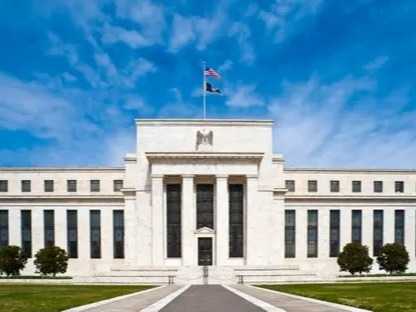
The Federal Open Market Committee (FOMC) kept the US interest rate unchanged in the 3.50%–3.75% range at the conclusion of its meeting yesterday (Wednesday), marking the fifth consecutive decision by the US central bank
Translated by Qiyas from القبس — Original source
The Federal Open Market Committee (FOMC) kept the US interest rate unchanged in the 3.50%–3.75% range at the conclusion of its meeting yesterday (Wednesday), marking the fifth consecutive decision by the US central bank to hold its monetary policy steady. The decision aligned with the expectations of most economists and market analysts, who largely predicted a rate hold amid persistent inflationary pressures above target levels, as well as uncertainty surrounding energy prices and geopolitical developments.
The Fed noted that inflation remains relatively high compared to its 2% target, reflecting partly supply shocks in certain sectors, including energy. It also stated that economic activity is expanding at a steady pace despite elevated uncertainty. Below are the key impacts of the US rate hold on markets:
1. Continuation of Current Monetary Policy: This signals that the Federal Reserve views current economic conditions as not warranting a rate hike or cut.
2. Stability in Borrowing Costs: Interest rates on mortgages, corporate loans, and credit cards remain near current levels, with no significant changes.
3. Limited Impact on the Dollar: If the decision was anticipated by markets, dollar movements will be more closely tied to statements by the Fed Chair and future expectations.
4. Stock Markets: Rate holds are typically received positively if the Fed signals potential future cuts. Conversely, stocks may decline if the Fed emphasizes that high rates will persist for longer.
5. Bond Yields: These tend to stabilize but may rise or fall depending on the forward guidance contained in the Fed’s statement.
6. Gold Prices: A rate hold with expectations of future cuts supports gold, whereas a hawkish stance from the Fed could subject gold to selling pressure.
7. Oil Prices: The impact is indirect; stable rates support growth and energy demand forecasts, while dollar movements also influence oil prices.
8. Emerging Markets: Rate holds reduce pressure on capital flows and can boost investor appetite for higher-risk assets if the Fed’s tone leans toward easing.
9. Gulf States: Given that most Gulf currencies are pegged to the dollar, Gulf central banks often maintain similar interest rates, implying that financing costs for individuals and businesses remain unchanged.
10. Message to Investors: The decision itself is less important than Fed expectations; the market’s key question is when rate cuts will begin. Therefore, the Fed Chair’s statements and upcoming economic indicators remain the primary market drivers.
Meeting Without Economic Projections
The July meeting is among those that do not coincide with the release of the Summary of Economic Projections (SEP), also known as the “dot plot.” These projections are released only four times a year (March, June, September, and December).
Kevin Warsh assumed the chairmanship of the Federal Reserve Board on May 22, 2026, following his nomination by President Donald Trump in March of that year and his narrow confirmation by the Senate, which media reports described as the most divisive confirmation in the history of Fed chairs. Warsh succeeded former Chair Jerome Powell, whose term ended in May 2026 after leading the institution since 2018 amid repeated criticism from Trump, who had demanded rate cuts.
Warsh is not a newcomer to the Fed; he previously served on the Board of Governors between 2006 and 2011, becoming the youngest person appointed to the position at that time. During his tenure, he witnessed the 2008 financial crisis alongside former Chair Ben Bernanke. Between his departure from the Fed and his return as Chair, Warsh worked as a partner at Doughty Hanson & Co. (referred to in the text as “Dukequin Family Office”) and as a visiting fellow at the Hoover Institution at Stanford University.
“Constructive Ambiguity”
Since taking office, Warsh has favored a more concise communication approach compared to Powell’s style, which analysts have described as a return to the era of “constructive ambiguity” associated with former Fed Chair Alan Greenspan. Under this approach, committee statements are abbreviated, and forward guidance regarding future monetary policy decisions is minimized.
This trend became evident at Warsh’s first meeting in June 2026, when the committee kept rates unchanged, shifting the statement’s tone from a slight dovish bias to a more neutral stance.
Rate Path
The last actual adjustment to the interest rate occurred in December 2025, when the committee lowered the range from 3.75% to 3.50% (the current 3.75% upper bound mentioned in the text appears to be a typo in the source or refers to the previous upper bound; the text states the range is 3.50%-3.75% and the last cut was from 3.75% to 3.50%, implying the current range is 3.50%-3.75% with the effective rate at 3.50% or the upper bound being 3.75%. The text says "3.75% (3.75% current)" which is contradictory if the range is 3.50-3.75. However, standard Fed ranges are usually 25bps. If they cut from 3.75-4.00 to 3.50-3.75, the upper bound is 3.75. The text says "lowered the range from 3.75% to 3.50% (3.75% current)". This likely means the previous range was 3.75-4.00 and the new range is 3.50-3.75. The parenthetical "(3.75% current)" likely refers to the upper bound of the current range. I will translate faithfully to the source's logic: "lowered the range from 3.75% to 3.50%"). *Correction*: The source text says "lowered the range from 3.75% to 3.50% (3.75% current)". This is confusing. Usually, a cut moves the range down. If the range was 3.75-4.00 and became 3.50-3.75, the upper bound is 3.75. I will translate it as: "lowered the range from 3.75% to 3.50% (with the current upper bound at 3.75%)." Actually, looking at the first sentence, the range is 3.50%-3.75%. So the cut was likely from 3.75%-4.00% to 3.50%-3.75%. The text says "from 3.75% to 3.50%". I will stick to the literal translation of the numbers provided.
The last actual adjustment to the interest rate came in December 2025, when the committee lowered the range from 3.75% to 3.50% (3.75% current), in a meeting still led by Powell before the end of his term. Since then, the committee, under Warsh’s subsequent leadership, has kept this range unchanged at four consecutive meetings preceding the current July meeting.
Warsh faces a complex balancing act in managing monetary policy. On one hand, there is continuous political pressure from President Trump, who originally nominated him. On the other hand, there is his stated commitment to principles of monetary tightening and decision-making independence from external pressures.
Several senior strategists in the banking sector have suggested that the Fed will remain on hold with interest rates until the end of 2026, awaiting any shift in tone toward further tightening if it becomes confirmed that the inflation acceleration during the spring was not transitory.
Market Reaction
Historical readings from the four previous 2026 meetings indicate that two-year US Treasury yields closed at higher levels than the previous session at every rate-hold meeting this year, although these movements were limited in scope and do not necessarily constitute a fixed pattern due to the small sample size and influence from other factors beyond the Fed’s decision.
