“Visible”.. Omani stories that place humanity at the center of the narrative
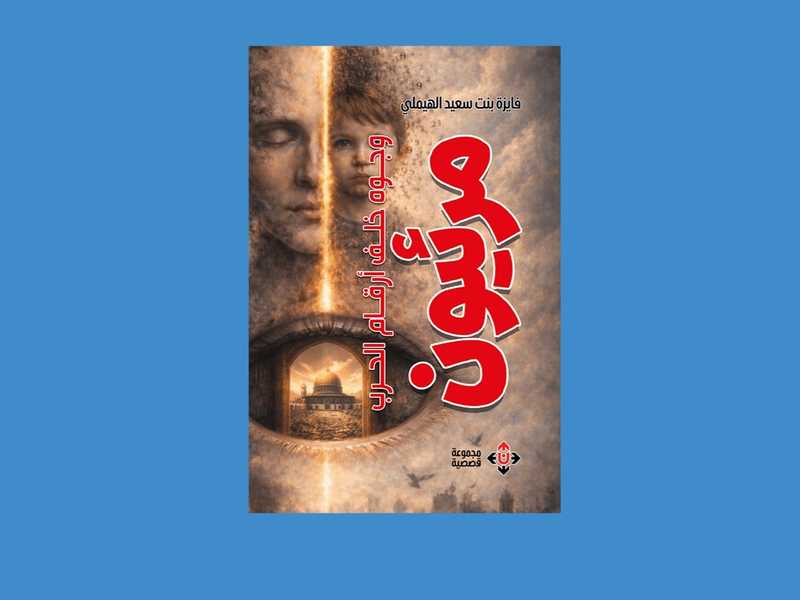
The stories of Omani writer Fayza bint Said Al-Haimili, in her collection “The Visible,” fall within the realm of humanistic literature that blends literary narrative with documentary vision. The stories evoke the atmosphere of conflicts—such as the war on Gaza—and the psychological and emotional questions they leave in the minds of individuals. They rely on a calm, dense language and a narrative structure based on suggestion and sensory details, where small things, such as a house door, a piece of bread, or a child’s voice, become symbols that encapsulate the meaning of loss, displacement, and the search for safety. The collection sheds light on the impact of conflicts on human lives, focusing on the small details that accompany them, such as fear, waiting, nostalgia, and the attempt to cling to life despite everything. It takes the reader on a journey through the inner worlds of multiple characters facing displacement, loss, and absence, not only through major events but also through simple daily moments that reveal human fragility and strength simultaneously.
The collection begins with stories that move between different characters experiencing the effects of war in varied ways: from a doctor trying to save the wounded under impossible conditions, to a mother waiting for a return, to a child who does not know where to go, and other characters who carry within them a constant sense of displacement and absence. The texts also explore the idea of collective memory, and how places and small details remain present in the human consciousness even after many years have passed since the loss. The stories in the collection, whose cover is adorned with a painting by artist Khames Darwish Al-Balushi, rely on a calm psychological construction that avoids direct rhetoric, focusing instead on transient human scenes that leave a deep emotional impact. The writer employs internal dialogue and concise description to highlight emotions associated with fear, waiting, and helplessness, in an attempt to present a human image of war, far removed from numbers and statistics.
In the story “Hands of a Covenant,” we read: “He thought of her hands when she was a child, and of the walls on which she had drawn, and of the dough, and of all the things made by hands that we do not notice until they are gone. He did not cry. Not because he did not want to, but because tears also require energy, and he no longer had any of that.” In the story “Small Children,” we read: “Their voices were like breaths, light and fragile like their bodies. These voices that used to fill the room are no longer there. He hears them now in the silence.” In the story “Return to Haifa,” we read: “Three generations, and the blue door is still far away.” In the story “Bread for Twelve,” we read: “That look he cast when Ibrahim left is still there, hanging in the air. No one has taken it away.” In the story “Before Amin Speaks,” we read: “From the pulpit, he finally said: Today I do not have a speech. (No one moved in the hall). I only have what each of you has: a broken heart, and a prayer that finds no words.” In the story “Present,” we read: “He called her to reassure himself that she was still there.” In the story “Life,” we read: “For one second, no sound came from him. A second that stretched like an eternity. The women held their breath. Umm Khalid closed her eyes. Then she screamed. And outside—at that very moment—the shelling fell silent. No one knows why. No one asked.”
Through these narrative examples and others, the writer attempts to re-present the human being as the center of the story, not merely as a number in news reports or statistics, exploring the impact of war on both individual and collective memories, and on the small details that remain embedded in people’s lives even after events have ended.
