Dr. Asrar Al-Sayed Hashem: 7 Tips to Avoid Fluid Retention in the Body During Summer
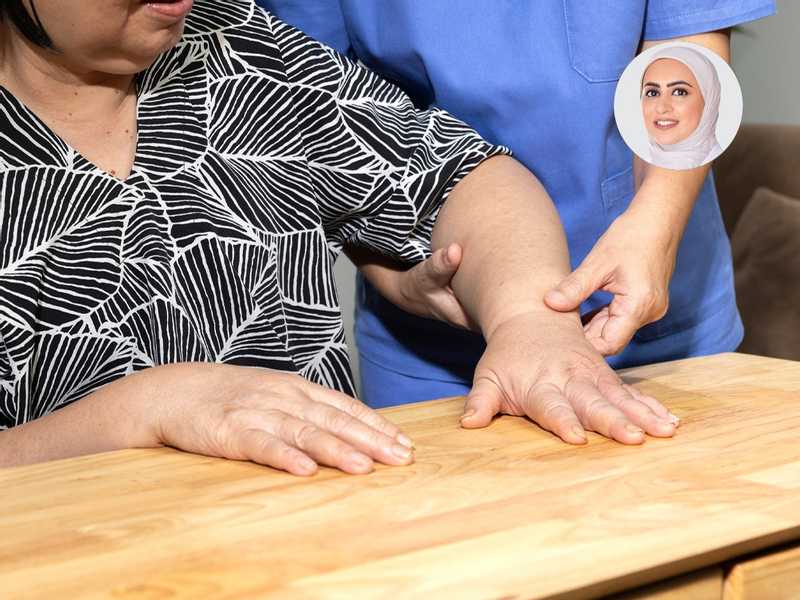
Dr. Wala’a Hafez – Many people may assume that swollen feet or puffy fingers are merely transient symptoms, but they can sometimes indicate fluid retention, a common condition resulting from various causes ranging from daily habits and hormonal changes to health issues that require medical evaluation. While some associate sudden weight gain with fat accumulation, doctors emphasize that fluid retention may be the true cause of this rapid change. How does fluid retention occur? What are its main causes and symptoms? When should one consult a doctor? And what are the best ways to alleviate it and prevent its recurrence? These questions and others are answered by Dr. Asrar El-Sayed Hashem, Consultant of Internal Medicine, Endocrinology, Diabetes, and Metabolic Disorders at Al Salam Hospitals, in this interview that sheds light on scientific facts and corrects major misconceptions about fluid retention.
Dr. Asrar told Al-Qabas: “Fluid retention is not a disease in itself, but rather a message sent by the body. The doctor’s role is to identify its cause; it may be a minor, temporary symptom, or in some cases, the first indicator of a disease requiring early diagnosis and treatment. Therefore, it should not be ignored. Moreover, using diuretics or herbal remedies without medical consultation may cause complications that outweigh any expected benefit. Accurate diagnosis remains the first step toward choosing the appropriate treatment.”
**“Fluid Retention”... or Fat Accumulation?**
Dr. Asrar El-Sayed Hashem emphasized that fluid retention is an abnormal accumulation of water within body tissues and is not limited to swollen feet, as many believe. It can also involve fluid buildup in the lungs or abdomen, depending on the cause and underlying condition. She clarified that weight gain due to fat accumulation usually occurs gradually over weeks or months and is not accompanied by obvious swelling. In contrast, fluid retention is characterized by a rapid increase in weight or body size over a few days, along with swelling in various areas. In some cases, pressing the skin with a finger for a few seconds may leave a temporary indentation or pit, a sign that may indicate fluid accumulation.
**Main Causes**
Dr. Asrar El-Sayed Hashem pointed out that fluid retention is not always an indicator of a health problem; it can be temporary and physiological, resulting from consuming a salt-rich meal, prolonged standing or sitting, travel, or hormonal changes. Conversely, fluid retention can be a sign of diseases requiring medical evaluation, such as heart failure, kidney and liver diseases, thyroid disorders, and as a side effect of certain medications.
She told Al-Qabas: “Fluid retention can be normal and temporary. If the swelling is mild and resolves within one or two days after reducing salt intake, increasing physical activity, or elevating the feet, it is generally not a cause for concern. However, if the swelling is severe or persistent, or is accompanied by shortness of breath (whether during exertion or when lying down), decreased urine output, or swelling in one leg accompanied by pain and redness – as may occur in cases of cellulitis – one should consult a doctor immediately, as these symptoms may indicate a health problem requiring medical intervention.”
**Indicator of Various Diseases**
Dr. Asrar El-Sayed Hashem clarified that fluid retention is a common symptom accompanying several diseases, rather than a disease in itself. It appears in cases of heart failure due to the heart’s reduced ability to pump blood efficiently, prompting the body to retain water and salts. It may also occur in kidney patients due to the kidneys’ declining ability to eliminate excess fluids and salts, and in advanced liver diseases due to decreased blood albumin levels and increased portal vein pressure. She noted that fluid retention may also accompany hypothyroidism and certain disorders of the venous and lymphatic systems. She emphasized that identifying the true cause begins with taking the patient’s medical history and performing a clinical examination, followed by appropriate laboratory or imaging tests to reach an accurate diagnosis and formulate a suitable treatment plan.
**Hormones... Play Their Role**
Dr. Asrar El-Sayed Hashem stressed that hormones play a crucial role in regulating the body’s fluid balance. Therefore, some women may notice slight swelling or fluid retention before their menstrual period due to changes in estrogen and progesterone levels, a temporary condition that usually resolves on its own. She added that fluid retention can also occur during pregnancy due to normal physiological changes and increased blood volume, and is generally normal. However, she stressed that severe or sudden swelling, especially if accompanied by high blood pressure, requires immediate medical consultation to rule out preeclampsia, which necessitates early diagnosis and treatment to safeguard the health of both mother and fetus.
**Foods and Medications... That Increase Fluid Retention**
Dr. Asrar El-Sayed Hashem mentioned that salt is the most common dietary factor in increasing fluid retention. She noted that sea salt and rock salt (Himalayan salt) do not differ in their effect in this regard, as it depends on the amount of sodium consumed, not the type of salt. She added that fast food and processed foods are among the main sources of sodium, along with other salt-rich foods such as pickles and salty cheeses, which increase the likelihood of fluid retention in the body. She explained that excessive carbohydrate consumption can also lead to water retention, as water is linked to glycogen stores in the body. She also pointed out that certain medications may contribute to increased fluid retention, including anti-inflammatories, cortisone, some blood pressure medications, and hormonal treatments. She emphasized the need to consult a doctor if swelling appears after starting a new medication, to evaluate the condition and determine whether the drug is the cause and take appropriate action.
**Misconceptions**
Dr. Asrar El-Sayed Hashem stressed that one of the most common misconceptions is the belief that reducing water intake helps eliminate fluid retention. She clarified that this belief is incorrect, as reducing fluids may cause the body to retain water to maintain internal balance, potentially worsening the problem rather than solving it. She said: “Most people need to drink an adequate amount of water appropriate for their age, weight, physical activity level, and ambient temperature; therefore, there is no single quantity that suits everyone.” She added that one simple way to ensure adequate hydration is to have pale yellow urine most of the time. She noted the need to increase fluid intake during high temperatures, physical activity, or excessive sweating, as well as in cases of diarrhea or vomiting to replace lost fluids.
She clarified that these recommendations do not apply to everyone; patients with heart, kidney, or liver disease may need to restrict fluid intake according to their doctor’s instructions, so water intake advice cannot be generalized to all cases. She explained that common habits that increase fluid retention include prolonged sitting or standing without movement, excessive salt consumption, reliance on ready-made and processed foods, lack of physical activity, and obesity. She warned against another common belief: resorting to diuretics or herbal diuretics to treat any swelling. She emphasized that this approach may be inappropriate and could cause complications in some cases if used without a medical diagnosis to determine the true cause of fluid retention.
**Treatment Approaches**
Dr. Asrar El-Sayed Hashem stressed that treating fluid retention primarily depends on addressing the underlying cause, not the swelling itself. She explained that many cases improve by following simple measures, such as reducing salt intake, elevating the legs, walking regularly, or using compression stockings in some cases, as recommended by a doctor. She added that diuretics are effective in specific cases, such as heart failure and certain kidney and liver diseases, but they are not suitable for all patients and should not be used without medical supervision. She warned that taking diuretics without need or a medical prescription can lead to complications, most notably dehydration, electrolyte imbalances, low blood pressure, and potentially kidney function deterioration. She emphasized that proper treatment always begins by identifying the root cause of fluid retention.
**Preventive Advice**
Dr. Asrar El-Sayed Hashem provided a set of recommendations to help maintain the body’s fluid balance and reduce retention, especially during summer or while traveling on long trips, including:
* Reduce salt consumption and foods high in sodium.
* Maintain a healthy weight.
* Walk or engage in regular physical activity.
* Drink an adequate amount of water according to the body’s needs.
* Avoid sitting or standing for long periods without movement.
* During air or car travel, it is recommended to move the legs every hour and walk when possible to stimulate blood circulation.
* Elevate the legs when resting to help reduce swelling.
She emphasized that recurrent fluid retention or increasing severity over time requires medical consultation, and one should not rely solely on home remedies, as early diagnosis helps identify the true cause and implement appropriate treatment before any complications occur.
