Making Mars a more habitable environment is more realistic than previously thought
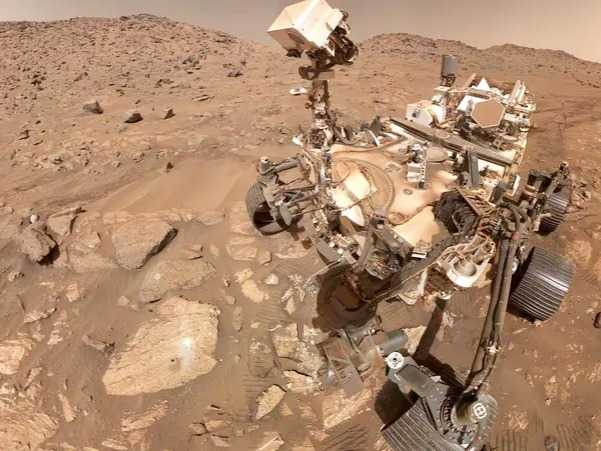
Terraforming Mars involves transforming the planet into an environment suitable for life by undertaking a process of planetary or lunar reshaping to enable it to support humans and other Earth-like organisms. In theory, this requires altering its atmosphere, climate, and surface to make them more Earth-like, by adding oxygen, creating stable bodies of water, and providing temperatures suitable for life. Mars has long been considered the prime candidate, with proposals ranging from releasing greenhouse gases to warm the planet to using microorganisms capable of slowly generating oxygen over many centuries. According to a report published on Science Daily, the concept of terraforming Mars has remained confined to science fiction for decades. Although the idea of transforming this cold, dusty planet into a habitable world has inspired generations, most scientists have regarded it as technologically unattainable. However, a summary of a recent workshop indicates that recent advances make terraforming Mars a viable field for scientific research. The summary for the Green Mars 2025 workshop was prepared by Dr. Erica de Benedetti, CEO of Pioneer Labs. She argues that although terraforming Mars was considered impossible just a few decades ago, tremendous technological progress has changed this assessment. Potential significant reductions in the launch costs of SpaceX’s Starship, along with advances in synthetic biology and climate modeling, have shifted the debate. Rather than questioning whether terraforming Mars violates the laws of physics, researchers believe the more important questions are whether humanity should pursue this goal and what the safest path forward would be. Studies indicate that Mars contains enough frozen water to form an ocean covering approximately four million square kilometers, with an average depth of about 300 meters.
