Dr. Jowan Stein: Plasma Injection.. An Adjunct Therapeutic Option for Knee Osteoarthritis
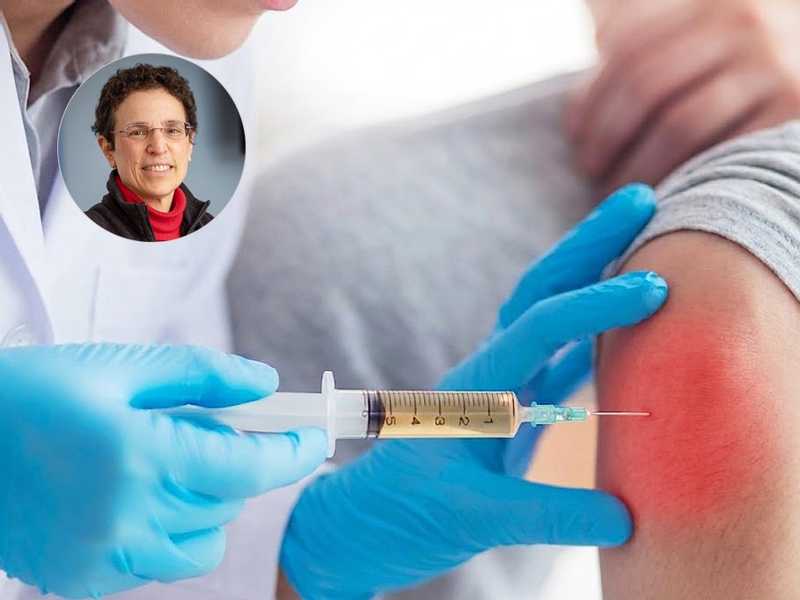
Dr. Wala’a Hafez: As the number of patients with knee osteoarthritis rises, many are seeking treatments that alleviate pain and delay the need for surgery. Among the modern therapeutic options that have garnered significant attention in recent years is Platelet-Rich Plasma (PRP) injection, which is promoted as a treatment that harnesses the body’s natural repair and regeneration capabilities. However, the most critical question remains: Have scientific studies truly proven its efficacy?
Dr. Joan Burg Stein, a professor of medicine at the Albert Einstein College of Medicine and Associate Director of the Sports Medicine Fellowship Program in the Department of Physical Medicine and Rehabilitation, answers this question. She founded and directs the Regenerative Medicine Program in the Sports Medicine Department at Brigham and Women’s Hospital. Her research focuses on treating sports injuries using regenerative injections. Based on a review published by Harvard Health, she outlines the latest scientific evidence regarding this technology, what it can offer patients with knee osteoarthritis, and the limits of its effectiveness. Recent studies also indicate that treatment outcomes remain inconsistent, and the quality of available scientific evidence is not yet sufficient to definitively confirm its efficacy.
**PRP Injections**
Dr. Stein explained that this technology involves drawing a small amount of the patient’s blood and placing it in a centrifuge to separate the plasma, which contains a high concentration of platelets. This plasma is then injected into the knee joint. Platelets contain proteins and growth factors believed to help reduce inflammation and stimulate tissue repair, prompting researchers to study their use in cases of joint osteoarthritis.
**Why Is It Used for Knee Osteoarthritis?**
Dr. Stein noted that knee osteoarthritis, or degenerative joint disease, is one of the leading causes of pain and disability among older adults. It gradually leads to the wearing down of articular cartilage, resulting in the following:
• Pain during movement.
• Joint stiffness.
• Difficulty walking and climbing stairs.
• Reduced quality of life.
Since cartilage cannot easily regenerate, most current treatments focus on pain relief and improving mobility rather than rebuilding the cartilage, she added.
**What Do the Studies Say?**
Dr. Stein pointed out that the Harvard review indicates that research results have been mixed. Some studies showed improvement in:
1. Pain intensity.
2. Mobility.
3. Joint function.
However, other studies found no significant difference compared to conventional treatments or placebo. She explained that this variability is due to differences in plasma preparation methods, the number of injections, platelet concentration, and patient selection, making it difficult to compare results across studies.
**Can It Rebuild Cartilage?**
Regarding the technology’s ability to rebuild knee cartilage, she stated that, so far, there is no strong evidence confirming that PRP injections regenerate damaged cartilage. Researchers believe the potential benefits lie primarily in:
● Reducing inflammation.
● Alleviating pain.
● Improving knee function for a limited period.
Repairing structural joint damage remains scientifically unproven.
**Who Benefits Most?**
Harvard studies indicated that the best results may appear in:
1. Patients with mild to moderate osteoarthritis.
2. Relatively younger individuals.
3. Those without severe joint degeneration.
In cases of very advanced osteoarthritis, Dr. Burg noted that the response to treatment is lower, and injections may not eliminate the need for joint replacement surgery.
**Is the Treatment Safe?**
Dr. Burg clarified that because plasma is extracted from the patient’s own blood, the risk of allergy or immune rejection is extremely low. However, some temporary side effects may occur, such as:
1. Pain at the injection site.
2. Mild swelling.
3. Stiffness for several days.
Serious complications are rare when injections are performed correctly by a specialist.
**Why Do Results Vary Among Patients?**
Harvard experts point out that one of the biggest challenges is the lack of a standardized protocol for plasma preparation. The following factors vary from center to center:
● The amount of blood drawn.
● Platelet concentration.
● The presence or absence of white blood cells.
● The number of treatment sessions.
● The injection method.
Consequently, two patients may receive treatment under the same name but with entirely different compositions, explaining the variation in outcomes.
**Does It Replace Other Treatments?**
Experts and studies emphasize that this technology does not replace other treatments. Even in studies showing improvement, the therapy remained part of a comprehensive treatment plan including:
• Weight loss.
• Physical therapy.
• Quadriceps strengthening exercises.
• Lifestyle modifications.
• Pain relievers when necessary.
These measures continue to form the foundation of knee osteoarthritis treatment.
**What Does Recent Evidence Say?**
Recent analyses pooling results from dozens of studies showed that PRP injections may provide pain relief and improved knee function for some patients compared to corticosteroid or hyaluronic acid injections, particularly after 6 to 12 months. However, researchers stress that the quality of evidence remains low to moderate, and larger, more standardized studies are needed before it can be adopted as a standard treatment for all patients.
**Important Advice**
Platelet-Rich Plasma injections represent a promising option for some knee osteoarthritis patients, especially in early and moderate stages, and may help alleviate pain and improve mobility in some individuals. However, it is not a miracle cure, and there is currently no definitive evidence of its ability to rebuild cartilage or halt disease progression. Therefore, experts advise against deciding to undergo this treatment without a specialist orthopedic physician’s evaluation of the joint condition, a clear explanation of expected benefits and current scientific limitations, and continued commitment to physical therapy, weight loss, and appropriate physical activity as the cornerstone of knee osteoarthritis management.
