Dr. Faisal Al-Jassar: 10 Potential Risks of Eye Color Change Procedure
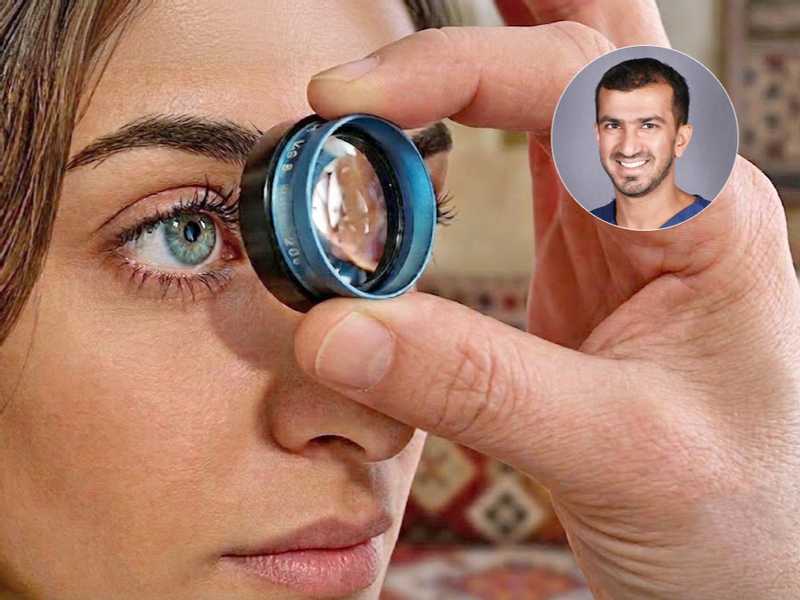
Dr. Walea Hafiz: In recent times, corneal pigmentation procedures have shifted from a niche cosmetic intervention to a phenomenon garnering widespread attention on social media platforms, fueled by “before and after” videos that have amassed millions of views. Coinciding with this surge, global reports and medical institutions have begun highlighting this technology, not only for its cosmetic outcomes but also to discuss its safety and potential complications for eye health. What do we know about corneal pigmentation? Why has this procedure sparked such controversy? Do its cosmetic benefits outweigh its medical risks? These are the questions addressed by Dr. Faisal Al-Jassar, an ophthalmology consultant specializing in corneal diseases, cataracts, and vision correction, in the following analysis.
**Eye Color Change Surgery**
Dr. Al-Jassar clarified that, according to a report published by *The New York Times*, there is a growing global interest in permanent eye color change surgery, known as “corneal pigmentation.” This technology relies on using lasers to create precise channels within the cornea, followed by the injection of metallic dyes to permanently alter the eye’s color.
He noted that this is not entirely new technology; historically, it was used for therapeutic purposes in patients with iris abnormalities or corneal opacities to improve appearance and reduce photophobia. However, using it purely for cosmetic purposes to change the color of healthy eyes is unsafe. The eye is an extremely sensitive organ, and any surgical intervention carries risks that could permanently affect vision.
Dr. Al-Jassar pointed out that the American Academy of Ophthalmology (AAO) has previously warned against performing these procedures for purely cosmetic reasons, citing potential complications such as eye inflammation, severe light sensitivity, corneal damage, blurred vision, and even the risk of blindness in rare cases. He believes that changing eye color using colored contact lenses remains the safer option for those wishing to alter their appearance without undergoing surgical risks.
From a medical and ethical standpoint, performing surgery on a healthy eye solely for cosmetic purposes—especially when it offers no visual benefit—requires adhering to the principle of balancing benefits and risks. When the eye is healthy and the procedure provides no functional visual advantage, it is imperative that the risks be extremely low and that the patient is fully aware of them. The following steps must be taken:
* Providing accurate and comprehensive information to the patient regarding risks and alternatives.
* Avoiding exaggeration in marketing the procedure as simple or free of complications.
* Ensuring the decision is based on genuine informed consent, not influenced by social media trends or advertising.
**Key Risks**
Dr. Al-Jassar highlighted that this procedure involves implanting dye within the cornea to permanently change eye color, resulting in short- and long-term risks that individuals must understand before proceeding:
**Potential Short-Term Risks:**
1. Eye pain and redness.
2. Corneal inflammation or infection, which is one of the most serious complications as it can threaten vision.
3. Delayed corneal healing.
4. Light sensitivity or a sensation of a foreign body in the eye.
**Long-Term Risks:**
1. Deposition or altered distribution of the dye over time.
2. Corneal clouding or scarring.
3. Difficulty in diagnosing certain eye diseases in the future due to the presence of the dye.
4. Potential decrease in visual quality or increased glare and halos in some cases.
5. The need for additional surgeries to treat complications.
6. In severe cases, permanent vision deterioration may occur, potentially necessitating a corneal transplant.
He stated, “Unfortunately, we have seen cases in Kuwait where individuals underwent this procedure from visiting doctors and are now requiring corneal transplants.”
He emphasized that if complications arise after the procedure, the dye cannot be completely removed or the procedure fully reversed. Permanent effects, such as scarring or changes in corneal transparency, may remain even after part of the dye is removed. He added that treating complications may require additional interventions, such as surgical removal of the dye, treatment of infections, or even corneal transplantation in advanced cases. Therefore, the procedure should be considered a permanent change, not a step that can be easily reversed.
**Groups Most Susceptible to Complications**
Dr. Al-Jassar noted that there are categories of people for whom corneal pigmentation is strictly prohibited, including:
* Patients with keratoconus or any condition leading to corneal weakness or thinning.
* Individuals with active eye infections.
* Those suffering from uncontrolled severe dry eye.
* Individuals with surface eye diseases or autoimmune conditions affecting corneal healing.
* Patients with a history of corneal scarring or poor wound healing.
**Message to Youth**
Dr. Al-Jassar addressed young men and women who are influenced by “before and after” clips on social media to consider changing their eye color without understanding the risks or verifying the scientific evidence behind the technology. He pointed out that such images and videos typically showcase cosmetic results but do not display complications that may emerge months or years later, nor do they show cases requiring long-term treatment or those who have lost part of their visual capacity.
He stressed that while eye color can be changed cosmetically, no eye surgery is entirely free of risks. Therefore, anyone considering this procedure should consult a corneal specialist or a certified ophthalmic surgeon to objectively discuss benefits, risks, and alternatives, and to review scientific studies rather than relying solely on content posted on social media.
He concluded, “Remember that preserving vision safety must remain the priority, as sight is a blessing that cannot be easily replaced if permanent complications occur.”
