Opening of the National Negotiators Training Course for the UN Convention: Qualifying National Cadres Capable of Representing the State with Competence
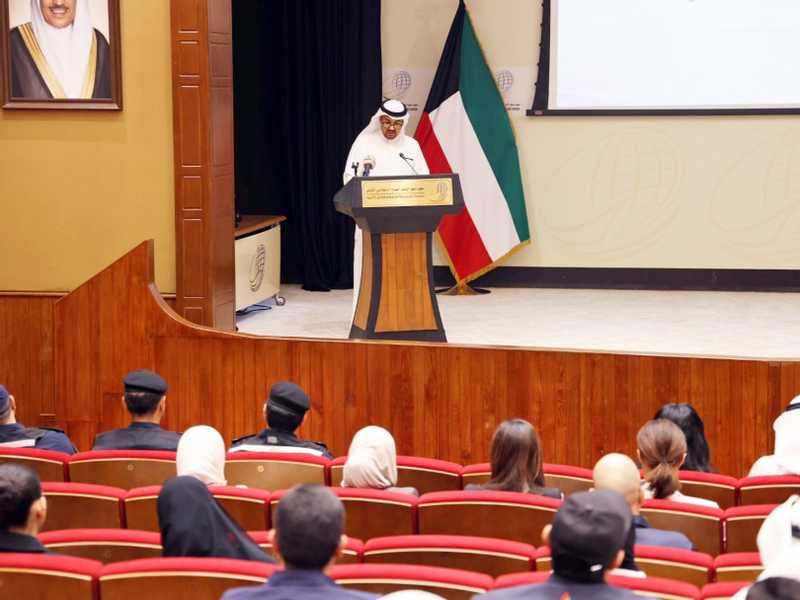
Assistant Assistant Minister for International Organizations Affairs, Counselor Abdulmohsen Al-Mansour, reaffirmed the Ministry’s commitment to being a key partner in national efforts addressing climate change issues, recognizing the importance of this file on the international stage and the rapid developments it has witnessed within the framework of multilateral negotiations, particularly the Conferences of the Parties (COPs) to the United Nations Framework Convention on Climate Change (UNFCCC).
This statement was made during the opening of the first training course for the qualification of national negotiators under the UNFCCC, held at the Kuwaiti Saud Al-Nasser Diplomatic Institute.
Al-Mansour stated that this interest is a continuation of the direct follow-up and attention given by Minister of Foreign Affairs Sheikh Jaber Al-Jarrah and his deputy, Hamad Al-Mashaan, to this file. He emphasized their commitment to enhancing Kuwait’s presence at international forums and qualifying national cadres capable of representing the state competently, defending its interests, and actively contributing to the formulation of relevant international decisions and consensus.
He noted that the Ministry of Foreign Affairs is participating in this course with several staff members from the Department of International Organizations and the Legal Department, as part of supporting the work of the National Negotiating Committee and preparing national cadres equipped with the necessary legal, diplomatic, and negotiating knowledge to ensure effective participation in climate change negotiations. This aims to enhance Kuwait’s readiness for upcoming obligations, foremost among which is COP31.
On the national capacities front, Acting Director General of the Public Authority for Environmental Affairs, Nouf Bahbahani, reaffirmed on Sunday (yesterday) Kuwait’s commitment to investing in building national capacities and its belief that qualified national expertise constitutes the fundamental pillar for enhancing the country’s presence at international forums.
She stated that this course embodies Kuwait’s empowerment of its experts to actively participate in shaping international policies, defending national interests, and fulfilling its commitments within the framework of international climate action.
Bahbahani explained that organizing the course stems from the high vision of His Highness the Amir, Sheikh Meshal Al-Ahmad Al-Jaber Al-Sabah, which underscores the importance of international cooperation and multilateral action in addressing global challenges and achieving sustainable development.
She added that Kuwait’s status as an energy-producing state and an active, responsible member of the international community necessitates a significant presence in climate negotiations that achieves a balance between adhering to international agreements and safeguarding national interests, while supporting the path of sustainable development through a balanced approach that considers economic, environmental, and social dimensions.
She noted that the course represents a strategic step in the process of building national capacities, thereby enhancing Kuwait’s readiness for active participation in the Conferences of the Parties and regional and international meetings, and strengthening its presence and influence in the trajectory of international climate action.
Bahbahani praised the pioneering role of the Diplomatic Institute in preparing and qualifying national diplomatic expertise, noting that it hosts the launch of this specialized national course for qualifying negotiators under the UNFCCC. She indicated that the course will continue until next Wednesday. (KUNA)
