Japanese Scientists Invent Device That Converts Sunlight into Fuel
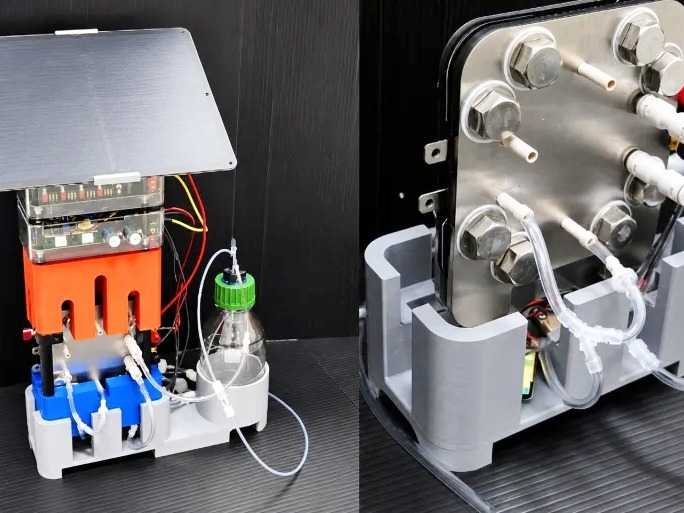
Researchers at Osaka Metropolitan University in Japan have developed an artificial photosynthesis system that self-regulates, eliminating the need for batteries in many current designs. This innovation is expected to represent a major breakthrough and a turning point in battery-free artificial photosynthesis, which converts sunlight, water, and carbon dioxide into usable fuel that is much easier and cheaper to produce. Like natural photosynthesis in plants, artificial photosynthesis uses sunlight to convert water and carbon dioxide into energy-rich compounds, including formic acid, a chemical that can be used as fuel and as an energy storage medium. Professor Yutaka Amao, a principal investigator in this innovation and a researcher at the university’s Center for Artificial Photosynthesis, told Al Jazeera: “The artificial photosynthesis system we developed consists of a solar panel (photovoltaic cell) connected to an electrolysis cell containing an anode and a cathode.” He added, “Using the photovoltaic cell as an energy source, water splitting and the conversion of carbon dioxide into formic acid take place within the electrolysis cell. Adding an appropriate ion-exchange membrane inside the cell enables the production of a pure aqueous solution of formic acid. In other words, the solar fuel produced by our artificial photosynthesis system is formic acid, generated from the conversion of carbon dioxide.” Meanwhile, a statement from Osaka Metropolitan University noted that maintaining operational efficiency as sunlight varies throughout the day remains a major challenge. Many artificial photosynthesis systems employ maximum power point tracking technology, a method that continuously adjusts voltage and current to enable solar cells to generate the highest possible power output.
