Dr. Mohammed Abdul Salam: Reducing excess weight alleviates the severity of snoring
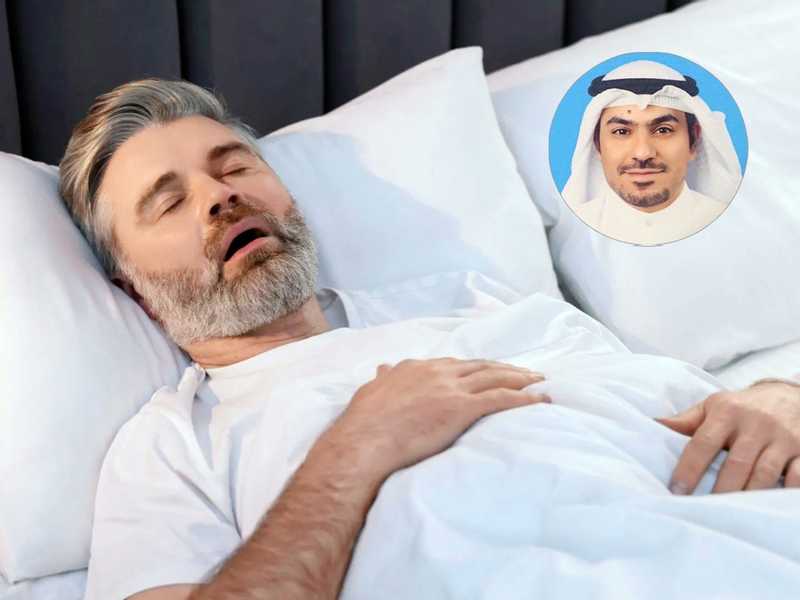
Dr. Wala’a Hafez: Many may assume that snoring is merely an annoying sound that wakes up a partner, but modern medicine has significantly changed this perspective. What was once viewed as a natural phenomenon associated with aging or weight gain is now considered a symptom that warrants attention in many cases, as it may be the first indicator of a health disorder affecting the heart, brain, metabolism, and quality of life.
Dr. Mohamed Abdel Salam, a senior specialist in internal medicine, respiratory diseases, and sleep disorders, told Al-Qabas that many patients do not consult a doctor because of snoring itself, but rather due to persistent fatigue, morning headaches, poor concentration, or high blood pressure that does not respond adequately to treatment, without realizing that the root cause begins every night during sleep.
**Snoring Explained**
Dr. Abdel Salam clarified that during sleep, the muscles of the throat and tongue relax naturally. When the airway narrows for any reason—such as weight gain, fat accumulation around the neck, enlarged tonsils, nasal congestion, or throat muscle relaxation—air passes through a narrower opening than usual. This causes soft tissues to vibrate, producing the sound of snoring. He stated, “Snoring does not necessarily indicate a disease; there are people who snore without suffering from any breathing disorder or oxygen level drop.” He added, “However, when snoring is accompanied by frequent breathing pauses, choking during sleep, or severe daytime drowsiness, the situation is entirely different, and it becomes necessary to investigate the underlying cause.”
**When Does Snoring Become a Disease?**
Dr. Abdel Salam noted that the danger lies in a disorder known as obstructive sleep apnea (OSA), where the airway collapses repeatedly during sleep, causing airflow to stop for several seconds. This may occur dozens or even hundreds of times in a single night. During each episode, blood oxygen levels drop and carbon dioxide levels rise, prompting the brain to send rapid signals to wake the person for a few seconds to reopen the airway, after which they fall back asleep. He said, “Most patients do not remember these brief awakenings, but they prevent deep, restful sleep. As a result, a person wakes up feeling exhausted, regardless of how many hours they slept. This is why patients often say they slept all night, yet feel as though they never slept at all.”
**Impact Beyond Sleep**
Some may believe the problem is limited to tiredness and drowsiness, but what happens inside the body is far more complex. Dr. Abdel Salam explained that every time oxygen levels drop, the sympathetic nervous system—which governs the body’s stress response—is activated. This leads to repeated spikes in blood pressure and heart rate throughout the night. Over the years, these changes become chronic, leading to blood vessel inflammation, oxidative stress, endothelial dysfunction, and increased insulin resistance. Consequently, OSA has become a recognized risk factor for hypertension, atrial fibrillation, coronary artery disease, heart failure, and strokes. It is also linked to difficulty controlling diabetes and an increased risk of traffic accidents due to drowsy driving.
**What Do Studies Say?**
Dr. Abdel Salam pointed out that over the past thirty years, scientific studies have provided strong evidence that snoring accompanied by apnea is not just an annoying symptom, but a disorder that affects long-term health. The Wisconsin Sleep Cohort Study, one of the most important longitudinal studies in this field, showed that the risk of developing hypertension increases progressively with the severity of sleep apnea, even after adjusting for age, obesity, and other factors. This study helped establish the concept that sleep disorders represent an independent risk factor for cardiovascular diseases.
Furthermore, the Sleep Heart Health Study, which followed thousands of participants over many years, revealed that those with OSA are more susceptible to atrial fibrillation, heart failure, and stroke compared to individuals without sleep-related breathing disorders. The study also demonstrated that disease severity correlates with an increased risk of complications, underscoring the importance of early diagnosis and not dismissing snoring as merely a social issue.
**Impact on Memory**
Regarding the brain, research has proven that fragmented, frequent sleep deprives the brain of its normal functions in memory consolidation, emotional regulation, and the removal of metabolic waste. Consequently, many patients suffer from poor concentration, forgetfulness, mood swings, and reduced productivity. They also experience higher rates of traffic accidents due to drowsiness and inattention. In recent years, interest has also grown in the relationship between OSA and diabetes. Numerous scientific reviews have shown that repeated oxygen deprivation and sleep disruption contribute to increased insulin resistance, making blood sugar control more difficult, even after accounting for the impact of obesity.
**Diagnosis**
Dr. Abdel Salam emphasized that the diagnosis of sleep disorders has seen significant development in recent years. Not all patients need to spend a full night in a sleep laboratory. In many cases, home sleep studies can be used—a precise and comfortable method for diagnosing the condition in suitable patients. However, patients with complex conditions or suspected other sleep disorders may require a full in-lab sleep study, which provides detailed information about sleep stages, breathing, oxygen levels, brain activity, and muscle movement throughout the night. Diagnosis does not rely solely on the sound of snoring but on medical history, symptoms, clinical examination, and sleep study results, to ensure the most appropriate treatment is chosen for each patient.
**Misconceptions**
Dr. Abdel Salam clarified that not everyone who snores needs a breathing device, which is one of the most widespread misconceptions. If snoring is mild and not accompanied by breathing pauses or oxygen deficiency, treating the underlying cause—such as weight loss, treating nasal allergies, or changing sleep position—may suffice. However, if a sleep study confirms apnea, treatment is determined based on disease severity and individual patient characteristics.
**Modern Treatments**
Continuous Positive Airway Pressure (CPAP) remains the most effective treatment for moderate and severe cases, as it keeps the airway open throughout sleep, prevents repeated oxygen drops, and clearly improves sleep quality. However, treatment success depends largely on the patient’s adherence to regular device use. In mild and moderate cases, oral appliances that advance the lower jaw have become an accepted and effective therapeutic option for many patients, especially those unable to use CPAP. Additionally, in recent years, hypoglossal nerve stimulation technology has emerged. This modern technique activates muscles that keep the airway open during sleep, and studies have shown continuous improvement in disease severity and quality of life for patients.
Notable developments also include the focus on treating obesity as an integral part of OSA management, rather than just an adjunct therapy. The 2024 publication of the SURMOUNT sleep apnea study showed that tirzepatide led to a significant reduction in the apnea index, improved oxygen levels, decreased daytime drowsiness, and coincided with noticeable weight loss, highlighting the pivotal role of obesity in the progression of this disease in a large proportion of patients.
**Practical Tips**
1. Do not underestimate snoring if it is accompanied by breathing pauses, a feeling of suffocation, or severe daytime drowsiness.
2. Aim for a healthy weight; even a modest weight loss can reduce the severity of snoring and apnea.
3. Avoid taking sedatives before bed unless prescribed by a doctor.
4. Try sleeping on your side if snoring worsens when lying on your back.
5. Treat nasal allergies or chronic congestion, as good nasal breathing helps reduce airway resistance.
6. If you suffer from high blood pressure, diabetes, or atrial fibrillation along with snoring, seek evaluation from a sleep medicine specialist.
7. Do not rely on commercial products or devices claiming to cure snoring without medical diagnosis; proper treatment begins with identifying the true cause.
