Simple Eye Test Predicts Recovery of Consciousness After Brain Injuries
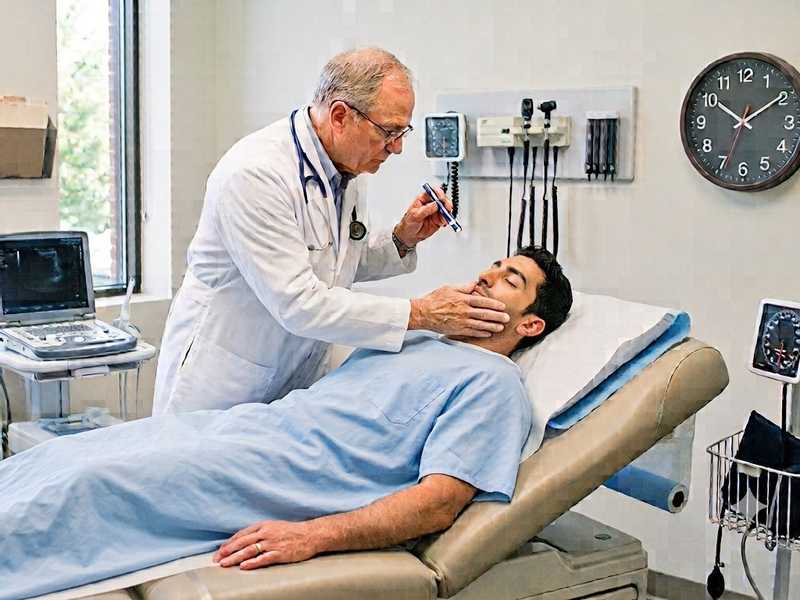
Dr. Wala’a Hafiz: Researchers have revealed that a rapid eye-pupil test performed at the patient’s bedside may help predict the return of consciousness in patients with severe brain injuries, potentially improving care for patients in intensive care units (ICUs). A study presented at the European Academy of Neurology congress showed that measuring the “late response after light offset” (LOR) could predict improved levels of consciousness seven days after injury, whereas traditional tests, such as the NeuroPupil Index (NPI) and pupil light response latency, failed to predict this improvement, according to Medical Xpress.
**A Major Challenge in Critical Care**
Predicting the return of consciousness following acute brain injuries is one of the most prominent challenges for intensive care physicians. Current examinations are limited to measuring the brain’s immediate response to light, without providing reliable indicators of recovery chances in the following days. Therefore, researchers from the University of Copenhagen Hospital and the Technical University of Denmark conducted a study to test whether the late phase of the eye-pupil response after light offset could reveal the brain’s capacity for recovery.
**Study Details**
The study included 250 patients suffering from disorders of consciousness due to traumatic and non-traumatic brain injuries, along with 30 healthy individuals for comparison. Patients underwent daily eye-pupil response examinations, with repeated neurological assessments for up to 20 days within intensive care units.
The results showed that the delay in the “late response after light offset” was an independent indicator of improved consciousness levels after one week, even after accounting for factors such as the severity of the neurological condition, the time elapsed since the injury, the use of sedatives, and the type of brain injury. Furthermore, this indicator was not associated with the patient’s response level on the day of the examination, suggesting that it may reveal a latent recovery capacity not captured by traditional clinical tests.
Dr. Paul Leigard, the lead researcher from the University of Copenhagen Hospital, stated: “Current tests show how the brain responds at the present moment, whereas the late response after light offset provides us with indicators of the brain’s capacity to recover in the coming days, which may help doctors identify patients most likely to regain consciousness.”
**Further Research Needed**
The researchers noted that the relationship between this test and improved consciousness was clearer in patients who had not received sedative medications, as well as in those with brain injuries caused by oxygen deprivation or reduced blood flow to the brain. Despite these promising results, the research team emphasized that the findings remain preliminary and require larger studies involving multiple medical centers before the test can be adopted in clinical practice.
Associate Professor Daniel Kondziella added: “We believe this observation is important and warrants further research, but we need broader studies to confirm the feasibility of using this test routinely to monitor patients and predict their condition.”
**Examination Takes 13 Seconds**
One of the key advantages of this test is that the necessary technology is already available in many intensive care units, which could facilitate its future adoption if studies confirm its efficacy. Leigard explained that measuring the late response is performed using a portable eye-pupil measurement device, the same equipment used in routine examinations. The test takes only 13 seconds per eye, making it a rapid and practical assessment that can be easily integrated into the daily care of intensive care patients.
