Dr. Ali Al-Mulla Ali: 10 Warning Signs of "Bruises" That Require a Doctor's Visit
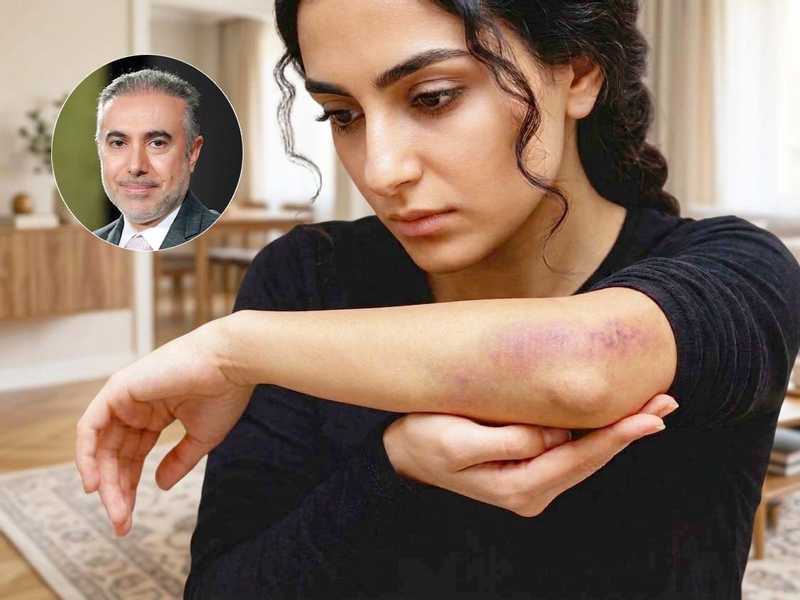
Dr. Walaa Hafez: Bruises are a common problem affecting people of all ages. They may appear after a minor injury, physical exercise, or receiving a medical injection. Usually, they are harmless and disappear within days or weeks. However, frequent bruising or appearing without a clear cause may warrant attention. This raises the question: Do recurrent bruises indicate bleeding disorders? Answering this requires understanding the causes of bruising and when it becomes a sign requiring medical evaluation. The term “bleeding disorder” is used to describe the blood’s reduced ability to clot, whether due to low platelet counts, clotting factor abnormalities, or the use of blood-thinning medications, which can lead to easy bruising or bruises that persist for longer periods.
◄ Early Diagnosis
In an interview with Al-Qabas, Dr. Ali Al-Mulla, Consultant of Hematology, Oncology, and Coagulation, clarified the relationship between recurrent bruises and bleeding disorders, emphasizing the importance of not ignoring bruises that appear without a clear cause, especially if accompanied by other bleeding signs. He noted that early diagnosis helps identify the cause and determine appropriate treatment. “The presence of bruises does not necessarily mean a bleeding disorder; there are several reasons that can make the skin more prone to bruising,” he said. He added that assessing the condition depends on medical history and clinical examination, and may require blood tests for platelets and clotting functions when necessary. He pointed out that most bruises resulting from daily injuries are a normal bodily response and do not cause concern.
◼ Concerning Bruises
Dr. Ali Al-Mulla explained that a bruise appears when the body is struck or impacted, changing color from blue to purple to yellow before disappearing within one to two weeks. However, bruising is concerning in certain cases, as it may indicate a bleeding disorder or blood vessel problems. These cases include:
1. No clear cause for the bruise.
2. Bruises appearing in unusual places, often not exposed to impacts, such as the back, abdomen, or buttocks.
3. Large bruises (larger than 3 cm) without significant injury.
4. More than 5–10 new bruises in a week.
5. Bruises appearing rapidly and increasing in size within hours.
6. Other symptoms accompanying the bruises. These may be among the most worrying causes, such as bleeding from other sites like frequent nosebleeds, gum bleeding, blood in urine or stool, very heavy menstrual periods, skin symptoms accompanying the bruise such as small red spots under the skin resembling ink splatters (a sign of low platelets), general symptoms such as fever, severe fatigue, weight loss, joint pain, rash, autoimmune diseases, severe headache, dizziness, and changes in consciousness.
7. If the patient is over 65 years old, as blood vessels are weaker and skin is thinner.
8. Patients taking blood thinners: warfarin, Eliquis (apixaban), aspirin, heparin, and others.
9. If the person has other diseases related to the liver, kidneys, or low platelet count.
10. Bruises that do not improve within the usual period (10–14 days). (Meaning, if they remain blue/purple for more than 3 weeks, or become hard and painful, a specialist should be consulted).
Dr. Ali Al-Mulla emphasized that appearing a small bruise after exposure to a blow or minor injury is normal and not a cause for concern. However, if multiple bruises appear without a clear cause, especially if accompanied by bleeding or feelings of fatigue and exhaustion, one should consult a doctor without delay for proper evaluation and to determine the cause.
◼ Physical Activity
Dr. Ali Al-Mulla explained that some athletes or individuals who regularly engage in physical activity may discover they have bleeding disorders after minor injuries. He stated, “Athletes and more physically active people are exposed to impacts and injuries more than others, so bleeding disorders may be detected in them earlier. An average person may have a mild form of hemophilia or von Willebrand disease and live for twenty or even thirty years without realizing it, because their body can naturally stop minor bleeding resulting from daily injuries.” He added, “Athletes suffer from repeated injuries, such as knee bruises, muscle strains, and ankle sprains. In a healthy person, the bruise is usually small and disappears gradually. However, in someone with a mild bleeding disorder, a larger amount of blood may accumulate under the skin, leading to the development of a large, painful hematoma.”
◼ When to See a Doctor
Dr. Ali Al-Mulla listed several signs that warrant an athlete’s visit to a doctor:
● Minor injury causing excessive joint or muscle swelling.
● A very large bruise compared to the impact.
● Bleeding that has not stopped after tooth extraction or a superficial wound.
● A family history of bleeding disorders, such as one of the parents experiencing abnormal bleeding after surgery.
◼ The Role of Nutrition and Liver Diseases
Dr. Ali Al-Mulla emphasized that the liver and nutrition play a fundamental role in the blood clotting process, alongside genetic factors. He explained that any imbalance in these areas can weaken the blood’s ability to clot, even in people without genetic clotting disorders. He clarified that the liver is the main factory for clotting factors in the body, producing about 90% of them, as well as proteins necessary to stop bleeding, and plays a role in metabolizing and eliminating certain blood-thinning medications. Therefore, liver diseases can affect clotting efficiency and increase the susceptibility to bleeding and bruising.
He explained that when liver function declines or is affected by disease, it impacts the clotting process, potentially leading to the following:
● Decreased production of clotting factors: Since the liver produces most clotting factors, declining liver function leads to lower levels, increasing the risk of bleeding and bruising.
● Deficiency of clotting-regulating proteins: The liver also produces important proteins such as Protein C, Protein S, and Antithrombin, which help regulate clotting. When their levels drop, balance may be disrupted, making the patient more prone to bleeding in some cases and clot formation in others.
● Decreased platelet count: Liver cirrhosis can cause spleen enlargement, leading to trapping of more platelets inside it, thus lowering their count in the blood, which increases bleeding risk.
● Weakening of small blood vessels: Capillaries may become more fragile in liver disease patients, leading to red spots or small blood vessels resembling spider webs on the skin, in addition to easy gum bleeding and bruising.
◼ Vitamin Deficiencies and Their Direct Impact
Dr. Ali Al-Mulla emphasized that deficiencies in certain vitamins, primarily Vitamin K, can lead to significant disruption in the blood clotting process and increase susceptibility to bleeding.
1. Vitamin K deficiency: Dr. Ali Al-Mulla explained that Vitamin K is essential for the production and activation of several important clotting factors. Therefore, its deficiency weakens the blood’s ability to clot and increases the risk of bruising and bleeding. He added that deficiency may occur due to malnutrition, malabsorption diseases, or after prolonged use of certain antibiotics. Newborns are also more susceptible to it, which is why they receive a Vitamin K injection after birth. Deficiency can lead to prolonged bleeding, recurrent bruises, blood in urine or stool, and in severe cases, intracranial bleeding, especially in infants.
2. Vitamin C deficiency: Dr. Ali Al-Mulla explained that Vitamin C does not directly affect clotting factors but plays an important role in maintaining the strength of capillary walls. Therefore, its deficiency increases the likelihood of bruising and bleeding. Severe deficiency can cause scurvy, characterized by recurrent bruises, gum bleeding, red spots under the skin, and joint pain. This disease is rare nowadays but may appear in cases of severe malnutrition and among some elderly people.
3. Other causes: Dr. Ali Al-Mulla pointed out that certain dietary disorders may increase the risk of bruising or bleeding, even if they do not directly cause bleeding disorders. Notable examples include:
● Vitamin B12 and Folic Acid deficiency: May cause anemia, and in severe cases, lead to decreased platelet count, increasing bleeding susceptibility.
● Malnutrition or strict diets: May lead to deficiencies in nutrients essential for blood vessel integrity and the clotting process.
● Lack of vegetables and fruits: May cause Vitamin C deficiency, leading to gum bleeding, bruising, or red spots under the skin.
● Overconsumption of dietary supplements: May increase the risk of bruising or bleeding, as some supplements can affect platelet function or interfere with the clotting process.
