Premature Greying: 6 Factors That Accelerate It, Alongside Genetics
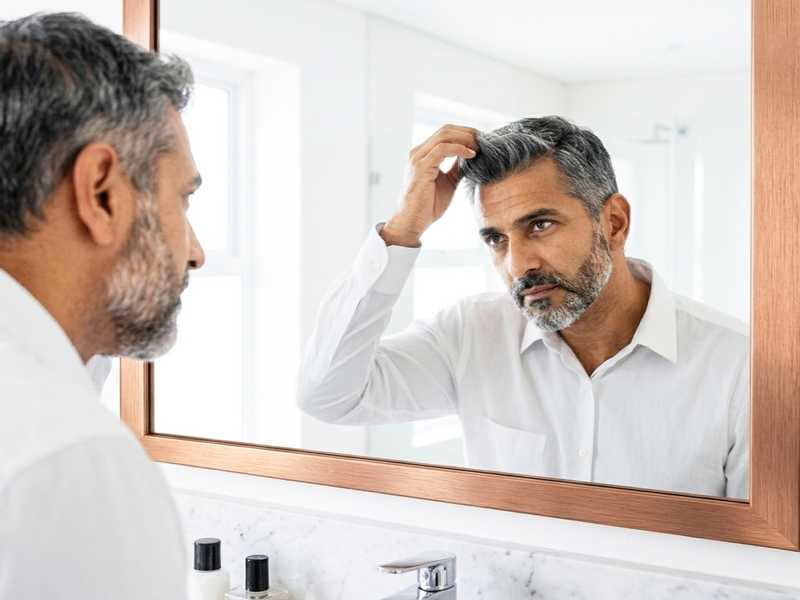
Reem Qasim: The gradual transition of black, brown, or red hair into white strands has long piqued our curiosity and baffled us. For decades, scientists have sought to analyze the role of genetics, the nature of hair aging, and the impact of the environment in explaining the loss of hair’s original color. What do the latest studies reveal about this phenomenon? Why do some people notice the first signs of graying in their twenties or thirties, while others remain unaffected until much later in life?
The natural color of each hair strand results from a fundamental biological process involving pigment production in the hair follicle. Melanocytes, located at the base of hair fibers, are responsible for producing melanin, the molecule that determines hair color shade and density. Pigmentation occurs exclusively during the growth phase of the hair cycle. According to genetic research, up to 99% of initial hair color depends on family history. This strong influence of genetic factors explains why some families are protected from early or complete graying, while others experience it rapidly.
Why does hair pigmentation cease with age?
As hair ages, it gradually loses its pigment, according to a report published by Passportsante. Melissa Harris, Associate Professor of Biology at the University of Alabama at Birmingham, explains that the primary function of pigment cells is to color the hair shaft during its growth. Although these cells die at the end of each hair cycle and must be replenished for the next cycle, a decline in this cell reservoir means the follicle can no longer produce pigment during regrowth. Consequently, the hair appears white or silvery because it fills with air instead of melanin.
Genetics is not the only factor
While genetics often plays a dominant role in the spread of this phenomenon, other factors can accelerate pigment loss. Some ethnic groups tend to show signs of graying earlier than others; typically, individuals with lighter skin show the first signs of graying about ten years earlier than those with darker skin. Other contributing factors include:
1. Smoking.
2. Repeated exposure to ultraviolet radiation.
3. Nutritional deficiencies, particularly of vitamins or minerals.
4. Air pollution.
5. Certain diseases, such as neurofibromatosis.
6. Rare conditions, such as vitiligo or Griscelli syndrome, which can cause very early graying, even in childhood.
Does stress trigger graying?
The idea that hair turns white suddenly due to shock or severe stress is a common belief in public consciousness. However, scientists offer a more precise explanation for this phenomenon. Episodes of acute stress can lead to hair loss. When this happens, existing gray hair, previously hidden among colored strands, becomes more noticeable. Therefore, so-called "rapid graying" does not mean that a single hair changes color instantly; rather, pre-existing white or gray hair appears to have emerged suddenly after a portion of colored hair has fallen out.
Can white hair regain its color?
This question has attracted significant interest among those who notice white hair for the first time, as well as among biology researchers. Although no definitive method has yet been found to reverse graying, some studies suggest the possibility of hair regaining some of its original pigmentation under certain conditions. Research by scientist Melissa Harris focuses on understanding the ability of stem cells in hair follicles to produce new melanocytes. Recent studies have identified a protein known as PD-L1, which appears at higher levels in some dormant stem cells compared to active ones. This discovery helps improve our understanding of the relationship between pigment cell regulation and the onset of graying. However, the potential to reactivate these cells and restore hair color still requires further research and verification. Experts believe that understanding these mechanisms may not only help influence hair color in the future but also open new avenues for studying aging and the body’s responses to psychological stress and environmental factors.
