Excessive Screen Time May Affect Children's Fine Motor Skills
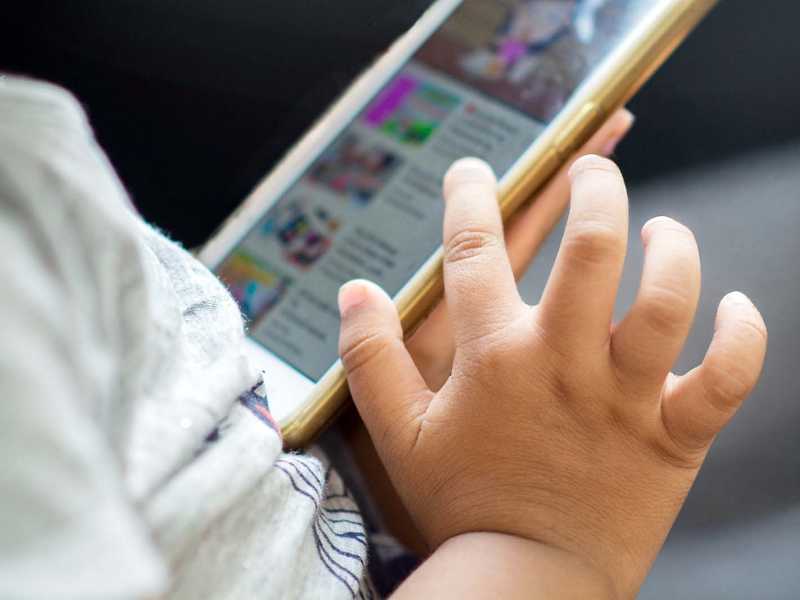
Nour Nour Eldin – The smartphone rarely leaves our hands; it is a tool for work, communication, entertainment, shopping, and even health monitoring. However, as the time we spend in front of screens increases, researchers have begun to notice that the impact of these devices extends beyond focus, sleep, and mental health, potentially affecting body shape and functions over time. In an interview with the BBC, several experts warn that prolonged use of smartphones and computers may affect neck and spine posture, eye health, hand muscle strength, and even the fine motor skills of children. They emphasize that these changes are often slow and cumulative, yet they warrant attention.
◄ “Text Neck”: The Most Common Issue Among the issues that have drawn researchers’ attention is what is known as “text neck,” a condition resulting from the constant bending of the head to look at a phone screen. When the head tilts forward, the pressure on the cervical vertebrae increases significantly. Experts cited in the report note that this pressure can reach approximately 27 kilograms when the head is tilted sharply downward, which over time may lead to muscle strain, accelerated degeneration of intervertebral discs, and chronic pain in the neck, shoulders, and back. Some studies also suggest that maintaining this posture for extended periods may affect breathing efficiency due to changes in the position of the rib cage and the muscles responsible for inhalation and exhalation.
◄ Do Wrinkles Appear Too? Potential effects are not limited to muscles and bones. According to British dermatologist Justin Hickstall, repeated neck bending may theoretically contribute to the appearance of horizontal wrinkles in the neck area. However, the doctor stresses that current scientific evidence remains insufficient to definitively prove this relationship, though she considers the hypothesis biologically plausible, especially given the repetition of the same movement for many hours each day.
◄ Eyes Affected… in an Unexpected Way Many associate screens with myopia (nearsightedness), but researchers point out that the problem lies not solely with the screens themselves. After a follow-up period exceeding twenty years, a research team from Ohio University concluded that the most important factor in preventing myopia is spending more time outdoors, rather than merely reducing screen use. Scientists believe that exposure to natural light stimulates healthy eye development and helps the retina perform its normal functions, whereas a lifestyle centered on staying indoors reduces this protective effect.
◄ Weakened Grip Strength Another notable finding discussed in the report is that increased use of electronic devices may also be linked to a decline in hand grip strength. Professor Johannes Beller from the University of Lusatia in Germany suggests that the rise in desk-based work and activities relying on keyboards and phones may gradually contribute to this decline, alongside a general lack of physical activity.
◄ What About Children? Studies also indicate that excessive screen time may affect children’s fine motor skills, such as the ability to hold a pen, cut with scissors, draw, button clothes, and perform precise finger movements. Research conducted by Professor Sebastian Suggat from the University of Regensburg in Germany showed that children who spend more time in front of screens tend to achieve lower scores in fine motor skill tests compared to their peers.
◄ How Can We Reduce These Risks? Experts do not advocate stopping the use of smartphones, as these devices have become an essential part of our daily lives. Instead, they recommend adopting some simple habits, including:
• Holding the phone at eye level instead of lowering the head.
• Taking short breaks every 30 to 60 minutes.
• Engaging in regular physical activity.
• Spending time outdoors daily.
• Reducing screen time for children and encouraging active play.
• Practicing activities that develop manual skills, such as writing with a pen, drawing, crafts, and cooking.
