Has the region entered a phase of “no war, no peace”?
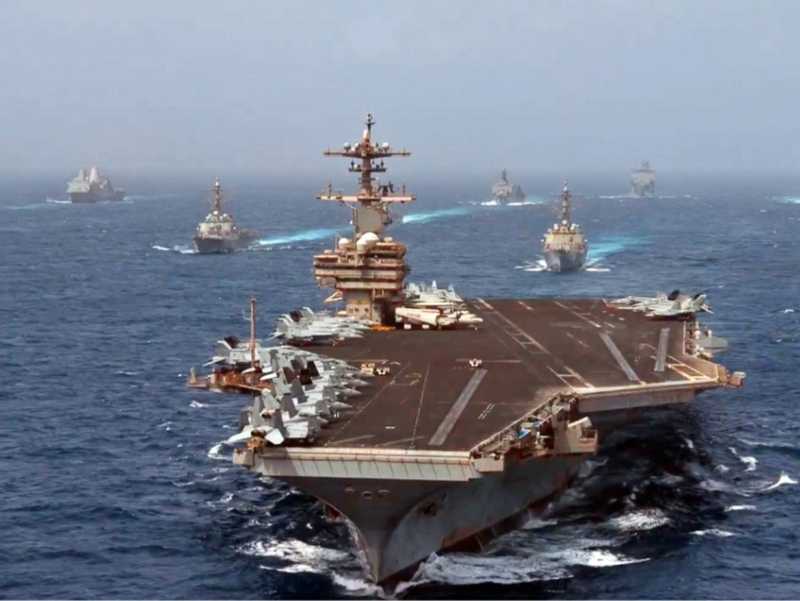
Senior International Affairs Editor: The region has entered a new round of military escalation, exposing the profound fragility of the “Memorandum of Understanding” and the temporary ceasefire that failed to hold between
Translated by Qiyas from القبس — Original source
Senior International Affairs Editor: The region has entered a new round of military escalation, exposing the profound fragility of the “Memorandum of Understanding” and the temporary ceasefire that failed to hold between the United States and Iran. On Tuesday, Tehran openly breached the understandings by targeting commercial vessels and tankers as they transited the Strait of Hormuz. This direct targeting reflected a clear Iranian desire to test American patience and to impose a new navigational and geopolitical reality through the force of arms. The American response was swift and decisive; the U.S. Central Command launched intensive airstrikes targeting military sites and vital infrastructure in Iran, coinciding with a stern political decision to revoke the waiver allowing the sale of Iranian oil, thereby returning both sides to an open field of confrontation.
The situation did not stop there. The scenario of violent confrontation repeated itself on Wednesday night, as U.S. aircraft continued to pound vital targets and missile platforms inside Iran to undermine its naval capabilities. In response, Iran’s Islamic Revolutionary Guard Corps chose to export its internal turmoil by launching attacks that affected Kuwait, Bahrain, and Jordan.
The current landscape signals a profound shift in the nature of conflict in the Middle East. The “Great War,” in its traditional sense, has either ceased or been frozen, making way for “small wars” and calculated conflicts, with the Strait of Hormuz emerging as the most prominent front. The strait has transformed into an international arena for breaking wills. Recent field behavior indicates that Iran is not using the strait solely for military and strategic purposes, but is also practicing a “policy of financial extortion” by attempting to impose transit fees on ships. Tehran remains committed to controlling this waterway as an irreversible strategic option. Iran has discovered that controlling the strait is equivalent in importance and effect to possessing a “nuclear weapon,” granting it the ability to choke the global economy.
Amid this escalating scene, a fundamental question arises: How will Washington and the world respond to this Iranian behavior? Will the region slide back into the crucible of total war? The rapid collapse of de-escalation arrangements is primarily due to the absence of mutual and binding guarantees between the two sides, turning the memorandum from a project for sustainable peace into merely a “temporary truce” that opens the door to military actions that could spiral out of control at any moment. In this context, it is clear that Tehran excels at the game of “rubber-band negotiation.” It is keen on maintaining prolonged negotiation atmospheres and temporary ceasefires that serve its interests. These ongoing military operations cannot be separated from the diplomatic table; strong indicators suggest they serve as “hard pressure” to improve negotiation terms. Tehran is not seeking a suicidal confrontation but rather additional leverage.
Despite the continuous escalation, it is far too early to speak of a final and radical collapse of negotiations. Both sides are clearly following a “brinkmanship” strategy, aiming to achieve negotiating gains rather than engage in an open war desired by no one.
Trump’s “Costly” Options
According to a report by *The New York Times*, President Donald Trump bet that economic interests would push the Iranian leadership to change its behavior, but he collided with the entrenched “confrontation logic” embedded in the ideology of the Iranian regime since 1979. With the ceasefire collapsed, Trump finds himself facing three paths, all bitter and costly:
1. Wide-scale military escalation: This could drag Washington into a new regional war that lacks any domestic American support.
2. A long-term economic and naval blockade: This requires an intensive and draining U.S. military presence to deter Tehran in Gulf waters.
3. Acceptance of a “no war, no peace” state: Based on intermittent and continuous rounds of mutual strikes and futile negotiations.
In this regard, the newspaper quoted Richard Fontaine, CEO of the Center for a New American Security (CNAS), stating that all options available to Washington today are “unattractive.” Fontaine predicted that the next phase would see low-intensity mutual attacks, interspersed with diplomatic mediation and fragile ceasefires, before returning to a new round of fighting. He described this scene as a “long and heavy oscillation between a cold war and a limited hot war.”
Accordingly, it can be said that the region is not heading toward permanent and stable peace in the foreseeable future, nor is it on the path to a comprehensive and destructive war. The most realistic scenario is entering a complex phase titled solely with “conflict management,” oscillating between diplomatic coldness and field heat.
