Tunisian Ambassador to Al-Qabas: We Are Coordinating New Agreements with Kuwait in Education, Health, and Agriculture
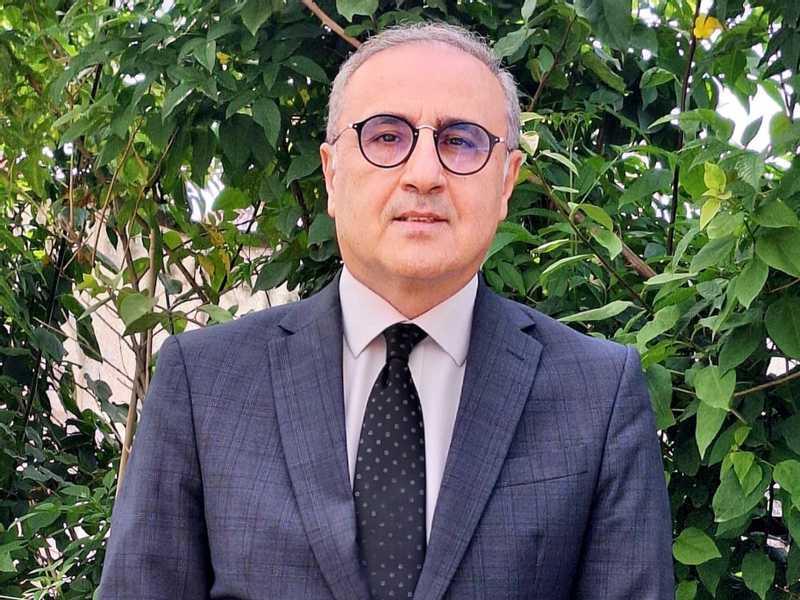
Tunisian Ambassador Mohamed Karim Al-Boudali revealed efforts to reactivate the direct flight route between the two countries and sign 14 cooperation agreements covering investment, industry, trade, transport, tourism, and social affairs.
Translated by Alqyas from Al-Qabas — Original source
May Al-Sukkarri - While the Tunisian Ambassador to Kuwait, Mohamed Karim Al-Boudali, announced plans for his country’s Foreign Minister to visit Kuwait in the near future as part of efforts to develop bilateral cooperation, he simultaneously revealed that the embassy is working to resume direct air links between the two countries as soon as possible, through continuous coordination and communication with Kuwait Airways and Jazeera Airways. He stressed that resuming these flights would support commercial, investment, and tourism cooperation.
In a statement to Al-Qabas, Al-Boudali said that Tunisian-Kuwaiti relations are witnessing growing positive momentum, underpinned by a firm political will on the part of both countries’ leaderships to elevate bilateral cooperation to the level of genuine and comprehensive partnership. He emphasized that the two countries share historical ties and strong fraternal bonds between their peoples.
Al-Boudali added that Tunisian President Kais Saied attaches special importance to strengthening cooperation with Kuwait, and holds His Highness the Amir, Sheikh Meshal Al-Ahmad Al-Jaber Al-Sabah, in the highest esteem and respect. He praised the Amir’s pivotal role and his sincere desire to enhance cooperation with Tunisia in ways that serve the shared interests of the two brotherly peoples and consolidate the distinguished relations between the two countries.
Full solidarity
The Tunisian ambassador clarified that his country has, since the beginning of the ongoing war in the region, declared its full and unconditional solidarity with Kuwait, standing by its side and firmly rejecting any violation of its sovereignty and territorial integrity. Tunisia has reaffirmed this principled stance on several occasions, including the Arab League Foreign Ministers’ meeting held remotely on March 8, 2026, the virtual ministerial dialogue organized by ESCWA on April 8, 2026, Tunisia’s statement at the United Nations on April 16, and the emergency Arab League Council meeting at the ministerial level held remotely on April 21, 2026.
He noted that his country was among the co-sponsors of United Nations Security Council Resolution 2817, reaffirming its supportive and solidarity stance with Kuwait and demonstrating its commitment to strengthening the principles of Arab solidarity and consolidating regional security and stability within the framework of international legitimacy.
Al-Boudali praised the wisdom and foresight of Kuwaiti leadership during the exceptional circumstances Kuwait experienced, as well as the high readiness displayed by Kuwaiti authorities in managing the situation and ensuring the needs of citizens and residents. He stressed that the measures taken had a profound impact on enhancing the sense of security and tranquility, and reinforcing confidence in the state’s ability to manage crises efficiently and competently, reflecting a model worthy of emulation in terms of sound planning and rapid response.
Significant momentum
Al-Boudali pointed out that bilateral relations have recently witnessed significant momentum, exemplified by the fourth session of the Tunisian-Kuwaiti Joint Committee held in Tunisia in November 2024, co-chaired by the foreign ministers of both countries. The session resulted in the signing of 14 cooperation agreements covering the sectors of investment, industry, trade, transport, tourism, and social affairs.
He noted that the Kuwaiti Foreign Minister held in-depth and fruitful talks in Tunisia, addressing ways to expand the horizons of cooperation and elevate it to the level of genuine partnership. He added that the Tunisian Foreign Minister is expected to visit Kuwait before the end of the current year, marking an additional milestone in strengthening the existing cooperation between the two countries.
He added that the positive development of relations has also been bolstered by a series of reciprocal visits between officials of the two countries, including the visit of Tunisia’s Minister of National Defense to Kuwait in September 2025, during which he met with the Crown Prince, the Prime Minister, and Minister of Defense Sheikh Abdullah Al-Ali. This visit followed the convening of the fourth session of the Tunisian-Kuwaiti Joint Military Committee in October 2024.
He also announced the recent opening of a Tunisian military attaché office at the Tunisian Embassy in Kuwait, a move that contributes to strengthening military cooperation between the two countries. He further pointed to the visit of Sheikh Hamad Al-Mubarak, Head of the General Authority for Civil Aviation, to Tunisia to discuss ways to enhance cooperation in the field of air transport.
Al-Boudali affirmed that the two countries have held several sectoral meetings, including a meeting between the Tunisian and Kuwaiti civil aviation authorities in April 2025, and a meeting of the sectoral committee on standardization in June 2025. He clarified that both sides signed important projects, most notably the construction and equipping of four Tunisian hospitals (Ghar El Damm, Jemna, Hafouz, and Makthar), funded jointly by the Tunisian state budget and the Kuwait Fund for Arab Economic Development. He also mentioned the air services agreement project, which could pave the way for the resumption of direct air routes and the consideration of establishing a direct cargo air link between the two countries.
On the economic front, Al-Boudali stated that both sides are discussing expanding cooperation in the fields of food security, particularly olive oil, health, information and communication technologies, artificial intelligence, and renewable energy, as well as leveraging Tunisian expertise and capabilities. He noted that the Tunisian Minister of Economy and Planning discussed ways to advance cooperation in these areas with the Kuwait Investment Authority during his visit to Kuwait in April 2025.
He added that new draft agreements covering agriculture, health, and education are under discussion, which will enrich the legal framework governing bilateral relations and enhance cooperation between the two countries.
Al-Boudali affirmed that Kuwait has historically been one of the most prominent supporters of Tunisia. He highlighted that his country highly appreciates the pivotal role played by Kuwait in supporting development in Tunisia, based on Kuwait’s conviction and commitment to the fraternal solidarity dimension in its foreign policy. Kuwaiti investments are among the first and most important Arab investments in Tunisia. The Kuwait Investment Authority operates through its investment arm, AQUI Capital, across sectors such as financial services, real estate, industry, food, agricultural industries, telecommunications, media, technology, retail trade, and others.
He also praised the Tunisian-Kuwaiti Bank as a successful model of financial cooperation between the two countries, commending the role played by the Kuwait Fund for Arab Economic Development in supporting Tunisian development projects for decades. He emphasized that the Kuwait Fund has been and remains a key partner in supporting development efforts in Tunisia since its establishment, being among the most important institutions that have supported the country’s development path through financing several projects in vital sectors.
Regarding investment attraction, he noted that the Tunisian Embassy in Kuwait is intensifying its efforts to resume direct air service between the two countries as soon as possible, through continuous coordination and communication with Kuwait Airways and Jazeera Airways. He affirmed that resuming these flights will contribute to supporting commercial, investment, and tourism cooperation.
Al-Boudali emphasized that Tunisia is working to reassure Gulf investors by highlighting its stability fundamentals and promising growth opportunities, and by developing its legal and economic framework to enhance confidence and position Tunisia as a safe and reliable investment destination.
Regarding tourism, Al-Boudali noted that Tunisia welcomed approximately 11 million tourists last year, thanks to its diverse tourism assets and advanced infrastructure, which strengthen the prospects of attracting more Kuwaiti tourists.
On investment opportunities for Kuwait, Al-Boudali affirmed that Kuwait is capable of playing a larger role in supporting the Tunisian economy in the coming period, whether through investments or development financing, given the strength of bilateral relations and the real opportunities Tunisia offers for cooperation in investment and development sectors. This makes cooperation between the two countries based on complementarity and shared interests.
When asked about strategic Kuwaiti projects in Tunisia, Al-Boudali stated that Kuwait is among the most important investors in Tunisia, with 20 Kuwaiti or Kuwaiti-participated enterprises distributed across 10 governorates. These enterprises are primarily active in the financial services, real estate, manufacturing, food, agricultural industries, telecommunications, media, technology, retail, and other service sectors.
Regarding the Kuwait Fund for Arab Economic Development, Al-Boudali pointed out that the Fund’s projects have a direct positive impact on the Tunisian economy and on the country’s development and economic activity. Since the launch of cooperation with the Fund in December 1963, it has financed numerous projects. It continues to fund other vital projects, including the rehabilitation and development of railway lines for phosphate transport, the construction and equipping of four hospitals, and projects in the water sector.
