Deputy Minister of Health Discusses Strengthening Health Cooperation and Attracting Medical Talent with Pakistani Counterpart
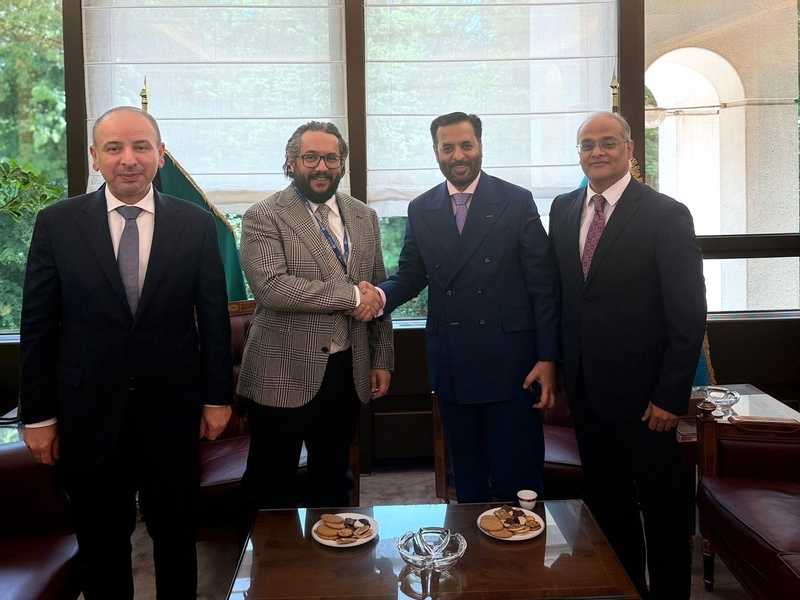
The Kuwaiti Deputy Minister of Health held talks with the Pakistani Minister of Health on enhancing health cooperation, exchanging expertise, and attracting medical personnel.
Translated by Alqyas from Al-Qabas — Original source
The Deputy Minister of Health and head of the State of Kuwait’s delegation to the 79th World Health Assembly, Sheikh Dr. Salman Khalifa Al Sabah, held talks with Pakistan’s Minister of Health, Syed Mustafa Kamal, to explore ways to enhance bilateral health cooperation. The discussions covered areas such as recruiting health professionals, medical training in certain specialized fields, exchange of expertise, as well as pharmaceutical manufacturing and medical supplies.
In a press statement, the Ministry of Health said that Sheikh Salman Al Sabah outlined the developments underway in Kuwait’s health system, particularly in legislative and regulatory aspects related to the governance of health practice, protection of patients’ rights, and strengthening quality and medical accountability systems. He emphasized Kuwait’s commitment to developing its health sector in line with the best international standards.
Sheikh Salman Al Sabah also highlighted Kuwait’s interest in attracting qualified health professionals, commending the distinguished professional reputation of Pakistani medical and nursing staff, and stressing the importance of continued coordination between the two sides to ensure the recruitment of personnel in accordance with the highest standards of quality and professional competence.
For his part, the Pakistani Minister of Health affirmed his country’s commitment to strengthening health cooperation with Kuwait, noting the strong international presence of Pakistani medical professionals and expressing his country’s aspiration to expand cooperation in medical education, training, and technical expertise exchange between the two nations.
According to the statement, both sides concluded the meeting by reaffirming the importance of maintaining coordination between the health ministries of the two countries and working to develop bilateral health relations in a manner that serves mutual interests, supports the exchange of expertise, and fosters broader health partnerships in the coming period.
