US presents final offer to Iran
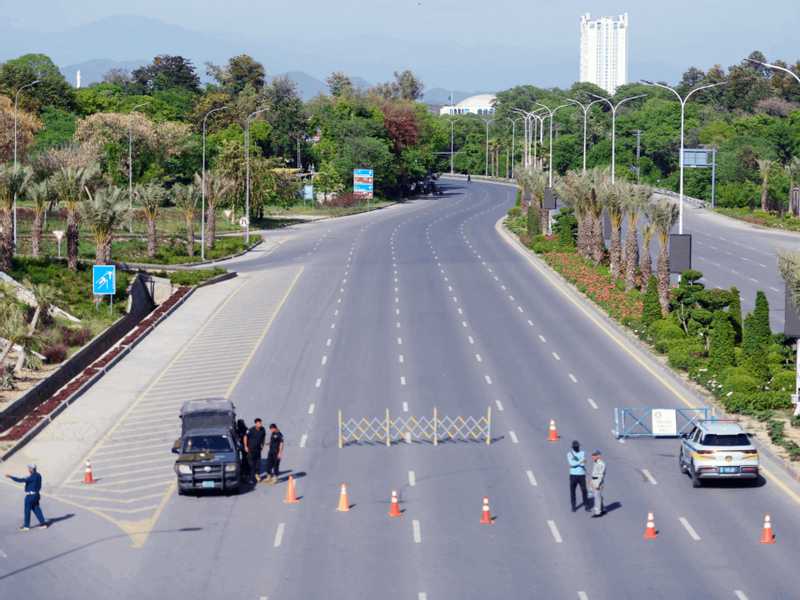
A meeting is expected between Trump and the Iranian parliament speaker in Islamabad to extend the ceasefire and resolve disputes over enrichment.
Translated by Alqyas from Al-Qabas — Original source
As the countdown to the expiration of the ceasefire between the United States and Iran has effectively begun, attention is turning to Islamabad, which is expected to host decisive negotiations between the two sides to end the war. U.S. President Donald Trump told Fox News that the talks in Islamabad represent Iran’s “last chance” to agree to a deal, vowing not to repeat what he described as the “mistake of former President Barack Obama.” He added, “If Iran does not sign this agreement, I will blow up the entire country.”
Trump had previously posted on Truth Social that the United States is offering Iran a “fair and very reasonable” agreement, “and I hope they accept it.” He added, “If they don’t, America will destroy every power station and every bridge in Iran.” Trump pointed to an ongoing struggle between “moderates” and “extremists” in Iran, stating that a peace deal with Tehran “will happen the easy way or the hard way,” and added, “The era of the nice guy is over; it’s time to end the Iranian killing machine!”
For its part, the official news agency IRNA denied reports about the Islamabad talks, dismissing them as an American media campaign to pressure Iran. IRNA claimed that “America’s excessive, unreasonable, and unrealistic demands, its repeated changes in position and contradictions, the continued naval blockade, and threatening rhetoric have hindered progress in negotiations. Under these circumstances, there is no clear prospect for productive talks.”
The Fars News Agency reported that it “cannot confirm or rule out” the final decision regarding Iran’s participation in the second round. Citing “sources inside Iran,” it stated that general expectations for the talks are “not particularly positive.”
In this context, CNN quoted Iranian sources as saying an Iranian delegation would arrive in Pakistan on Tuesday, led by Qalibaf, and that Iranians expect a joint symbolic announcement on Wednesday to extend the ceasefire. It added that if things proceed smoothly and Trump agrees to go to Islamabad, the Iranian president would also go, where they would sign the “Islamabad Declaration.”
Meanwhile, Majid Mosavi, commander of the Islamic Revolutionary Guard Corps (IRGC) Air Force, said that Iran is talking and replenishing missile launch platforms and drones at a faster rate than before the war.
Details follow: As the countdown to the expiration of the ceasefire between the United States and Iran has effectively begun, attention is turning to the Pakistani capital, Islamabad, which will host a new round of direct talks between the warring parties in a fresh effort to defuse the risk of renewed war in the Middle East and achieve long-term stability. Pakistani authorities have begun tightening security measures in Islamabad.
A regional official involved in the efforts said that mediators are putting the final touches on arrangements and that U.S. advance security teams are already on the ground. President Trump stated that American negotiators would head to Pakistan on Monday for another round of talks with Iran, raising hopes for extending the fragile ceasefire, scheduled to expire on Wednesday, even as confrontations continue over the Strait of Hormuz. Turkey said it is “optimistic” about the possibility of extending the ceasefire.
Iran did not immediately confirm the talks, but its chief negotiator, Parliament Speaker Mohammad Bagher Qalibaf, said on Saturday night that “there will be no retreat in the field of diplomacy,” while acknowledging a wide gap remains between Tehran’s and Washington’s demands. He said, “The fundamental issue for us is the lack of trust in America. At the same time, we have good intentions and seek permanent peace.”
Joint announcement on Wednesday!
Iranian sources, familiar with the negotiations, reported that an Iranian delegation, including Qalibaf and Foreign Minister Abbas Araghchi, will arrive in Pakistan on Tuesday. Iranians expect a symbolic joint announcement on Wednesday extending the ceasefire. The sources added that if proceedings go smoothly and U.S. President Donald Trump agrees to travel to Islamabad, the Iranian president will also go, resulting in a “joint presidential meeting” where they will sign a joint “Islamabad Declaration.” The two sides remain divided over whether Iran will be allowed to enrich uranium after the war. On Sunday, Iranian President Masoud Pezeshkian stated that Trump would not “deprive” his country of its “nuclear rights.” The White House announced that Vice President J.D. Vance, who led the first round of historic face-to-face talks late last week, will lead the delegation to Pakistan, accompanied by envoys Steve Witkoff and Jared Kushner. Trump had previously suggested that Vance might not attend due to security concerns, stating that “the Secret Service considered such a short-notice trip extremely dangerous,” but a White House official later confirmed that Vance’s attendance at the negotiations was secured.
A Chance for Peace… and War. Trump stated that meetings in Pakistan would begin on Tuesday and once again threatened to destroy all of Iran’s power plants and bridges if the regime rejected his “reasonable deal.” Writing on his Truth Social platform on Sunday, he said, “U.S. representatives will go to Islamabad, Pakistan, and will be there tomorrow evening to conduct negotiations.” The U.S. president said he was giving peace a chance following alleged ceasefire violations, pointing to an ongoing conflict between “moderates” and “extremists” in Iran. He added to Fox News: “If the agreement we reached is not implemented, we will destroy their bridges and their power plants. If they do not sign this agreement, the entire country will be blown up.” He continued, “We are preparing to strike them with greater force than any country has ever been struck, because we cannot allow them to possess a nuclear weapon.” Trump further stated that Iran had already “agreed to a lot” of the terms of the deal, adding that he would continue his efforts to negotiate a peace agreement with Tehran: “It will happen… one way or another… by the gentle way or by the hard way.”
Trump also mocked the Islamic Revolutionary Guard Corps (IRGC) over its claim of imposing a “blockade” on the Strait of Hormuz, which the U.S. military had already imposed. Trump wrote, “Iran announced a ceasefire today in the Strait of Hormuz, a blatant violation of the ceasefire agreement! Many shots targeted a French ship and a cargo ship from the United Kingdom. That wasn’t nice,” he added. “They are helping us without our knowledge, and they are the losers from closing the passage, losing $500 million a day! The United States, however, loses nothing. In fact, many ships are now heading to the United States to load cargo, thanks to the IRGC, which is always seeking to demonstrate its strength!” He added, “We are offering an extremely fair and reasonable deal, and I hope they accept it, because if they don’t, we will destroy every power plant and every bridge in Iran. Enough with the nice guy! They will come down quickly and easily. If they do not accept the deal, I will have the honor of doing what needs to be done, which other presidents should have done to Iran over the past 47 years. The era of the nice guy is over. It is time to end the Iranian killing machine!”
Pakistan Presses. Pakistani Foreign Minister Ishaq Dar, who spoke by phone with Iranian Foreign Minister Abbas Araghchi on Sunday, said his country is working to “bridge” the differences between the United States and Iran.
While Iranian Deputy Foreign Minister Saeed Khatibzadeh told The Associated Press on Saturday that the United States “risks completely ending the ceasefire” with its blockade, Khatibzadeh stated that Iran would not hand over its stockpile of 440 kilograms of enriched uranium to the United States, describing the idea as “unworkable.” The deputy foreign minister did not address other proposals regarding enriched uranium, particularly reports that Islamabad had been nominated to take custody of it, limiting himself to saying, “We are ready to address any concerns.” Iran had announced that it had received new proposals from the United States. It remains unclear whether either side has changed its position on the issues that led to the failure of the last round of negotiations, including Iran’s uranium enrichment program, its regional proxies, and control of the Strait of Hormuz.
Meanwhile, Majid Mousavi, commander of the Islamic Revolutionary Guard Corps (IRGC) Air Force, said on Sunday that Iran is talking and replenishing its missile launch platforms and drones at a faster pace than before the war. Press TV (ISNA) quoted him as saying, “The enemy, unlike Iran, has been unable to rebuild its ammunition stockpile during the ceasefire period.” He added that “the enemy is unable to create these conditions for itself and is forced to bring ammunition from the farthest corners of the earth very slowly... They have lost this phase of the war; they have lost the Strait, Lebanon, and the region.” Mousavi’s statement was accompanied by an edited video of him inspecting an unnamed underground missile facility. The video also included footage of drones, missiles, and launch platforms inside underground facilities, as well as ground-to-ground missile launches.
In this context, The New York Times reported that Tehran can access 70% of its pre-war ballistic missile stockpile, 60% of its pre-war missile launch platforms, and 40% of its drone arsenal. U.S. intelligence assessments indicated that when the ceasefire came into effect about two weeks ago, Tehran had only half of its missile launch platforms and subsequently extracted about 100 systems hidden in caves and bunkers in the following days to boost its stockpile to 60% of its pre-conflict level.
Is Trump heading to Islamabad? When told that Qatari officials had been seen in Islamabad in hopes of hosting him if he came to the Pakistani capital, Trump showed no surprise and left the door open for a visit to Islamabad if an agreement is reached, according to The New York Post. He said, “I think it might be a little later. We’ll have to see how things go tomorrow.” When pressed on whether he would visit Pakistan, Trump clarified that he does not want to anticipate events, insisting that he “will probably come later.”
Amid growing buzz in the Pakistani capital and road closures as trucks unload military supplies and Americans check into luxury hotels, one question dominates conversations here: Will Trump also come? It is unlikely that he would want to miss an opportunity to sign a deal. However, negotiators must first reach that stage, and it will not be easy. To clarify, the Secret Service does not want Vance and President Trump to be in the same place at the same time, not only regarding travel to the region amid ongoing war and security risks, but also for domestic travel, according to sources familiar with Secret Service policy.
If Trump ultimately decides to travel to Pakistan upon reaching a final agreement, Vance will likely need to return to the United States first.
