Explanatory Memorandum for Citizenship Law Amendment: National Identity is the Goal of Every Authentic Kuwaiti
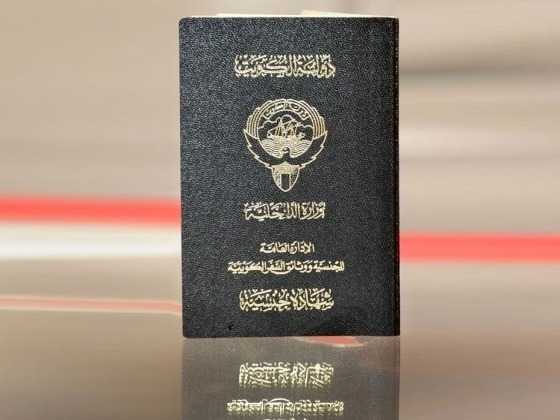
Kuwait issued an explanatory memorandum to amend the citizenship law to protect national identity and ensure consistency with the Constitution and contemporary reality
Translated by Alqyas from Al-Qabas — Original source
The explanatory memorandum for Decree-Law No. 52 of 2026, amending certain provisions of Amir’s Decree No. 15 of 1959 on Kuwaiti Nationality, emphasizes the importance of regulating nationality as one of the state’s sovereign pillars. It reaffirms the commitment to safeguarding Kuwait’s national identity and ensuring consistency between legislative provisions, constitutional texts, and the requirements of contemporary reality.
The memorandum adds that this decree implements the directives outlined in the High Speech delivered by His Highness the Amir of the State on March 20, 2025, which stressed the necessity of handling nationality matters in accordance with the law, while taking into account humanitarian and living conditions. It further states that national identity represents the goal of every genuine Kuwaiti who is keen on the progress and elevation of his country. It also serves as the shield protecting Kuwait, the impregnable fortress for confronting hardships, overcoming challenges and threats, and countering anyone attempting to tamper with the nation’s security and stability or harm citizens’ interests.
Driven by the importance of regulating nationality as a sovereign pillar, the commitment to preserving Kuwait’s national identity, ensuring alignment between legislative and constitutional texts, and meeting contemporary needs, as well as the urgent need to achieve a balanced and comprehensive legal framework that reorganizes the provisions of Amir’s Decree No. 15 of 1959 on Kuwaiti Nationality—thereby guaranteeing the preservation of national identity, strengthening national belonging, and maintaining Kuwait’s legal sovereignty in all nationality matters—the project was prepared.
Given that the Amir’s Decree was issued on May 10, 2024, and Article 4 thereof stipulates that laws are enacted by decree-laws, the present decree-law project introduces fundamental amendments to certain provisions of the aforementioned Amir’s Decree No. 15 of 1959. These amendments emphasize Kuwaiti nationals’ national identity and enhance state belonging, ensuring the purification and rectification of any impurities that marred the Kuwaiti nationality file due to erroneous handling—whether intentional or unintentional.
The current project aims to update the legislative framework governing Kuwaiti nationality, achieving a balance between protecting the national fabric, considering humanitarian and social factors, and ensuring the state exercises its sovereign powers regarding the granting, loss, withdrawal, and cancellation of nationality within clear boundaries and robust legal controls. The project includes replacing several key articles in the existing law, amending certain phrases that no longer align with the current framework, and repealing provisions found to be unnecessary or conflicting with the new legislative vision.
Regarding the deprivation of all benefits if nationality is lost, withdrawn, or cancelled, in accordance with Articles 10, 11, 11 bis, and 13 (items 2, 3, 5, and 6), the individual shall be deprived of all benefits previously obtained.
The use of genetic and biometric fingerprints is permitted in cases of loss, withdrawal, or cancellation of nationality. Article 20, second paragraph, of the decree states: “Scientific means—including genetic and biometric fingerprints—may be used in cases of loss, withdrawal, or cancellation of nationality, as well as when adding any person to the father’s nationality file, in accordance with the principles and controls issued by a decision of the Minister of Interior.”
A Kuwaiti nationality certificate shall be revoked if it is established that it was issued through fraud or false statements. Article 21-A stipulates that a Kuwaiti nationality certificate shall be revoked if it is found to have been issued unlawfully on the basis of fraud, false statements, or incorrect certificates. Such revocation shall be effected by decree upon a proposal from the Minister of Interior and with the approval of the Supreme Committee for Kuwaiti Nationality. Consequently, the Kuwaiti nationality of any person who acquired it through the original certificate holder by way of derivation shall also be revoked.
Seven years’ imprisonment for intentionally providing false information: Article 21-B stipulates that: “Any person who provides false information to the administrative authorities competent for investigating Kuwaiti nationality, or to the committees formed for this purpose, whether to prove Kuwaiti nationality for themselves or for others, or to facilitate its acquisition in accordance with the provisions of this Law, whether orally or in writing, and fails to demonstrate that they made reasonable efforts to verify the accuracy of the information provided, shall be punished with imprisonment for a term not exceeding three years and a fine not exceeding three thousand dinars. If the person provided the aforementioned information with knowledge of its falsity, the punishment shall be imprisonment for a term not exceeding seven years, and a fine not exceeding five thousand dinars may also be imposed.”
Decrees and decisions regarding nationality are acts of sovereignty and are not subject to judicial review: Article 22 stipulates that all decrees and decisions related to nationality are considered acts of sovereignty, and courts shall not adjudicate them. Article 23 stipulates that the Public Prosecution is competent to investigate, take action, and prosecute all crimes stipulated in this Law.
Article 2: The phrases “Minister of Interior” and “Supreme Committee for Kuwaiti Nationality” are replaced by “Head of the Circles of Police and General Security” and “Supreme Committee,” respectively, wherever they appear in the articles of the Emiri Decree No. 15 of 1959 referred to herein.
Article 4: Articles numbers “2, 3, 4, 5, 6, and 7 bis” of the Emiri Decree No. 15 of 1959 referred to herein are repealed. Law No. 44 of 1994 and Law No. 32 of 1995, which amended certain provisions of the aforementioned Emiri Decree No. 15 of 1959, are also repealed. Any provision conflicting with the provisions of this Law-Decree is hereby repealed.
Article 5: The Prime Minister and the Ministers shall each, within their respective competencies, implement this Law-Decree. It shall be published in the Official Gazette and shall take effect from the date of its publication.
Article 11 bis stipulates: “Every person who acquires Kuwaiti nationality by naturalization must renounce their foreign nationality, if they hold another nationality, within three months from the date of acquiring Kuwaiti nationality, and must submit to the Ministry of Interior proof of such renunciation within this period. Otherwise, their grant of nationality shall be considered null and void ab initio from the date of naturalization.”
Naturalized persons must renounce their foreign nationality within three months of naturalization.
Article 12: Restoration of nationality to a Kuwaiti woman, subject to conditions: “By decree, and with the approval of the Supreme Committee for Kuwaiti Nationality, Kuwaiti nationality may be restored to a Kuwaiti woman in accordance with the provision of Article 1 of this Law, which she lost under the provisions of the first paragraph of Article 10 of this Law upon the termination of marriage, if she requests it and her habitual residence is in Kuwait or she returns to reside there.”
Six cases for revoking the nationality of a Kuwaiti who acquired it by naturalization:
01. If the Kuwaiti nationality was granted through fraud, forgery, or based on false statements, the nationality shall be revoked from anyone who acquired it through the original holder by way of derivation.
02 If he is sentenced to a final judgment after being granted Kuwaiti nationality for an offense involving moral turpitude or breach of trust, or for a crime against internal or external state security, or for an offense against the sanctity of the divine, the prophets, or the Amir. If the judgment issued against the person in any of these crimes was in absentia and he is fleeing abroad, nationality may be revoked after six months have passed since his presence outside the country.
03 If he is dismissed from his government position for disciplinary reasons related to moral turpitude or breach of trust after being granted Kuwaiti nationality.
04 If the supreme interests or external security of the state so require. In this case, Kuwaiti nationality may be revoked from anyone who acquired it through derivation.
05 If there are serious indications before the competent authorities that he has propagated principles likely to undermine the economic, social, or political system of the country, or that he belongs to a foreign political organization. In this case, Kuwaiti nationality may be revoked from anyone who acquired it through derivation.
06 If he intentionally added to his own nationality file or the nationality file of another person any individual who is not his child or descendant, and this is established through an investigation conducted by the Supreme Committee for Kuwaiti Nationality. In this case, nationality may be revoked from anyone who acquired it through derivation.
Four cases for revoking Kuwaiti nationality from anyone holding it:
01 If he enters the military service of a foreign country without the permission of the Kuwaiti government.
02 If he works for the benefit of a foreign state that is at war with Kuwait, or if political relations have been severed with that state.
03 If he joins an organization whose objectives include undermining Kuwait’s social, economic, or political system, or if a judgment is issued convicting him of crimes specified as affecting his loyalty to his country and undermining its social, economic, or political system. In this case, Kuwaiti nationality may be revoked from his children and their descendants.
04 If he intentionally adds to his own nationality file or the nationality file of another person any individual who is not his child or descendant, and this is established through an investigation conducted by the Supreme Committee for Kuwaiti Nationality or by a final court judgment. In this case, revocation of nationality is issued by decree solely for that person.
