Fragile truce... Two weeks for negotiations
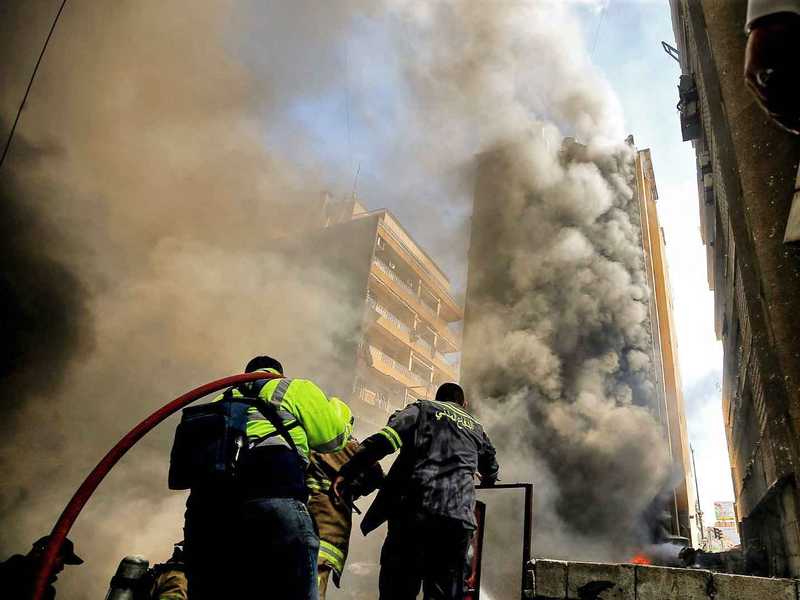
Trump and Tehran agreed to a two-week ceasefire, with negotiations in Islamabad regarding the nuclear file, but violations are raising doubts.
Translated by Alqyas from Al-Qabas — Original source
In the final half-hour before the anticipated darkness, Pakistan, alongside the mediating countries Turkey and Egypt, succeeded in securing a safe descent from the tree of escalation for both the Iranian regime and U.S. President Donald Trump in a conflict that had raised its stakes to unprecedented heights. This was achieved through their sudden acceptance of Islamabad’s proposal to suspend military operations for two weeks, open the Strait of Hormuz to international navigation, and commence negotiations in Islamabad the following day (Friday) to reach a final agreement on outstanding issues, foremost among them the nuclear file. However, the agreement is fragile and under test, particularly after being violated by the Tehran regime in the Strait of Hormuz and the continuation of aggression against Gulf states.
A brief pause and a move that shifted the balance of conflict saw U.S. President Donald Trump announce a suspension of military operations against Iran for two weeks. This sudden decision came after weeks of intense escalation and just one hour before the expiration of an ultimatum issued to Iran to open the Strait of Hormuz, or face U.S. action to “annihilate Iranian civilization entirely and forever.” Analysts viewed this rapid shift from escalation to de-escalation as reflecting a dual strategy combining military pressure and diplomacy. They see Trump’s current ceasefire as a preliminary step toward a broader agreement, especially given indications of Iran’s readiness to enter negotiations. Notably, however, Trump did not close the door on escalation, emphasizing in a clear deterrent message that Washington would return with force if necessary.
By the United States scaling back its comprehensive strikes, in exchange for Iran’s agreement to ensure the safe passage of oil, gas, and other tankers through the Strait of Hormuz, Pakistan managed to avert a major escalation that had the entire world holding its breath. Pakistani Prime Minister Shehbaz Sharif and Army Chief Asim Munir, who maintain close ties with both Washington and Tehran, provided an exit strategy sought by the U.S. President and the new regime in Tehran, allowing both sides to declare victory in their own ways.
It was a great day for peace. Trump stated that the United States would work with Iran to extract and remove buried uranium, and also indicated the possibility of U.S. participation in securing the vital waterway of the Strait of Hormuz through a “joint project” with Iran. He declared the ceasefire agreement a “great day for global peace” and said the United States would “help alleviate traffic congestion in the Strait of Hormuz,” anticipating “many positive measures.” He added: “Huge sums of money will be earned. Iran can begin a reconstruction process. We will store supplies of all kinds and remain on standby to ensure everything proceeds smoothly.”
Forced to surrender! Meanwhile, Tehran stated that its army would coordinate the passage of ships. The Iranian military praised the country’s resilience against the United States and the “occupation entity,” claiming this had “ultimately forced them to accept Iran’s proposed terms and surrender.” The Central Command of Khatam al-Anbiya, affiliated with the Iranian Army, announced in a statement that there had been “extremely heavy losses in lives,” indicating that Iran is capable of “putting any enemy in its place and forcing it to surrender and retreat.” The statement read: “Given the lack of trust toward enemies, we are monitoring all their movements in the region. If they commit another mistake, we will respond in a more destructive and lethal manner than before.” The Iranian military stated it would manage the Strait of Hormuz intelligently, claiming it poses no threat to regional states, and reaffirmed its support for what it calls the Iranian axis of resistance.
Doubts surround the talks. While Gulf Arab states welcomed the temporary ceasefire and emphasized the importance of keeping the Strait of Hormuz open and the necessity of reaching a comprehensive settlement to the conflict, Iran halted oil tankers passing through the Strait of Hormuz, in violation of the ceasefire terms with the United States. Iranian state media reported that traffic was forcibly stopped in response to the occupation entity’s most intense strikes against Iranian-backed Hezbollah militias in Lebanon. This move came as Iran also attacked Saudi Arabia and four other Gulf states over the course of the previous day.
According to sources familiar with the matter cited by The Wall Street Journal, Iran informed mediators that it would not participate in talks scheduled for tomorrow (Friday) in Pakistan unless the current ceasefire included Lebanon. Iran warned it would continue attacking its Gulf neighbors and reverse its decision to reopen the Strait of Hormuz if the occupation entity continued its strikes on Hezbollah.
In response, U.S. President Donald Trump stated that the ceasefire with Iran did not include Lebanon. In a phone interview with “PBS NewsHour,” he added that Lebanon was not included in the agreement “because of Hezbollah. It wasn’t included in the agreement. This will also be addressed. It’s fine.” When asked about Israel’s continued airstrikes in Lebanon, he said, “Everyone knows it’s a separate skirmish.”
It remains unclear what Tehran and Washington will discuss if Friday’s talks proceed, after Pakistani Prime Minister Shehbaz Sharif invited delegations from Iran and the United States to hold talks. A regional official warned that the matter of negotiations had not yet been finalized, pointing to uncertainty regarding the topics to be discussed and the agreed-upon mechanisms for the talks.
Prime Minister Sharif stated that “reports of ceasefire violations have emerged in a few places across the conflict zone, undermining the spirit of the peace process.” In a post on X, he urged “all parties sincerely and earnestly to exercise restraint and respect the two-week ceasefire so that diplomacy can play a leading role toward a peaceful settlement of the conflict.” He noted that Pakistan had played a key role in securing the cessation of hostilities, praising his team, including Foreign Minister Ishaq Dar and Army Chief General Asim Munir, for their ongoing diplomatic efforts with American and Iranian leaders. He described the truce as a first step toward broader peace, expressing hope that the talks on Friday would help transform the fragile ceasefire into a permanent solution.
Fans may not attend. Rumors circulated that Iranian Parliament Speaker Mohammad Bagher Qalibaf would lead Iran’s delegation to Islamabad, while U.S. Vice President J.D. Vance would lead the American delegation. Both were expected to arrive in the Pakistani capital today. However, President Trump said talks with Iran would take place “very soon,” adding, “We will have Steve Witkoff, Jared Kushner, and maybe J.D. Vance. I don’t know... There is a matter of safety and security.” Trump also stated that there was a single set of points acceptable to the United States, which would be discussed in closed sessions.
Later, White House spokesperson Karoline Leavitt said Iran’s original plan was unacceptable, and when it was ignored, Iran proposed a more reasonable plan. She added that the red lines set by Trump regarding Iran remained unchanged, and that Iran had requested a ceasefire and could no longer afford to gamble.
Kuwaiti officials also indicated that negotiators would focus on the American plan, the opening of the Strait of Hormuz, and that J.D. Vance would lead the American delegation to Islamabad. A fragile ceasefire: In this context, U.S. Vice President Vance described the ceasefire agreement as “a fragile truce,” but he provided no details. Vance said the agreement reached by the United States with Iran was being distorted within Iran, although he offered no specifics beyond stating that the agreement included a ceasefire, plans for negotiations, and the opening of the Strait of Hormuz. Vance said, “There are people lying even about the fragile truce we have already secured.” Vance said Trump had instructed the American representatives who would negotiate with Iran to do so “in good faith,” but he warned that Trump was eager to make progress; however, if the Iranians did not do the same, they would discover that the U.S. president is not the type to show leniency. Vance added, “I think if the Iranians negotiate in good faith, we will be able to reach an agreement, though that is a slim possibility.” Four factors can explain Trump’s decision: • Achievement of military objectives and weakening of Iranian capabilities • Global economic pressure following the rise in oil prices • U.S. domestic political calculations as the midterm elections approach • Opening the door to negotiations and the prospect of a long-term, historic strategic agreement. Three scenarios: Despite the optimism, several scenarios remain: • Success of negotiations and conclusion of a historic agreement • Failure of the ceasefire and return to catastrophic escalation • Continuation of the current situation. Statistics on strikes against Iran according to General Cain: • More than 13,000 targets were struck • 80% of Iran’s air defense systems were destroyed • 90% of its weapons factories were attacked • More than 90% of Iran’s regular naval fleet may have sunk • 150 ships are now “at the bottom of the ocean” • The operation involved consumption of more than 6 million meals, more than 950,000 gallons of coffee, 2 million energy drinks, and a large amount of nicotine.
