Real estate experts to Al-Qabas: Sector transactions witness a decline
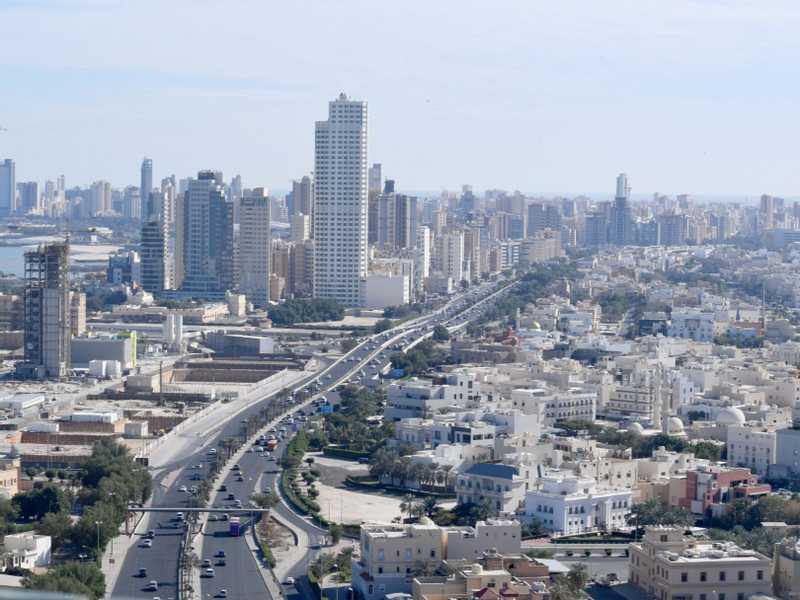
The real estate market in Kuwait witnessed a decline in transactions and a drop in property prices due to regional tensions and reduced work percentages.
Translated by Alqyas from Al-Qabas — Original source
The Kuwaiti real estate market currently stands at a suspended moment, caught between what has happened and what may occur, between figures that have declined and others waiting to recover, between canceled deals and those postponed, and between investors who are watching and buyers who cannot wait. War does not always arrive as smoke; sometimes it comes as changing numbers, delayed decisions, and caution seeping into the smallest details. Here, real estate is no longer just a financial asset, but a long memory of crises—from 1990, to 2008, to the coronavirus pandemic. This memory suggests that every downturn carries the potential for a rise, and every stagnation hides deferred movement. In this sense, the market is not experiencing a collapse, but rather a slow period of reflection, a moment in which it tests its ability to survive, not just to rise.
Real estate expert Sulaiman Al-Dulaimi stated that residential real estate in Kuwait witnessed a decline in prices during the past year. With the ongoing war, expectations remain open to the possibility of future impacts; however, the market currently shows a state of relative stability in terms of supply and demand. He added that real estate, by nature, has gone through repeated cycles of crises, as seen during the 2008 crisis and the coronavirus pandemic, where activity temporarily declined before rebounding rapidly once the crises subsided. This reinforces the hypothesis that the market possesses the capacity to recover as conditions improve.
He continued: "On the other hand, the Land Anti-Monopoly Law is expected to exert a downward pressure, potentially leading to further declines or stagnation, especially with the increase in potential supply. However, the current landscape is characterized by anticipation and waiting, amid unstable regional conditions."
Al-Dulaimi concluded: "During the last two weeks of Ramadan, a clear slowdown in real estate transactions was observed. Activity was almost entirely confined to the residential sector, while other sectors were absent from the scene. The picture is expected to become clearer in the coming period, with the release of data from the Ministry of Justice, which will reflect the market’s direction."
For its part, the market awaited developments. Researcher and real estate consultant Ali Al-Saffar stated that if we were to describe the current real estate landscape, we would find it undergoing a new exceptional state, due to the significant regional tensions affecting Kuwait directly. Since February 28, 2026, we have witnessed rapid and sudden events. Through the Research and Studies Center, and as part of monitoring and analyzing real estate transactions, we identified several key points that outline the current landscape preliminarily, as follows:
First: Cancellation of some registered sales. A number of sales that were in progress were canceled, reflecting a state of anticipation and caution among a segment of market participants.
Second: Clear negotiating flexibility, even from buyers. Negotiations over prices have become more prominent in current deals, due to the prevailing atmosphere of anticipation in the market.
Third: A sharp decline in transactions and the number of deals, caused by a 30% reduction in the number of employees in ministries, which led to delays in registration procedures.
Fourth: Some investors and property buyers are taking advantage of opportunities during this period.
Al-Saffar clarified that these factors directly impacted transaction activity. Comparing transactions in March 2026, it is clear that during the first 24 days of March 2026, 115 real estate transactions were recorded with a total value of 59.499 million dinars. In comparison with the same period in February 2026, which recorded 474 real estate transactions valued at 561 million dinars, there is a 79% decrease in the traded value, as well as a nearly 76% drop in the number of transactions.
Continuing: Compared to the same period in March 2025, which recorded 381 real estate transactions valued at 257.155 million dinars, there was a 69% decline in the number of deals and a 77% drop in their value, compared to the same period last year, when total transactions in this month reached 419 real estate deals valued at 280.462 million dinars. He clarified that February 2026 was the highest trading month in the history of the Kuwaiti real estate market, achieving 616 million dinars. This figure was supported by trading in the Sabah Al-Ahmad City maritime area, where commercial transactions and nurseries in that area reached approximately 202 million Kuwaiti dinars during this month. These transactions were distributed into 123 million dinars in commercial transactions and 79 million dinars in the nursery sector.
Continuing: We also expect April to see a doubling in trading volume for two reasons: first, the sale of March transactions that were delayed until April, and second, the possibility of the market returning to its normal pace following a decrease in the intensity of regional tensions. Al-Saffar added: Returning to common data points that recur in most economic and political crises, we find that property prices often experience a temporary decline, while oil prices rise due to tensions. Interest rates also decrease in some stages, in addition to rising transportation costs, which affect building materials and may contribute to higher inflation rates.
In turn, Aman Aqari said real estate researcher Abdulrahman Al-Husseini stated that residential real estate is the safest haven, as demand for it remains steady because it is a basic need unaffected by crisis fluctuations. Although war periods usually witness a decline in trading volume, the Kuwaiti real estate market has not faced a real obstacle, but rather a relative slowdown that is not alarming.
Continuing: This slowdown is partly attributed to a reduction in the work rate to 30%, which reflected on the pace of completing sales and registration procedures. For example, some transactions from late February and early March may be deferred to April, which could affect their timing of registration, without changing the overall picture of market performance or disrupting first-quarter data. Al-Husseini clarified that most sectors are affected by current conditions, except for the residential sector, which remains more resilient. In a state of anticipation, speculators in residential and other sectors tend to freeze their funds and monitor developments in global and Gulf markets, especially since conditions have not yet reached a stage of full-scale war, leading to a decline in activity among some of them.
Housing is a necessity: Al-Husseini said residential demand remains relatively stable, as those buying for residential purposes do not retreat, considering that housing is a basic need that cannot be postponed.
Real estate and crisis memory: Al-Saffar said the real estate market has gone through several pivotal crises that affected its trajectory, and each crisis had a direct impact on market movement. Among the most prominent of these crises are:
- The Iraqi invasion crisis in 1990.
- The Asian crisis in 1997.
- The September 11 events in 2001.
- The fall of Saddam in 2003.
- The global financial crisis in 2008.
- The Arab Spring in 2011.
- The Corona crisis in 2020.
Post-crisis boom: Al-Saffar said historical readings indicate that after these crises, the market often experiences a boom due to the return of economic activity and the accumulation of deferred demand, leading to an increase in trading value and the number of deals, in addition to an improvement in property prices after periods of decline.
He added that after the boom phase, the market typically moves to another stage characterized by a price correction, accompanied by a decline in trading volumes and market capitalization, due to changes in economic indicators and rising interest rates, which brings the market back to a more balanced trajectory within the natural cycle of the real estate market.
