Simple ways to mitigate the impact of 'sirens' on children
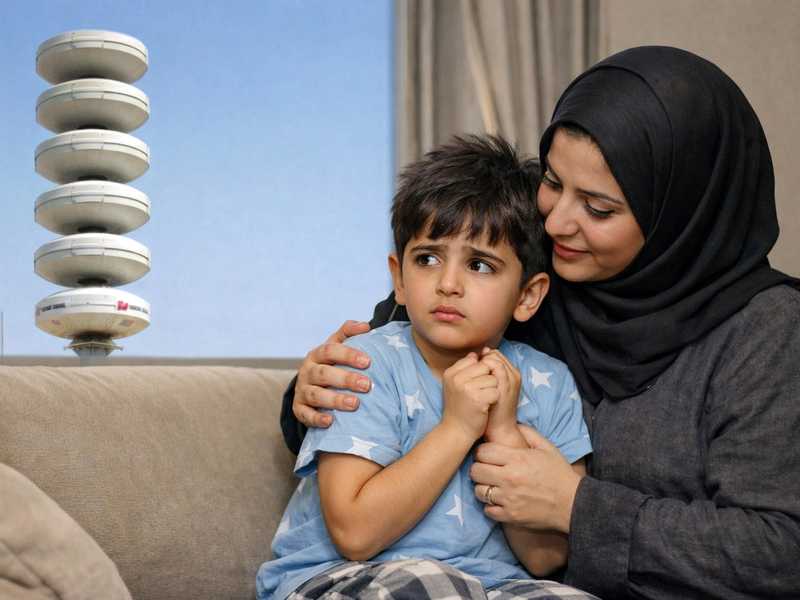
Sirens affect children by activating the nervous system, causing fear and psychological disturbances.
Translated by Alqyas from Al-Qabas — Original source
Dr. Wala’a Hafez: As countries in the region and around the world witness an escalation in the pace of wars, with air-raid sirens blaring and missiles being intercepted, children remain the most psychologically affected. The loud sounds associated with war are not merely transient noise; they are stored in a child’s memory as signals of danger and threat, and over time can evolve into deep psychological effects scientifically known as “psychological trauma” or post-traumatic stress disorder. Medical and psychological reports indicate that repeated exposure to these sounds is among the most dangerous factors affecting a child’s mental health and normal development.
◄ Children Are More Susceptible to Impact
Children remain the group most vulnerable to the effects of war, as they lack the capacity to fully understand what is happening around them or to cope with it psychologically. Sounds that may pass unnoticed by adults become in a child’s memory permanent symbols of fear and threat. Nevertheless, studies confirm that the availability of a supportive environment, a conscious family, and early psychological intervention can transform a painful experience into a path of recovery, rather than leaving a wound in children’s memories. Studies published in specialized scientific journals, including the European Child & Adolescent Psychiatry journal, show that war experiences increase the risk of long-term psychological disorders. The American Academy of Pediatrics also confirms that the impact of conflicts may extend to behavioral disorders and developmental delays.
◄ Why Do Loud Sounds Terrify Children?
Sudden sounds, such as explosions and air-raid sirens, trigger the “fight or flight” response in a child’s brain—a natural mechanism aimed at protecting them from danger. However, repeated activation of this response over prolonged periods exhausts the nervous system, keeping the child in a state of continuous tension. Psychiatry specialists note that children exposed to these sounds or witnessing them exhibit a wide spectrum of reactions, including fear, crying, and withdrawal, as well as physical symptoms such as abdominal pain and headaches. The problem does not end at the moment of hearing the sound; it may extend to a persistent fear of any sudden noise, even if it is not dangerous.
◄ Direct Impact on the Nervous System
Sudden loud sounds are among the most impactful factors on children’s nervous systems, given their sensitivity and incomplete development. Repeated exposure to these sounds affects not only hearing but also the brain, the nervous system, and psychological and behavioral functions.
◄ How Does the Body React to Sounds?
When a child hears a sudden explosion, the autonomic nervous system becomes activated, particularly the sympathetic nervous system responsible for responding to danger, leading to:
● Increased heart rate
● Elevated blood pressure
● Increased secretion of stress hormones, such as adrenaline
● Muscle tension
● Heightened alertness and fear
With repeated exposure to this reaction, the nervous system remains in a state of constant alert, causing neurological stress that may develop into long-term psychological and behavioral disorders.
◄ Symptoms of Psychological Trauma in Children
Reports from the World Health Organization indicate that children affected by war may exhibit a range of symptoms, the most prominent of which include:
● Sleep disturbances and nightmares
● Enuresis (bedwetting), especially in younger children
● Severe fear or anxiety about separation from parents
● Loss of appetite or unexplained physical pain
● Difficulties with concentration and learning
● Withdrawal or aggressive behavior
◄ Sleep Disorders and Their Deep Impact
Sleep disorders are among the key indicators of nervous system impact. Sudden sounds disrupt sleep and increase nighttime vigilance, affecting brain development, especially since deep sleep is essential for regulating emotions and consolidating memory.
◄ Potential chronic effects of continued exposure to loud noises may include long-term impacts such as hypersensitivity to sounds, persistent anxiety, impaired concentration, hyperactivity, and memory and attention disorders. ◄ The family’s role in protecting a child psychologically The family plays a pivotal role in safeguarding a child’s mental well-being. Specialists emphasize that emotional support serves as the first line of defense, achieved through: ● Providing a sense of security and reassuring the child ● Explaining what is happening in age-appropriate language ● Maintaining a regular daily routine that fosters a sense of safety and stability ● Encouraging the child to express emotions through drawing and play ● Limiting exposure to news and violent imagery ◄ When should psychological help be sought? It is advisable to consult a mental health professional if symptoms persist or worsen, particularly in the presence of recurring nightmares, severe anger outbursts, noticeable social withdrawal, or a sudden decline in academic performance. ◄ Essential preventive measures Experts note that simple measures, such as using earplugs, can significantly reduce the intensity of loud noises in such circumstances. The American Academy of Pediatrics also recommends a set of practical steps to help minimize the impact of these noises, including: ● Using earplugs suitable for children ● Keeping the child in an interior room away from windows ● Closing windows and doors tightly ● Covering windows with thick curtains or blankets to dampen sound ● Temporarily covering the child’s ears during sudden loud noises Although these measures are simple, they effectively help mitigate the neurological effects of loud noises, especially with repeated exposure, and assist in reducing stress and anxiety levels in children.
