Vague remarks tread the line of diplomacy
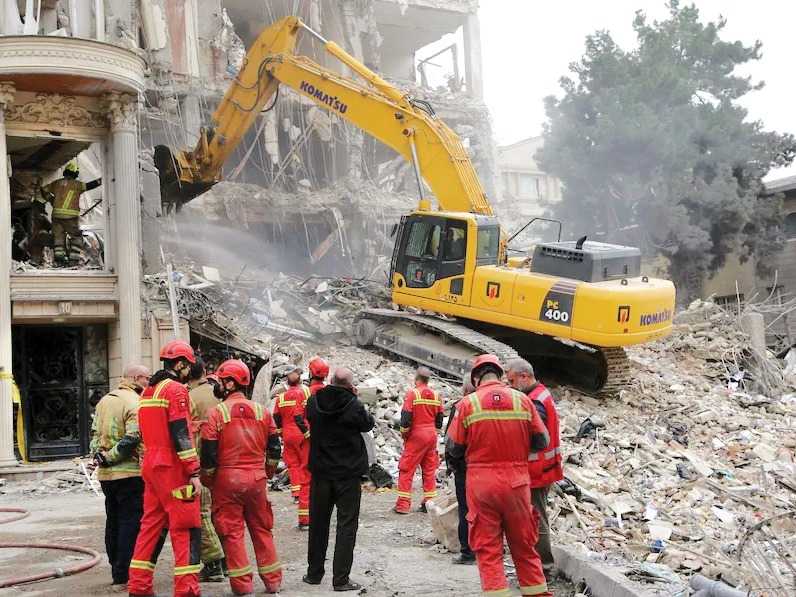
Trump announced good talks with Iran and postponed military strikes against power plants, while criticizing Iran's denial and emphasizing regime change.
Translated by Alqyas from Al-Qabas — Original source
On the twenty-fourth day of the war, vague and inconclusive statements emerged today regarding the imminent launch of a diplomatic initiative and negotiations aimed at ending the conflict. The announcement of the diplomatic move appeared unilateral, originating from Washington and specifically from U.S. President Donald Trump, while the Iranian regime continued to deny it. President Trump granted Iran a new deadline, announcing that Washington and Tehran had held “very good and highly productive” talks over the past two days to reach a comprehensive resolution to the state of hostility with Iran, and he confirmed that he would postpone military strikes against Iranian energy and power facilities for five days. Trump also proposed a “co-leadership” for Iran following talks with the regime aimed at ending the war, noting that the United States could administer the country alongside an unnamed Iranian leader. Trump claimed that peace talks had begun and stated there would be “some form of regime change” in Iran, adding, “Perhaps co-leadership.” He further suggested that the United States could find a leader as it had done in Venezuela. Speaking to reporters, he said, “We have held important talks with Iran… We have completely destroyed their leadership, and we are now speaking with their highest remaining official, but it is not the Supreme Leader, and no one knows what is in his mind. Perhaps we can reach a solution… We will give them five days to see if we can do that. If we cannot, we will continue to bomb them.” Trump added, “We are talking about everything. We do not want nuclear weapons or long-range missiles, and peace will prevail in the Middle East. I believe we will succeed on the nuclear file. We do not want uranium enrichment; we want to seize enriched uranium. If that happens, Iran will have a good chance to rebuild itself. That would also be beneficial for Israel and other Gulf states.”
However, Tehran viewed Trump’s remarks as a new U.S. retreat, denying that any negotiations had taken place. A senior Iranian official told Reuters that Washington had requested the meeting with Qalibaf, and that Tehran had not yet decided on any proposed talks. Qalibaf himself denied holding any negotiations, writing on the X platform: “Our people demand comprehensive punishment for the aggressors… No negotiations have taken place with the United States, and false news is being used to manipulate financial and oil markets.”
Following the Iranian denial, Trump reiterated that “talks with Tehran began on Saturday night… We may reach an excellent agreement for everyone, no worse than what we would have achieved had we proceeded with the full military option.”
Commenting on the U.S. president’s statements, Axios reported that U.S. envoys Steve Witkoff and Jared Kushner were speaking with Iranian Parliament Speaker Mohammad Bagher Qalibaf, and that intermediary countries—Turkey, Egypt, and Pakistan—were attempting to organize a meeting in Islamabad later this week, with Qalibaf representing Tehran, and Witkoff, Kushner, and possibly the U.S. Vice President representing the United States. Pakistani Prime Minister Shehbaz Sharif confirmed that he had contacted Iranian President Masoud Pezeshkian, and the two agreed on the necessity of beginning transparent negotiations to halt the war. The Financial Times reported that Pakistan is playing a key mediating role in efforts aimed at ending the war. The newspaper cited two informed sources stating that Pakistani Army Chief Asim Munir spoke with the U.S. president on Sunday as part of these diplomatic efforts.
The following are the details: The war in the Middle East, which has entered its fourth week, has seen several dramatic turns, including the killing of Iran’s Supreme Leader Ali Khamenei, the bombing of a major Iranian gas field, and Iran’s launch of a brutal aggression against Gulf Arab states targeting oil and gas facilities and other civilian infrastructure under false and baseless pretexts. The Hormuz Strait crisis has become a primary issue driving a global energy crisis and preventing Trump from ending the war, as he warned of an imminent dramatic escalation. However, in a new turn in the course of the war, US President Donald Trump – in a surprise announcement – retracted his threat to strike Iranian energy facilities, noting that his administration had engaged in productive talks with Iran regarding a “complete and comprehensive” resolution to hostilities. This led him to postpone his pledge to bomb energy sites if Iran did not allow safe passage of ships through the Strait of Hormuz by Monday night, extending the deadline by five additional days.
Trump wrote in capital letters on his Truth Social post: “I am pleased to inform you that the United States and the Islamic Republic of Iran have conducted, over the past two days, very good and highly productive talks regarding reaching a complete and comprehensive solution to our hostilities in the Middle East.” Trump added: “Based on the content and tone of these deep, detailed, and constructive talks, which will continue throughout the week, I have issued my orders to the Department of War to postpone any and all military strikes against Iranian energy facilities and energy infrastructure for five days, contingent on the success of the ongoing meetings and discussions.”
Later that evening, Trump reiterated that the renewed talks with Iran began shortly after his threat to bomb energy infrastructure. During an event in Tennessee, he said: “We were planning to destroy some of their energy facilities tomorrow, but we won’t do that; we will postpone it. We hope we won’t have to do it, and we hope we can reach an agreement that benefits everyone.” He added: “We have been negotiating with Iran for a long time, and this time, they are serious about it, and that is thanks to the excellent work done by our military.”
The US President had previously told reporters at West Palm Beach airport that his envoys had held talks with a senior official in the Iranian leadership, noting that both sides agreed on many points. Although Iran denied holding any such talks, while acknowledging that some regional countries are working to de-escalate tensions, and claiming that Trump is merely trying to calm energy markets, Trump revealed another surprise, stating that Iran’s denial was due to a misunderstanding within the Iranian leadership. He affirmed that he believes the individuals the United States is speaking with inside Iran represent the regime.
A temporary reprieve! Trump’s shift in position appeared to offer a temporary reprieve for Iran after threats that could have had severe consequences. Trump said Iran wants to “reach an agreement,” and pointed out that US envoys are holding talks with an Iranian leader “who is respected.” He added that his Middle East envoy, Steve Witkoff, and his son-in-law, Jared Kushner, held talks on Sunday evening, and that negotiations would continue via phone, with the possibility of an in-person meeting later. Trump did not name his Iranian counterpart, saying he did not want to cause his death, but he confirmed that the United States had not spoken with the new Supreme Leader, Mojtaba Khamenei.
Mojtaba is not the true leader. Regarding the identity of the person the United States is talking to in Iran, Trump said: “A high-level figure. Don’t forget: We eliminated the leadership in the first and second stages, and a large part of the third stage.”
“But we are dealing with a man I consider the most respected, and the leader—you know, it’s a bit difficult; we have eliminated everyone.” When pressed by a CNN reporter on whether the United States was speaking with Mojtaba Khamenei, Trump said, “No, not with the Supreme Leader,” adding, “We haven’t heard anything about Khamenei’s son. From time to time you will hear a statement issued—but we don’t know if he is alive.” He added, “I don’t consider him the real leader.”
A 15-point agreement. Trump stated that the United States and Iran agree on many key issues, “and we will see where that leads us.” He added that the United States and Iran had reached 15 points of agreement—none of which Tehran has confirmed. According to the U.S. president, Iran pledged not to seek nuclear weapons or uranium enrichment, to hand over its current stockpiles, and agreed to discuss missiles. It also agreed to reopen the Strait of Hormuz. Trump said, “Everything went perfectly,” noting that Iran initiated the talks. “I think if they proceed with that, this problem and this conflict will end, and I believe it will end radically.”
Trump said, “They really want to strike a deal. We also want to strike a deal.” The U.S. president emphasized that any agreement would require Iran not to acquire a nuclear bomb—“we don’t want to see a nuclear bomb, nor nuclear weapons”—but also that the United States would take possession of Iran’s highly enriched uranium. He added that his administration would move to seize enriched uranium from Iran if the two countries reach an agreement: “It will be very easy. We will go down there and take it ourselves.”
Trump said, “We will give it a five-day period and see how things go. If things go well, we will reach a solution. Otherwise, we will continue to bomb everything we can.”
“Hormuz” and regime change. The U.S. president said the Strait of Hormuz would open “very soon,” adding that he wants to see the vital shipping route under joint control by the United States and Iran. He said, “The strait will be under joint control… me and Ayatollah, whoever the next Ayatollah is.” Trump stated that there would also be “radical regime change,” referring to the strikes launched in the early hours of the conflict that killed most of Iran’s senior leadership. He added, “Regime change will happen automatically… We are dealing with some people whom I find extremely rational, strong personalities who know themselves and are highly respected, and perhaps one of them is exactly what we are looking for.”
Iranian oil. President Trump downplayed the move to ease sanctions on some Iranian oil stockpiles, noting that it aims to boost supplies amid a worsening energy crisis and will not “make any difference” in the war. When pressed on his previous criticism of former President Barack Obama for sending money to Iran as part of its 2015 nuclear deal, Trump said, “I just want to have as much oil as possible in the system.” He continued, “We don’t even know if Iran will get that money. Honestly, I think it’s extremely difficult, extremely difficult for them to get it.” Trump affirmed that “any oil revenues going to Iran will be minimal, and no small amount of money Iran receives will have any impact in this war. But I want things to be facilitated.” Qalibaf...
In response to Trump’s statements, a Kuwaiti official told Axios that U.S. envoys Steve Witkoff and Jared Kushner were speaking with Iranian Parliament Speaker Mohammad Bagher Qalibaf. He added that intermediary countries are trying to arrange a meeting in Islamabad, where Qalibaf and other Iranian officials represent Tehran, while Witkoff, Kushner, and possibly U.S. Vice President JD Vance represent the United States, later this week. However, a senior Iranian official told Reuters that the United States had requested a meeting with Parliament Speaker Mohammad Bagher Qalibaf, without specifying a location for the proposed meeting. The official, who requested anonymity due to the sensitivity of the issue, said the Iranian Supreme Council of National Security had not yet decided on any proposed talks, and Iran had not yet responded. Qalibaf, in turn, denied that any negotiations were taking place between Iran and the United States, writing on the X platform: “Our people demand comprehensive punishment for the aggressors, and all officials stand firmly with their leader and people in pursuing this goal.” He added: “No negotiations have taken place with the United States; false news is being used to manipulate financial and oil markets and to extricate the United States and Israel from the predicament they have created.” Qalibaf, a former commander of the Islamic Revolutionary Guard Corps, has emerged as a key decision-maker during wartime. Iranian media claimed that Trump had backed down shortly after Trump announced an extension of the deadline to strike power plants. Hours before the deadline, Iran’s state television reported that the U.S. president had “backed down after Iran’s firm warning.” Following Trump’s shift in position, Fars News Agency and Tasnim News Agency portrayed the U.S. president as retreating. A Tasnim report stated: “Since the beginning of the war, some intermediaries have sent messages to Tehran, but Iran’s clear response has been that it will continue its defense until the desired level of deterrence is achieved. With this kind of psychological warfare, the Strait of Hormuz will not return to its pre-war status, and energy markets will not return to calm.”
