Defense: Total Intercepted and Handled 212 Ballistic Missiles and 394 Drones
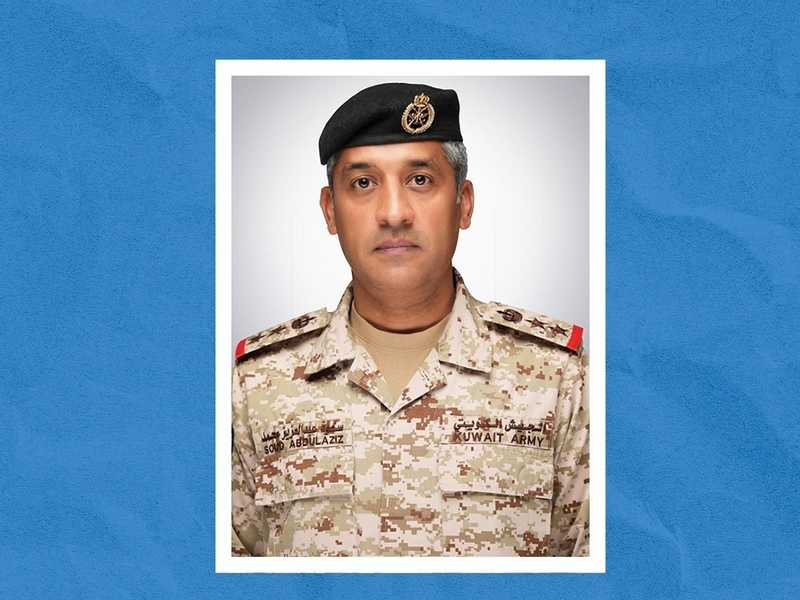
212 ballistic missiles and 394 drones were intercepted in violation of Kuwait's sovereignty
Translated by Alqyas from Al-Qabas — Original source
The official spokesperson for the Ministry of Defense, Colonel Saud Al-Atwan, confirmed that the total number of threats detected and intercepted so far as a result of attacks targeting Kuwait’s airspace amounted to 212 ballistic missiles and 394 drones. The armed forces successfully countered and intercepted these threats within the ongoing operational area.
Speaking at the first media briefing held by the Government Communications Center regarding current events on Thursday, Al-Atwan stated that Kuwait has been subjected to a series of attacks targeting its territory, constituting a clear and blatant violation of Kuwait’s sovereignty and international covenants and laws. He clarified that these attacks involved the use of ballistic missiles and attack drones targeting Kuwaiti territory, affecting some civilian facilities, infrastructure, vital installations, and residential areas. The attacks resulted in the martyrdom of two members of the armed forces and a child, along with several human injuries and material damage to certain installations.
Regarding the tracking of hostile targets, he noted that since noon on Saturday, February 28, Kuwaiti Army units and formations began their duties defending the country’s airspace and territory. The armed forces and air defense systems tracked and monitored hostile targets and engaged them in accordance with established operational procedures. He explained that the sounds of explosions heard were the result of successful engagement with hostile missiles and drones. He also praised the significant role played by Kuwaiti men and women in military and security agencies and across various state institutions, who have continued to perform their duties with responsibility and dedication since the onset of this brutal aggression, reflecting a unified national effort to protect the country’s security and stability.
On the sequence of field events since the start of operations, he stated that starting at 12:30 p.m. on Saturday, February 28, 2026, and during the first 24 hours until noon on Sunday, March 1, operations concentrated on several vital sites in the north and south of the country. Air defense systems engaged an initial wave of hostile aerial targets. During this period, 86 ballistic missiles were detected; 68 were intercepted, while 18 were not engaged as they posed no threat and were outside the threat zone. Additionally, 30 out of 53 drones were intercepted.
He further explained that on the second day, from noon on Sunday until noon on Monday, March 2, aerial attacks continued toward central regions. The armed forces engaged an additional wave of missiles and drones. A total of 62 ballistic missiles were detected; 54 were intercepted, while 8 were not engaged as they posed no threat and were outside the threat zone. Furthermore, 72 out of 132 drones were intercepted. During these operations, while performing their national duty, two members of the armed forces were martyred while carrying out their defensive missions to protect the homeland.
Regarding the third day, from noon on Monday until noon on Tuesday, March 3, Colonel Al-Atwan added that tracking and interception operations continued within the air defense system to protect the country’s airspace. During this period, 37 ballistic missiles were detected; 23 were intercepted, while 14 were not engaged as they posed no threat and were outside the threat zone. Additionally, 42 out of 100 drones were intercepted.
He reported that some interception operations resulted in debris falling in residential areas, causing material losses and civilian casualties, including the martyrdom of a child and injuries to four people. He stated that on the fourth day, from Tuesday afternoon until Wednesday afternoon, March 4, the armed forces continued to deal with additional waves of ballistic missiles, a cruise missile, and drones detected in Kuwait’s airspace. During this phase, 27 ballistic missiles were detected and all were successfully intercepted. He clarified that 33 out of 109 drones were intercepted as part of the air defense system protecting the country’s airspace. Regarding injuries among armed forces personnel, Colonel Al-Atwan said that 67 injuries have been recorded among Kuwaiti army members since the start of operations. The injured received necessary medical care and are all in stable condition, with two cases currently under medical follow-up.
He emphasized that the Kuwaiti Armed Forces are at the highest levels of readiness and preparedness, operating around the clock with close and continuous monitoring of all field developments, in full coordination with military and security authorities and various state institutions, as part of an integrated national system aimed at safeguarding the country’s security and the safety of citizens and residents. He prayed to Allah, the Almighty, to protect Kuwait and its people from all harm and to perpetuate the blessings of security and stability under the wise leadership of His Highness the Amir of Kuwait, Supreme Commander of the Armed Forces, Sheikh Meshal Al-Ahmad Al-Jaber Al-Sabah, may God protect and support him, and the leadership of His Highness the Crown Prince, Sheikh Sabah Khaled Al-Hamad Al-Sabah, may God protect him.
Interior Ministry: Security Situation Stable
For his part, Major General Nasser Bousaleeb, Director General of the General Administration of Security Relations and Media at the Kuwaiti Ministry of Interior, affirmed the stability of the security situation in the country, stressing the necessity of obtaining information and news from reliable sources, namely the official accounts of the state, and ignoring or refraining from spreading rumors. He stated that the security and defense systems are operating at the highest levels of readiness and preparedness within an integrated framework of joint operations rooms and precise, round-the-clock monitoring, thanks to the constant presence in the field of all relevant state sectors, which operate according to comprehensive proactive plans ensuring rapid response and precise handling of any emergency to protect national security and territorial integrity.
He added that the General Administration of Civil Defense activated air raid sirens 50 times since the onset of the current situation. He noted that field explosive ordnance disposal teams, composed of personnel from the Kuwaiti Army, the Ministry of Interior, and the National Guard, responded to 148 reports concerning debris falls, in accordance with the approved response plan for handling such incidents. He clarified that the Ministry of Interior, in its commitment to alerting all segments of society, activated sirens across various regions of the country and issued warnings through official Kuwait Television channels and all Kuwaiti radio stations, in coordination with relevant authorities.
He reported that warning notifications were sent via the unified government electronic services application (Sahel), benefiting approximately 6,800 deaf and hard-of-hearing individuals, ensuring that warning messages reached everyone and enhancing awareness and response levels in such situations. He urged everyone to cooperate and adhere to obtaining information and news from reliable sources, namely the official state accounts, and to avoid paying attention to or spreading rumors.
Officials emphasized the need to stay away from debris and to maintain distance if any unusual objects or unidentified remnants are spotted, reporting them via the emergency hotline. They noted that the Ministry had identified several individuals who moved or gathered around debris and other foreign objects, as well as gatherings organized by homeowners and neighbors, which pose a serious threat to their safety. There was also a directive to refrain from filming or disseminating any visual footage of security and military movements or of sites handling the incident, to avoid legal repercussions and safeguard national interests. The warning was reiterated against launching leisure and fishing boats into the sea and against staying in camps during this period, as a precautionary measure to ensure everyone’s safety, along with a ban on the use or operation of aerial imaging devices (drones). Colonel Busaless provided instructions to be followed when air raid sirens sound: remain calm, immediately proceed to safe locations inside buildings (such as basements or cellars, if available), stay away from windows and open areas, and follow directives issued by official authorities.
