Unprecedented US troop buildup in the region
Tensions rise between the US and Iran amid massive military deployment in the Middle East
Translated by Alqyas from Al-Qabas — Original source
Tensions have risen between the United States and Iran, marked by mutual accusations, amid growing U.S. military buildup in the region in anticipation of a potential decisive military strike by President Donald Trump aimed at toppling the regime. This comes as the U.S. Department of Defense released its National Defense Strategy, which stated that Iran, “despite recent setbacks in recent months, aims to rebuild its military, while keeping the door open to pursuing nuclear weapons and seeking to rebuild its proxies’ infrastructure and ignite regional crises that threaten the lives of U.S. soldiers.” The U.S. Department of Defense has deployed massive military assets to the Middle East, including an aircraft carrier group. The aircraft carrier Abraham Lincoln and three accompanying destroyers are in the Indian Ocean, joining three littoral combat ships stationed in Bahrain, along with two additional destroyers in the Arabian Gulf.
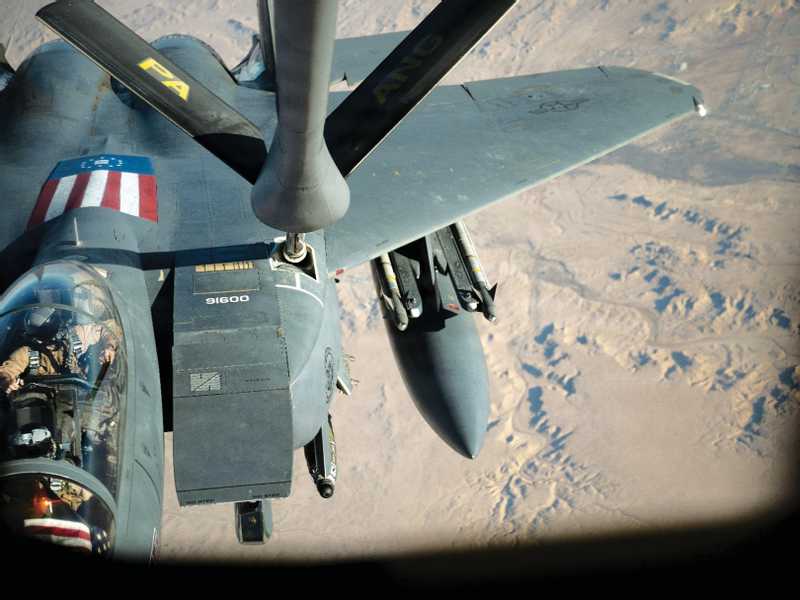
U.S. Central Command announced that F-15E Strike Eagle aircraft have now arrived in the Middle East, while the British Ministry of Defense stated it has deployed Typhoon fighter jets to Qatar “for defensive purposes.” Meanwhile, after a series of global airlines announced the suspension of flights to and through Middle Eastern countries, U.S. Central Command (CENTCOM) Commander Brad Cooper arrived in Tel Aviv on Saturday (today), following last week’s visit by Mossad Director David Barnea to the United States. The Hebrew newspaper Haaretz reported that “Cooper’s visit is intended to coordinate in the event of a potential attack on Iran.” The visit comes amid growing fears in Tel Aviv of a possible preemptive Iranian strike, with an Israeli security official noting that “a military strike on Iran is inevitable given the U.S. preparations and readiness.” He added that “the U.S. military buildup in the region is unprecedented and extremely large, and the U.S. demands on Iran this time are very strict.” He said, “We expect missiles to be launched from Iran, Yemen, Iraq, and Lebanon,” adding, “U.S.-Iran negotiations will be complex but short-term.”
In response, Tehran has escalated its warnings. A senior official stated that “Iran will treat any attack as an all-out war against it, and its military is on high alert and prepared for the worst-case scenarios, ready to respond in the strongest possible manner.” The Islamic Revolutionary Guard Corps (IRGC) and the regular army have also affirmed the integration and coordination of their operations. Army Ground Forces Commander Brigadier General Ali Jahanshahi emphasized that they will defend Iran to the death.
Details follow: The intensity of mutual threats between Iran and the United States is increasing alongside the growing U.S. military buildup in the region, preparing for what observers describe as the “worst-case scenario”—the overthrow of the Iranian regime through military strikes targeting its leadership, including Supreme Leader Ali Khamenei. Amid rising estimates that the United States is close to launching an attack on Tehran, particularly following the release of the U.S. Department of Defense’s National Defense Strategy—which noted that Iran, “despite recent setbacks, aims to rebuild its military, while keeping the door open to pursuing nuclear weapons and seeking to rebuild its proxies’ infrastructure and ignite regional crises that threaten the lives of U.S. soldiers”—U.S. Central Command (CENTCOM) Commander General Brad Cooper arrived in the occupied entity today in preparation for meetings with security and military leaders, including Chief of Staff of the Israeli Defense Forces Eyal Zamir and Commander of the Israeli Air Force Tomer Bar.
Amid fears in Tel Aviv that Iran may carry out a preemptive strike, as reported by the Israeli newspaper Yedioth Ahronoth. The U.S. Department of Defense (the Pentagon) deployed U.S. military assets to the Middle East this week, including an aircraft carrier group and thousands of troops, as President Donald Trump indicated he still retains the option of launching strikes against Iran amid its crackdown on protests. Trump told reporters last Thursday, “We have a huge fleet heading in that direction, and maybe we won’t have to use it,” adding that they are going “just in case.” He further stated, “We’ll see what happens. I don’t want anything to happen, but we’ll have to see what happens.”
While keeping his options open, Trump said on Thursday aboard Air Force One that his threat of military action would make the U.S. strikes launched last June against Iranian nuclear sites “look like nothing” if the Iranian government proceeds with planned executions of some protesters. A U.S. Navy official reported that the aircraft carrier Abraham Lincoln and three accompanying destroyers departed the South China Sea and began heading west, arriving in the Indian Ocean by Thursday. Upon reaching the region, those warships joined three littoral combat ships anchored in Bahrain’s port, along with two additional U.S. Navy destroyers operating in the Arabian Gulf. The arrival of the carrier strike group will bring approximately 5,700 additional troops.
The United States maintains several bases in the Middle East, including Al Udeid Air Base in Qatar, which hosts thousands of U.S. troops and serves as the forward headquarters of U.S. Central Command. The deployment of the aircraft carrier follows the Trump administration’s recent diversion of some regional assets to the Caribbean as part of a pressure campaign against former Venezuelan President Nicolás Maduro, including the Gerald R. Ford, the largest U.S. aircraft carrier, and the aircraft carrier Nimitz.
More warplanes were announced as well. Central Command stated that F-15E Strike Eagle aircraft from the U.S. Air Force are now present in the Middle East, noting that the fighter jet “enhances combat readiness and promotes regional security and stability.” Similarly, the UK Ministry of Defense said on Thursday that it had deployed Typhoon fighter jets to Qatar “in a defensive capacity.” Flight-tracking data analysts noted dozens of U.S. military cargo planes also heading to the region.
This activity resembles last year’s buildup, when the United States deployed air defense equipment, such as Patriot missile systems, in anticipation of a retaliatory Iranian attack following strikes on three major nuclear sites. Israel’s Kan Broadcasting Corporation reported on Saturday that “estimates by the Israeli security establishment suggest that the increased U.S. military deployment may be a precursor to an attack on Iran, or a credible military threat designed to pressure Iran into reaching a better nuclear agreement than the one achieved under President Barack Obama.” The broadcaster quoted Tel Aviv officials as saying that “in the event of an attack on Iran, settlers will be notified in advance and adequately.” It also cited a security source stating, “There is currently no operational coordination regarding Iran; President Donald Trump’s position is unclear.”
Commenting on these developments, Turkish Foreign Minister Hakan Fidan said there are indications that the Zionist occupation entity is still seeking opportunities to launch an attack on Iran. Iran threatens all-out war: A senior Iranian official stated that Iran would treat any attack on it as an “all-out war against us.” He added, “We hope this military buildup is not aimed at a real confrontation, but our army is prepared for the worst-case scenarios. This is why everything in Iran is on high alert. This time, we will treat any attack—whether limited, all-out, a precision strike, or a direct military targeting, whatever name they give it—as an all-out war against us, and we will respond in the strongest possible way to settle the matter.”
Today, the Iranian Revolutionary Guard and the Army Ground Forces confirmed during a coordination meeting that the unity and integration of the armed forces’ operations represent the decisive factor in foiling the “enemies’ plans” and confronting security challenges. While Army Ground Forces Commander Major General Ali Jahanshahi stressed that they would defend Iran to the “last drop of blood,” the Revolutionary Guard commander said the Guard is “more prepared than ever, with fingers on the trigger.”
NurNews, a channel close to the Supreme National Security Council, reported that Commander-in-Chief General Mohammad Bagheri warned the United States and Israel “against any miscalculation,” stating that the Revolutionary Guard and dear Iran are on higher alert than ever before, with their fingers on the trigger, ready to execute the orders and directives of the Supreme Leader.
Airlines suspend flights to the region: Tensions have led at least two European airlines to suspend some flights to the broader region. French Airlines canceled two round-trip flights from Paris to Dubai. Luxair announced it postponed its scheduled flight from Luxembourg to Dubai for 24 hours “in light of tensions and insecurity.” Arrival information at Dubai Airport showed cancellations of incoming flights from Amsterdam by Dutch airlines KLM and Transavia. Some Royal Dutch Airlines flights bound for Tel Aviv were also canceled. Additionally, i24news reported that German airline Lufthansa and Swiss International Air Lines canceled their flights to Tel Aviv today (Saturday).
In contrast, a spokesperson for the Iranian Civil Aviation Organization confirmed that flights are continuing, and the country’s airspace has not been closed or evacuated.
“Telegraph”: Putin ready to sacrifice Iran: An article in the British Telegraph newspaper reported that Russian President Vladimir Putin is “prepared to sacrifice his ally Iran without defending it to avoid risking Moscow’s interests.” Ivana Stradner, in her article titled “Suddenly, Putin is ready to sacrifice Iran,” argues that the United States should seize the opportunity to expose the fragility of what is known as the “Kremlin’s friendship” to Russia’s other allies. She notes that despite the long-standing partnership between Moscow and Tehran in opposing the West, “Russia shows no willingness to face the risk of defending Iran.” The author points out that although Iran and Russia have sought in recent years to consolidate a strategic relationship between them, despite a legacy of mutual distrust, Moscow’s reliance on Tehran has recently diminished, and the Russian-Iranian partnership suffered a “setback” following the overthrow of former Syrian President Bashar al-Assad.
The author argues that Putin fears a scenario of regime change in Iran, given the potential destabilizing effects on Russia. Consequently, his stance has remained limited to offering mediation. Putin’s current priority is maintaining a good relationship with Trump amid Ukraine-related talks, which has led him to avoid escalation.
