Justice Minister: Ratio of foreign advisors dropped to 17%
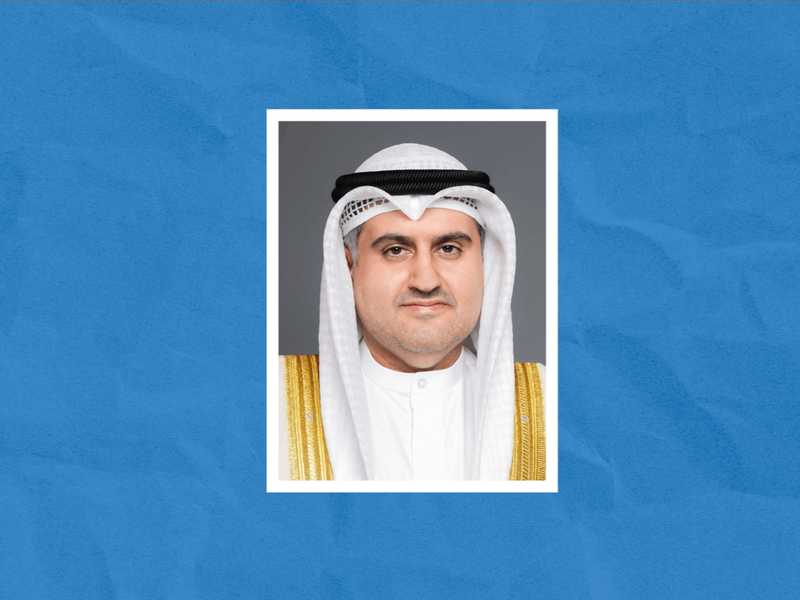
The proportion of foreign advisors has decreased to 17% amid the Kuwaitization of the judiciary and the adoption of a new correction system.
Translated by Alqyas from Al-Qabas — Original source
Mubarak Habib – While Justice Minister Nasser Al-Samit stressed that the time has come for Kuwaitis to fully assume responsibility for the judiciary and its system, affirming their capability to do so, he confirmed that the Kuwaitization of the judiciary is proceeding according to a defined approach and plan. This came during the Justice Minister’s attendance and supervision of the written exams for candidates applying for the position of “Deputy Public Prosecutor” today (Saturday), accompanied by the President of the Kuwait Institute for the Judiciary, Advisor Badr Al-Musaid, the Director General of Execution, Advisor Abdullah Al-Qasimi, and officials from the Ministry of Justice.
The Justice Minister announced that the proportion of foreign advisors has dropped to 17% this year, emphasizing that national competencies have proven their efficiency and competence. He affirmed the Ministry’s full support for empowering women in the judicial corps, noting that Kuwaiti women have demonstrated their competence in several positions, including Deputy Minister, Director of Public Prosecution, and Deputy Director of Public Prosecution, and that the door remains open for them to assume precise and sensitive roles within the judicial system.
He pointed out that 1,295 graduates from the Faculty of Law, both male and female, applied for the Deputy Public Prosecutor exams, reiterating, “We did not accept the errors that occurred in previous prosecutor exams, which were annulled.” He noted that these exams are conducted under a new system developed by the Kuwait Institute for Legal and Judicial Studies, with no human intervention in the grading process, ensuring justice and equal opportunities for all candidates.
Minister Al-Samit explained that candidates scoring 25 out of 40 will advance to the personal interview stage, conducted by a specialized judicial committee renowned for its integrity and independence. He added that the Ministry has secured the necessary financial allocations for the appointment of new deputy prosecutors as part of a comprehensive plan to support the judiciary and strengthen reliance on national competencies. He highlighted that the government is gradually moving toward replacing foreign personnel with Kuwaiti nationals in support roles within the judiciary, targeting full implementation by 2030.
Details follow:
While Justice Minister Nasser Al-Samit stressed that the time has come for Kuwaitis to fully assume responsibility for the judiciary and its system, affirming their capability to do so, he confirmed that the Kuwaitization of the judiciary is proceeding according to a defined approach and plan. This came in a statement to journalists during the Justice Minister’s attendance and supervision of the written exams for candidates applying for the position of “Deputy Public Prosecutor” today (Saturday), accompanied by the President of the Kuwait Institute for the Judiciary, Advisor Badr Al-Musaid, the Director General of Execution, Advisor Abdullah Al-Qasimi, and officials from the Ministry of Justice.
The Justice Minister announced that the proportion of foreign advisors has dropped to 17% this year, emphasizing that national competencies have proven their efficiency and competence. He pointed out that 1,295 graduates from the Faculty of Law, both male and female, applied for the Deputy Public Prosecutor exams, reiterating at the same time, “We did not accept the errors that occurred in previous prosecutor exams, which were annulled.” He noted that these exams are conducted under a new system developed by the Kuwait Institute for Legal and Judicial Studies, with no human intervention in the grading process—an aspect that was not the case previously. Results will also be announced on the same day.
Al-Samit clarified that the new system ensures justice and equal opportunities for all candidates, as exams are graded automatically, and each candidate’s location and result are announced immediately upon completion of the exam, unlike in previous years when results took months to appear.
Minister Al-Samit explained that candidates scoring 25 out of 40 will advance to the personal interview stage, conducted by a specialized judicial committee renowned for its integrity and independence. Names will subsequently be submitted to complete the necessary legal procedures.
He praised the fruitful cooperation with the University of Kuwait, commending the high professional standard demonstrated by the university and its faculty members in organizing the examinations, and emphasizing that this cooperation reflects confidence in national competencies and local academic institutions. Al-Sameet revealed that the examinations are conducted in two sessions during the day, with admissions to be reopened for new batches immediately after the completion of current admission procedures, as part of a future plan aimed at compensating for the expected shortage in judicial cadres in the coming years. He noted that the Ministry has allocated the necessary financial resources for these appointments, within the framework of a comprehensive plan to support the judiciary and enhance reliance on national competencies, pointing out that the government is gradually moving to replace expatriates with nationals in support positions for the judiciary, according to a timeline extending to 2030.
In the same context, Al-Sameet confirmed the beginning of the Kuwaitization of one of the important support judicial positions within the courts, which was previously held by non-Kuwaitis, after its job title was amended and competition was opened to national competencies, emphasizing that this step represents a qualitative addition to the justice system.
Support for women: He also affirmed the Ministry’s full support for empowering women in the judicial corps, noting that Kuwaiti women have proven their competence in several positions, including Deputy Minister, Director of Public Prosecution, and Deputy Director of Public Prosecution, and that the door remains open for them to assume precise and sensitive roles within the judicial system.
In July 2025, Minister of Justice and Advisor Nasser Al-Sameet issued a decision canceling all actions of the committee selected for the position of Junior Legal Researcher qualified for the role of Deputy Public Prosecutor, and the supporting team formed under Ministerial Decisions No. 1602 and No. 1603 of 2024, due to irregularities that marred the work of the selection committee and its supporting team. The decision also stipulated the “cancellation of all procedures and results resulting from the committee’s actions, considering them as if they never existed, and reorganizing the written examinations and personal interviews for applicants, according to a procedure to be announced later, ensuring the integrity of the procedures and enhancing public trust in the integrity of the Kuwaiti judiciary.”
Minister Al-Sameet clarified that this came from the Ministry of Justice’s keenness to consolidate the principle of equal opportunity and achieve justice and transparency in the appointment to judicial positions, and to preserve public trust in the judiciary’s mission. He explained that document inspection revealed irregularities that marred the work of the selection committee and its supporting team, which cast a shadow over the entire admission process.
Regarding the examination mechanism: There is no human intervention in the correction process. Results are announced on the same day without delay to ensure justice and equal opportunity among all applicants. The ranking and result of each applicant are announced immediately after the exam ends. Candidates who score 25 out of 40 will undergo personal interviews conducted by an independent judicial committee. Names will be submitted later to complete the necessary legal procedures to protect the integrity of the judiciary.
The Minister of Justice stressed that the new admission mechanism for Deputy Public Prosecutors is based on institutional partnership between the Ministry of Justice, the Judicial Authority, and the University of Kuwait, thereby consolidating the principle of transparency and ensuring the selection of the most competent candidates. He stated that any action taken in this regard aims to protect the integrity of the judiciary and enhance public trust in its judicial institutions.
High professional standard: The Minister of Justice praised the cooperation with the University of Kuwait, commending the high professional standard demonstrated by the university and its faculty members in organizing the examinations, and emphasizing that this cooperation reflects confidence in national competencies and local academic institutions.
