Health Minister: Combating Infectious Diseases and Antimicrobial Resistance Integral Part of Health Security System
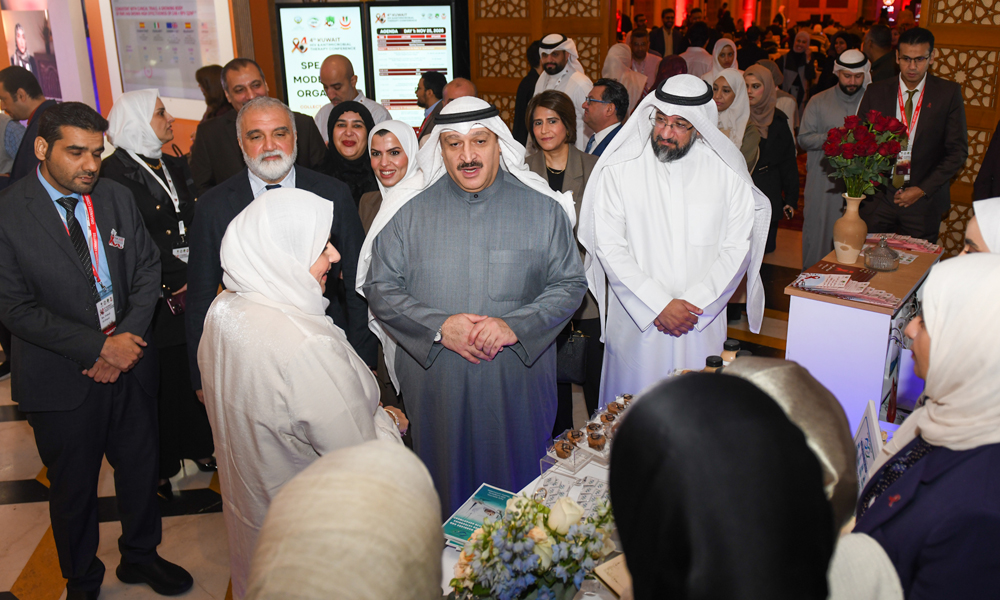
Health Minister Dr. Ahmad Al-Awadi confirmed combating infectious diseases and antimicrobial resistance is integral part of national health security system, emphasizing importance of international cooperation and prevention.
Translated by Alqyas from Kuwait News — Original source
Health Minister Dr. Ahmed Al-Awadi affirmed that combating infectious diseases and antimicrobial resistance has become an integral part of the national health security system, emphasizing the importance of strengthening scientific dialogue, exchanging expertise, and collaborating to address emerging health challenges.
Speaking in his opening address at the Fourth Kuwait Conference on AIDS and Antimicrobial Therapy on Wednesday, Minister Al-Awadi stated that addressing these challenges goes beyond merely providing treatment; it also involves early preparedness, prevention, epidemiological surveillance, scientific research, and enhancing the capacity of health institutions to detect and respond to risks efficiently.
He added that the (95-95-95) targets represent a crucial global framework, meaning that 95 percent of infected individuals know their status, 95 percent of those diagnosed receive treatment, and 95 percent of those on treatment achieve viral suppression, within an interconnected continuum of care that begins with diagnosis and continues with treatment, leading to viral control.
The Health Minister stressed that caring for patients requires safeguarding privacy, combating stigma and discrimination, and providing safe care that preserves human dignity.
Regarding antimicrobial resistance, he noted that it constitutes a growing global challenge that could limit the effectiveness of treatments relied upon in many medical specialties. Its impact is not limited to treating infections but extends to the safety of complex surgeries, organ transplants, cancer treatment, and critical care.
He pointed out that protecting the efficacy of antibiotics is a shared responsibility that begins with prudent use, strengthening prescription oversight programs, infection control, and developing laboratory surveillance for resistance, and extends to raising awareness and fostering cooperation among various sectors.
He clarified that confronting infectious diseases and antimicrobial resistance requires cooperation that transcends national and institutional borders through the exchange of expertise and data, supporting joint research, and enhancing collaboration with the World Health Organization, the Gulf Center for Disease Prevention and Control, and international scientific institutions.
Minister Al-Awadi explained that the future of public health depends on surveillance and early warning systems, the integration of clinical and laboratory data, the responsible use of diagnostic technologies and artificial intelligence, and adherence to the "One Health" concept, which links human, animal, and environmental health. This also includes investing in national competencies and applied scientific research, as well as training and empowering doctors, technicians, nurses, researchers, and young professionals.
For his part, Conference Chairman Dr. Osama Al-Baqshimi emphasized in his speech that medicine today faces a paradox worthy of reflection: while HIV has transformed, thanks to science and treatment, from a diagnosis synonymous with fear and death into a condition that can be lived with for many years, antibiotics that saved millions of lives are losing their effectiveness against microbes that have developed resistance.
Al-Baqshimi stated that according to estimates by the Joint United Nations Programme on HIV/AIDS, the number of people living with the virus globally reached approximately 41 million in 2025, with one million new infections and half a million deaths related to AIDS recorded in the same year.
He clarified that more than 32 million people are receiving antiretroviral therapy, and scientific evidence has proven that sustained viral suppression prevents sexual transmission of the virus.
He warned of the dangers of antibiotic resistance, noting that WHO data showed that one in every six laboratory-confirmed bacterial infections globally was resistant to antibiotics in 2023, a figure that rises to one in three reported cases in the Eastern Mediterranean Region.
He noted that a scientific study published in The Lancet in 2024 revealed that bacterial resistance directly caused the deaths of approximately one million people in 2021, with projections indicating it could lead to more than 39 million cumulative deaths between 2025 and 2050 unless countermeasures are strengthened. He pointed out that the latest World Health Organization report, issued in November, showed that 173 countries have developed national plans to combat antimicrobial resistance.
He emphasized that the Kuwait Ministry of Health is combating antimicrobial resistance through an integrated health system that combines strategic planning, rational use of medications, epidemiological surveillance, and international support.
He highlighted the pioneering role of the Infectious Diseases Hospital since 1958 in confronting infectious diseases and safeguarding health security, noting that the hospital’s move to its new building in the Andalusia area in February of this year inaugurated a new phase in the development of specialized services.
Al-Baqshami stated that this phase saw the activation of all infectious disease wards and isolation units, the enhancement of molecular laboratory diagnostic services, and the full operation of an outpatient intravenous antimicrobial therapy clinic, enabling eligible patients to complete their treatment with medical follow-up without unnecessary hospital stays.
He added that the holding of the two-day conference, which brings together a select group of experts and specialists from within and outside Kuwait, immediately after the World Antimicrobial Awareness Week and ahead of World AIDS Day, embodies a unified message and shared responsibility. He expressed his hope that the conference will leave a tangible impact on medical practice, patient safety, and the future of healthcare.
