United Nations Discusses Possibility of Setting Rules for 'Killer Robots'
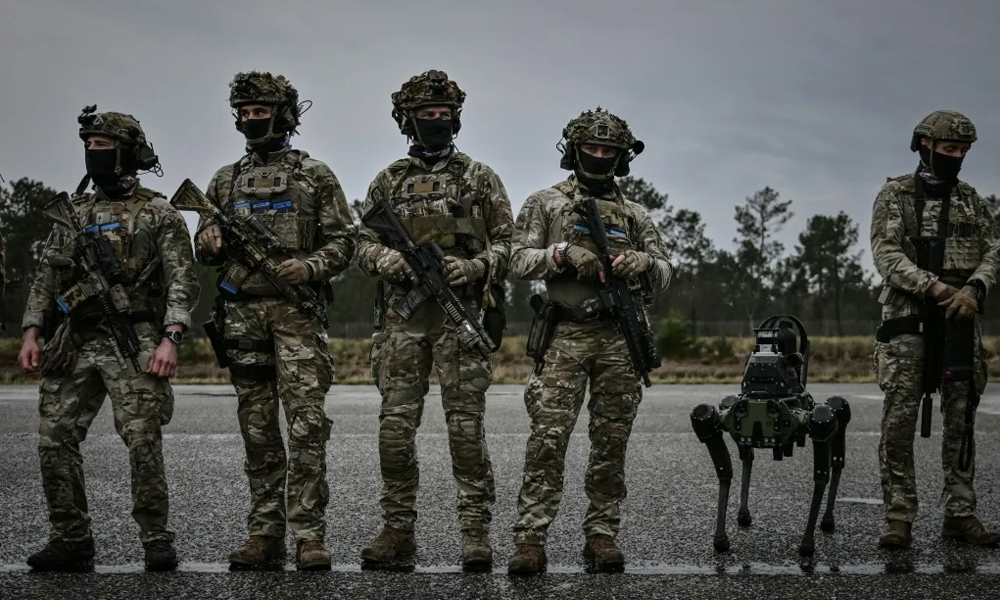
World countries discuss binding rules for autonomous weapons amid disagreements
Translated by Alqyas from Kuwait News — Original source
Starting Monday, countries at the United Nations will consider whether to begin talks on establishing binding rules for autonomous weapons systems, which opponents call “killer robots,” amid growing concerns over their increasing use in warfare.
Wars are undergoing a radical transformation as militaries seek to leverage the artificial intelligence boom to enhance their combat capabilities by identifying and striking targets with greater speed and precision.
However, numerous actors, from activists to UN Secretary-General António Guterres and Pope Leo XIV, have warned against the risks of handing over life-and-death authority to fully autonomous machines.
Laurent Gisel, head of the Weapons and Hostile Operations Unit at the International Committee of the Red Cross (ICRC), stated that “the need to regulate autonomous weapons has taken on a new urgency” amid AI developments.
Media reports indicate that Russia has effectively used fully autonomous drones with lethal efficiency in its war against Ukraine, while Ukraine’s defense sector is working to develop “swarms” of autonomous drones.
Human Rights Watch warned that this week’s meeting of the UN Convention on Certain Conventional Weapons (CCW) Review Conference in Geneva would leave civilians “at significant risk” if it fails to take decisive action.
128 countries will participate in the meeting to decide whether to launch negotiations on establishing binding rules.
While many countries support stricter regulations, similar to those applied to other advanced military capabilities such as nuclear weapons, nations possessing this technology are hesitant.
During the UN General Assembly last month, 163 countries adopted a resolution calling for negotiations on rules related to autonomous weapons.
Five countries voted against the move: the United States, Russia, Belarus, Israel, and North Korea, which last week boasted about a new AI-powered torpedo system.
Nine countries abstained, including Iran, Saudi Arabia, and China, which has maintained “carefully crafted ambiguity,” according to Laure de la Rochère of the French Institute of International Relations.
Washington proposed a five-year process to establish a non-binding mechanism, while NGOs and the ICRC are calling for a one-year timeline.
In 2023, Guterres and ICRC President Mirjana Spoljaric Egger urged countries to ban autonomous weapons before 2026.
The ICRC calls for a ban on two categories of autonomous weapons: those termed “unpredictable autonomous weapons,” and those designed or used to directly target humans.
Given opposition from major powers, analysts doubt an agreement will be reached this week to begin talks on binding rules.
