KIB Organizes 'Value of Memory' Event to Discuss the Role of Real Estate Valuation in Preserving Historical Buildings and Reviving Urban Heritage
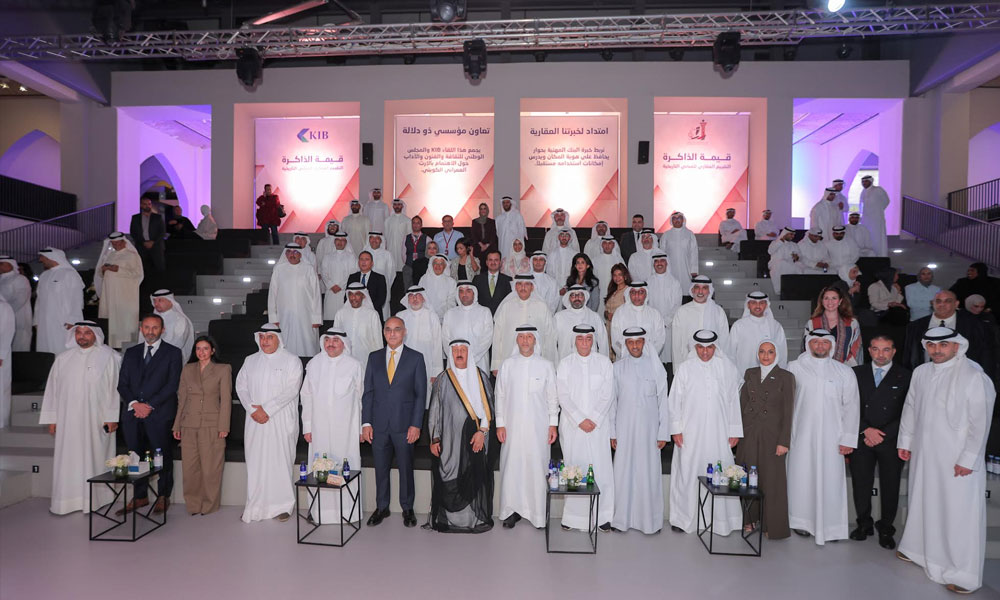
Kuwait International Bank organized an event to discuss the role of real estate valuation in preserving historical buildings and reviving urban heritage.
Translated by Qiyas from كويت نيوز — Original source
Kuwait International Bank (KIB), in collaboration with the National Council for Culture, Arts and Letters, organized a specialized event titled “The Value of Memory: Real Estate Valuation of Historical Buildings” at the American Cultural Center. The event was attended by Raed Javad Bu Khamsin, Deputy Chairman and CEO of KIB; Dr. Mohammed Khaled Al-Jassar, Secretary-General of the National Council for Culture, Arts and Letters; Dr. Hassan Ashkanani, Professor of Anthropology and Archaeology and Cultural Heritage at the University of Kuwait; a representative from the Royal Institution of Chartered Surveyors (RICS); along with a number of KIB executives, officials, experts, and specialists in the fields of heritage, real estate, and investment.
The event focused on the importance of developing specialized methodologies for valuing historical buildings, taking into account their cultural and historical value alongside their economic value. This approach supports informed decision-making regarding their preservation and rehabilitation, achieving a balance between safeguarding architectural identity and national memory, and meeting economic sustainability requirements.
On this occasion, Raed Javad Bu Khamsin, Deputy Chairman and CEO of KIB, stated that the bank’s accumulated real estate expertise serves as a fundamental pillar for developing professional practices in the Kuwaiti real estate sector and enhancing its capacity to keep pace with sustainable development requirements, while preserving the country’s urban and historical heritage.
He added that KIB continues to leverage its extensive experience in the real estate sector, alongside its investments in technology, digital solutions, and partnerships with professional and academic institutions, to contribute to the development of real estate valuation standards, enhance transparency, and support investment decision-making on the basis of well-researched professional practices.
Bu Khamsin remarked, “The value of cities is measured not only by the new buildings they construct, but also by their ability to preserve their historical landmarks and utilize their urban heritage to build their future. Since its establishment in 1973 as Kuwait Real Estate Bank, KIB has acquired solid expertise in financing, real estate valuation, property management, consulting, and feasibility studies. We view this legacy as a professional responsibility and a foundation from which we contribute to the development of the Kuwaiti real estate sector.”
He clarified that valuing historical buildings requires considering their historical, cultural, and architectural dimensions alongside their economic value, thereby supporting informed decisions regarding their preservation and rehabilitation. He emphasized that preserving urban heritage and achieving economic viability are not conflicting goals; rather, integration between them can be achieved through accurate professional valuation, leveraging specialized expertise and international best practices. This contributes to safeguarding Kuwait’s urban memory and preserving its value for future generations.
For his part, Dr. Mohammed Khaled Al-Jassar, Secretary-General of the National Council for Culture, Arts and Letters, expressed his pride in the strategic cooperation with KIB in organizing this specialized event, which highlights the importance of historical buildings as an integral part of Kuwait’s national identity and cultural memory, and discusses ways to develop real estate valuation methodologies that consider their historical and cultural value alongside their economic dimensions.
He emphasized that this cooperation reflects the importance of integrating efforts among national institutions, the banking sector, academic institutions, and professional bodies. He added that partnerships with specialized institutions, such as KIB, facilitate the exchange of knowledge and expertise and broaden the discourse on best practices in heritage asset valuation, thereby supporting the balance between the requirements of preserving cultural heritage and the opportunities to leverage it for economic and creative development.
The event program included opening remarks, specialized presentations, and an extended panel discussion, which began with the national anthem, followed by remarks from Marwa Maaref, Director of the Corporate Communications Unit at KIB, and then by Dr. Mohammed Khaled Al-Jassar.
Dr. Hassan Ashkanani from the University of Kuwait presented a paper on historical buildings in Kuwait, highlighting the historical and aesthetic dimensions of the urban heritage. Meanwhile, Engineer Jaber Al-Qallaf from the National Council for Culture, Arts and Letters presented on creative economy projects.
Fahd Al-Saleh, Executive Director of the Real Estate Consulting and Digital Solutions Department at KIB’s Real Estate Management, presented on the bank’s expertise and digital solutions. Verity Ramsden, a member of the Royal Institution of Chartered Surveyors (MRICS), a member of the Institute of Historic Building Conservation (IHBC), and a representative of RICS specializing in the economic feasibility of heritage buildings, outlined relevant international standards.
The event concluded with a panel discussion moderated by real estate advisor Eng. Basil Salem, which explored ways to align heritage preservation with economic value creation and support for development. This was followed by a question-and-answer session that allowed for the exchange of views on challenges and opportunities related to the valuation and adaptive reuse of historical buildings.
Jassim Al-Abd Al-Hadi, General Manager of Real Estate Management at KIB, noted that the bank offers a comprehensive suite of real estate services covering all stages of investment, from financing and planning to valuation, asset management, and smart technical solutions. He added that the bank’s connection to Kuwait’s urban memory extends to its headquarters, located within the Joint Banks Complex in the heart of Kuwait City, which represents an architectural landmark associated with the evolution of architecture and banking in the country.
Regarding property valuation, Al-Abd Al-Hadi revealed that the bank conducts approximately 21,000 property valuations annually, adhering to the standards of the International Valuation Standards Council (IVSC) and the Royal Institution of Chartered Surveyors. The bank also relies on a real estate and historical database containing records of over 75,000 field inspections covering the period from 1980 to 2026, alongside a digital geographic valuation map that enables real-time analysis of price levels.
For his part, Engineer Fahd Al-Saleh outlined the bank’s efforts in digital transformation and PropTech during the seminar. He highlighted the development of the “KIB Aqari” digital platform within the bank’s digital factory, aimed at transitioning property valuation services to a digital environment and facilitating real-time transaction monitoring.
The bank’s digital solutions include property management services, such as automatic rent collection, as well as monitoring cash flows and expenses. Additionally, the bank launched an initiative for certified valuers to support the development of professional practices in the real estate sector.
In the realm of capacity building and strengthening professional and academic partnerships, KIB continues its collaboration with the Royal Institution of Chartered Surveyors (RICS) to deliver specialized training programs on the valuation of heritage and historical buildings, public-private partnership projects, and hospitality projects. It also cooperates with the College of Business Administration at Kuwait University to equip young talents in the fields of financial and real estate analysis.
