Minister Al-Mashaan Leads Kuwait Delegation to the 75th Session of the Executive Office of Arab Ministers of Transport
Press coverage 2 newspapers covered this event: Al-Rai · Kuwait News →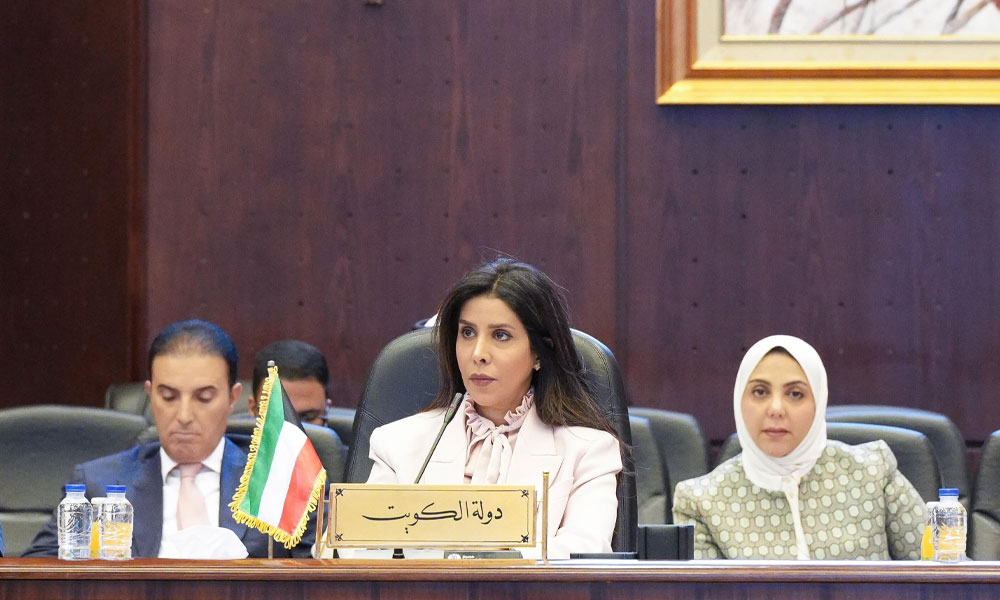
Noura Al-Mashaan led Kuwait's delegation to the 75th session of the Executive Office of Arab Ministers of Transport in Alexandria to discuss cooperation and challenges.
Translated by Qiyas from كويت نيوز — Original source
Minister of Public Works Dr. Noura Al-Mashaan chaired, on Monday, the Kuwaiti delegation participating in the 75th session of the Executive Office of the Arab Ministers of Transport, which launched at the headquarters of the Arab Academy for Science, Technology and Maritime Transport in Alexandria, under the presidency of Egypt and with the attendance of transport ministers and representatives of Arab member states in the Executive Office and specialized Arab organizations.
The Egyptian Minister of Transport and Chairman of the Executive Office, Field Marshal Kamel al-Wazir, expressed his gratitude in his opening speech on Monday to Kuwait’s Minister of Public Works and Chair of the current session of the Arab Ministers of Transport Council, Dr. Noura Al-Mashaan.
The minister stated that emerging geopolitical risks arising from conflicts and challenges facing the region have created further complexities in transport movement and management, disrupting supply chains worldwide.
In this regard, he pointed to the repercussions of the Russian-Ukrainian war, the Israeli aggression on Gaza that has claimed 70,000 martyrs and injured more than 170,000 people, the closure of the Strait of Hormuz due to the Iranian war and the Houthi aggression against the territory of the fraternal Kingdom of Saudi Arabia, and their threats to navigation in the Bab al-Mandab Strait.
He added that this has led to instability in global supply chains, with major shipping lines adopting alternative routes that have increased voyage duration, raised operational costs, caused port congestion, delayed cargo delivery, and increased harmful carbon emissions.
The minister emphasized that these challenges require collective effort locally and internationally to overcome unconventional circumstances that have repercussions on human life and all aspects of economic and social life, including rising living costs not only in the region but also across the world’s countries and the international economy as a whole.
He said, “Here we are today, under these circumstances, working to enhance cooperation and interconnection among our peoples and countries to mitigate their impacts. Our meeting today serves to consolidate our distinguished relations and reaffirm our shared will to strengthen Arab cooperation and coordination in various transport fields, building on our commonalities and mutual interests to achieve our peoples’ aspirations for greater growth and progress, given the vital importance of transport across all its sectors to the economic and social development of our countries.”
He noted that regional and international developments have proven that addressing these challenges requires enhancing Arab coordination, exchanging information and expertise, raising the readiness of ports and transport partnerships, and studying available operational alternatives, while supporting efforts to ensure the safety of maritime navigation and freedom of safe passage in accordance with international law rules.
He clarified that the Executive Office’s agenda for this session includes several important topics reflecting a collective commitment to strengthening Arab economic and logistical solidarity, foremost among them supporting the Palestinian economy, implementing the strategic plan for sectoral development in Al-Quds Al-Sharif (Jerusalem), and discussing Arab agreements regulating the transport of passengers and goods via land routes between Arab countries.
He added that the agenda also includes important items related to developing the electronic portal for land transport, enhancing road safety, developing rail transport, digital transformation in the transport sector, energy transition, and reducing carbon emissions. It also covers a draft agreement to regulate procedures for the maritime transport of passengers and goods among Arab countries, the development of river transport in Sudan, the development of its logistics zones, and the preparation of a comprehensive Arab agreement for maritime cooperation, as well as strengthening maritime and logistics diplomacy to support the resilience of corridors and supply chains and to bolster the Arab geopolitical standing.
The Kuwaiti delegation, led by Minister Al-Mashaan, included Kuwait’s Permanent Representative to the League of Arab States, Ambassador Talal Al-Mutairi, and the Director General of the General Directorate of Road Engineering Affairs, Engineer Khaled Al-Asimi.
The meeting was attended by the ministers of transport and communications from the Executive Office members: Saudi Arabia, Bahrain, Qatar, Oman, Tunisia, and Morocco, as well as Egypt, which holds the current chairmanship of the Executive Office. Also present were the Arab Academy for Science, Technology and Maritime Transport and the General Secretariat of the League of Arab States.
The Executive Office is scheduled to submit the agenda items to the 39th session of the Council of Arab Ministers of Transport tomorrow for approval.
